

As of 2026, most California-formed LLCs and corporations do not need to file a federal BOI report. FinCEN exempted domestic reporting companies from Beneficial Ownership Information filing after 2025 rule changes, so if you formed your entity in California, you're likely off the hook federally. Foreign-formed companies registered to do business in California generally still must file. Check FinCEN's BOI page and the California Secretary of State for the latest before assuming either way.
TL;DR:
- California-formed companies are exempt from federal BOI reporting starting in 2026, but foreign-formed companies registered in California still generally need to file.
- Only foreign entities registered in California must submit a BOI report, while domestic companies are automatically exempt.
- Reporting requires detailed information about beneficial owners, including copies of IDs and residential addresses, with strict formatting rules and tight deadlines based on registration date.
- California’s Statement of Information, which is separate from federal BOI filings, remains required and must be maintained regularly to stay compliant.
- FinCEN warns against scams, emphasizing only to submit via official .gov portals and never pay fees or send private IDs in unsolicited requests.
Table of Contents
- Who Has To File a BOI Report in California?
- What Information Goes Into a BOI Report Summary?
- When Are BOI Filing Deadlines in California?
- How Do You Actually Submit a BOIR?
- Does California Still Require Its Own Filings?
- What Happens If You Don't File (Or Get Scammed)?
- Your California BOI Compliance Checklist
- How California Entrepreneurs Should Read the 2026 BOI Changes
- Get Your California Compliance Handled by Legalstepz
- Sources
- FAQ
Who Has To File a BOI Report in California?
The federal rule hinges on one test: where was your company legally created? A "reporting company" under the Corporate Transparency Act is any corporation, LLC, or similar entity created by filing paperwork with a state, or a foreign entity registered to do business in a U.S. state. FinCEN now splits these into two buckets, and only one still owes a filing.
- Domestic reporting companies (formed under California law, or any other U.S. state) are exempt from BOI filing as of 2026.
- Foreign reporting companies (formed outside the U.S., then registered with the California Secretary of State to operate here) generally still must file, according to FinCEN's FAQ guidance.
- A beneficial owner is anyone who exercises substantial control over the company or owns at least 25% of it.
- A company applicant is the person who filed the formation or registration paperwork, though FinCEN's carve-out means U.S. persons acting as company applicants for domestic entities are no longer relevant to the current filing pool.
Picture two companies: a bakery LLC formed in Sacramento, and a software company originally incorporated in the United Kingdom that later registered to sell in California. The bakery is exempt. The UK-based company almost certainly still has a BOI obligation.
What Information Goes Into a BOI Report Summary?
For the foreign-formed entities still required to file, the BOIR asks for two categories of data: information about the company itself, and information about each beneficial owner.
Company-level fields include the legal name, any DBA name, a U.S. street address, the jurisdiction where the entity was formed, and a taxpayer ID (EIN, or a foreign tax ID if no EIN exists yet).
- Full legal name and date of birth for each beneficial owner
- Current residential address (not a business address, unless that owner is a company applicant)
- A unique identifying number from an acceptable document, such as a passport
- An image of that identifying document
FinCEN's filing instructions specify exact ZIP code formatting and note that U.S. territories follow the same address rules as the 50 states. Skipping a required field or submitting a blurry ID image is the most common reason a BOIR bounces back for correction.
When Are BOI Filing Deadlines in California?
Timelines depend on when your entity was created or registered, and they still apply to the foreign-formed companies that remain in scope. Here's the sequence FinCEN laid out:
- Entities created or registered before January 1, 2024 originally had until January 1, 2025 to file an initial BOIR.
- Entities created or registered during 2024 got 90 days from formation or registration to file.
- Entities created or registered on or after January 1, 2025 get 30 days from formation or registration to file.
- Any change to previously reported information, such as a new address or a change in beneficial owners, triggers a 30-day window to file an updated BOIR.
- If you discover an earlier filing contained an error, you have 30 days from that discovery to submit a corrected BOIR.
Litigation and rule changes have shifted some of these dates before, according to FinCEN's published filing timeline. Don't file based on a date you saw on a blog. Confirm it on FinCEN's own site first.
How Do You Actually Submit a BOIR?
FinCEN built one channel for this: the BOI E-Filing portal. It offers two main paths for a standard filer, plus a third for larger operations.
- Web-based form: fill out fields directly in your browser, section by section.
- PDF upload: download the fillable PDF, complete it offline, then upload the finished file.
- System-to-system API: built for companies or filing services submitting many reports at once, with instructional guides posted directly on the portal.
Before you start, decide whether to register for a FinCEN ID, which lets a beneficial owner share one reference number across multiple filings instead of resubmitting personal details every time. Gather ID images, double-check your address formatting, and download or screenshot your submission confirmation the moment you get it.
Pro Tip: Save your BOI E-Filing confirmation number somewhere outside your email inbox. If FinCEN's servers have an outage during an audit or dispute, that confirmation is your proof of timely filing.
Does California Still Require Its Own Filings?
Yes, and this is where the most confusion happens. The California Secretary of State does not administer BOI reporting at all. Federal exemption from BOI has zero effect on your state paperwork.
- Statement of Information: required periodically for every California LLC and corporation, listing officers, directors, and addresses. A Statement of Information guide walks through the filing step by step.
- Biennial or annual statement schedule: LLCs file every two years, corporations file annually, tied to your original registration date.
- Registered agent maintenance: your agent's information has to stay current with the state at all times.
The Secretary of State explicitly separates these obligations from FinCEN's rules, and unlike BOI data, your Statement of Information is a public record anyone can look up.
What Happens If You Don't File (Or Get Scammed)?
For entities still required to file, FinCEN treats missing or false BOI information as a real compliance risk, not a paperwork suggestion. This isn't legal advice for your specific situation, but the agency's own guidance frames noncompliance seriously enough that it's worth treating any filing obligation you do have as a firm deadline.
Fraudulent letters and emails asking for BOI information spiked after the rules were first announced, according to FinCEN's fraud alerts. The agency's standing advice: only use .gov portals for anything related to BOI.
- Verify any BOI-related URL ends in .gov before entering data.
- Never email scanned IDs or ownership documents to an unsolicited requestor.
- Ignore letters demanding immediate payment to "process" a BOI filing. FinCEN doesn't charge a filing fee.
Your California BOI Compliance Checklist
Work through this in order, and most owners will finish in under 20 minutes.
- Confirm where your entity was formed. California-formed means you're almost certainly exempt from federal BOI. Foreign-formed and registered here means you probably still need to file.
- Identify your beneficial owners. Anyone with 25% ownership or substantial control over decisions needs to be on your list if your entity isn't exempt.
- Pull together the required documents. Passport or driver's license images, current addresses, and your EIN should be in one folder before you touch the E-Filing portal.
- File if required, using the web form or PDF upload, and save your confirmation the moment it arrives.
- If you're exempt, document it. A one-page note in your corporate records explaining why no BOIR was filed protects you if rules shift again.
- Redirect your attention to state filings. Confirm your Statement of Information is current and your registered agent details haven't lapsed.
Pro Tip: Set a recurring calendar reminder tied to your original formation date, not the calendar year. California's Statement of Information deadlines run on your registration anniversary, and missing that window is a common compliance slip among small California entities.
How California Entrepreneurs Should Read the 2026 BOI Changes
Most California-formed businesses can stop worrying about federal BOI paperwork entirely and put that energy into their Statement of Information instead. The mistake I'd watch for is assuming "exempt from BOI" means "exempt from state compliance." They're unrelated systems, run by unrelated agencies, with unrelated penalties. When in doubt, get a second opinion from someone who tracks California filings specifically rather than guessing from a federal notice.
— Peter
Get Your California Compliance Handled by Legalstepz
Legalstepz exists for exactly the confusion this article just walked through: sorting out what California actually requires versus what FinCEN used to require. Instead of hiring a traditional business attorney by the hour to interpret BOI exemptions and Statement of Information deadlines separately, Legalstepz packages both into one straightforward service built for California entities.
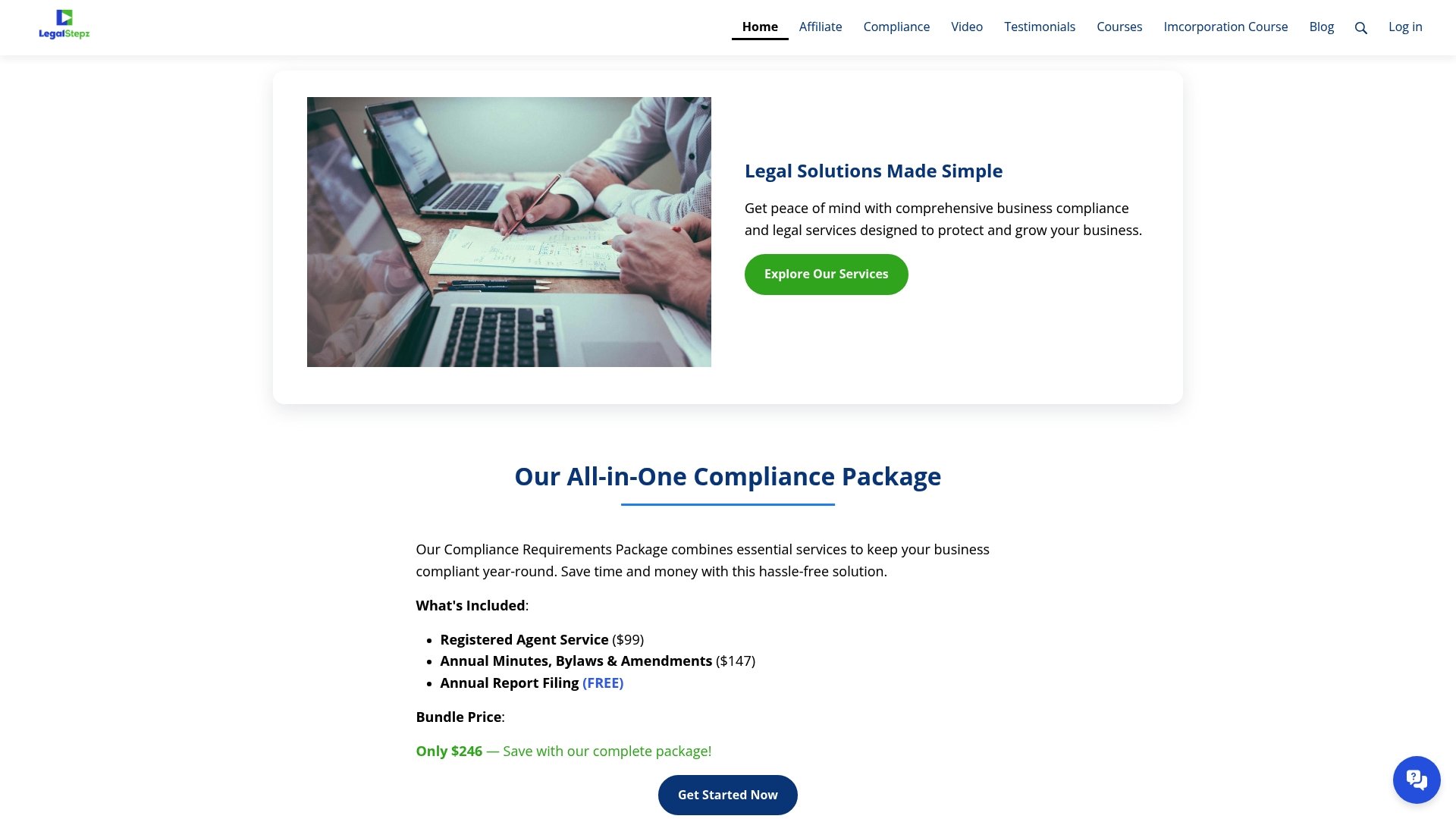
Legalstepz files your California Statement of Information, keeps your registered agent information current, and drafts the annual corporate minutes and bylaws your entity needs on record. If you formed your LLC or corporation yourself and want a second set of eyes confirming you're covered on the state side now that federal BOI rules have shifted, visit the Legalstepz site for a compliance check or to get your next filing handled directly.
This article is general information, not a substitute for advice from a qualified lawyer. Consult a qualified legal professional about your own circumstances before acting on anything here.
Sources
- Beneficial Ownership Information Reporting | FinCEN
- BOI E-FILING
- News & Notices - California Secretary of State
FAQ
What Happens if I Don't File a BOI Report?
If your entity is still required to file and misses its deadline, FinCEN treats that as a compliance failure, though the agency's current guidance should be checked directly for the specific consequences that apply to your situation. Most California-formed companies are now exempt entirely, so this risk mainly applies to foreign-formed entities registered here.
Do I Need To File a BOIR for My LLC?
If your LLC was formed in California (or any other U.S. state), it's exempt from federal BOI filing as of 2026, according to FinCEN. If your LLC was formed outside the U.S. and registered to do business in California, you likely still need to file.
Are Banks Still Required To Collect Beneficial Ownership Information?
Bank-level beneficial ownership collection under federal banking regulations is a separate requirement from the FinCEN BOIR filing discussed here, and it hasn't been eliminated by the 2026 domestic exemption. Check with your bank directly on what documentation they require when you open or maintain a business account.
Is There a BOI Reporting Deadline?
Deadlines depend on when your entity was created or registered, and you generally have 30 days to file updates or corrections after a change or error discovery. Because rules and dates have shifted before, check current timelines on FinCEN's site before filing or deciding not to file.