

Most California business owners assume that designating an agent for service of process is a one-time checkbox during formation. It is not. The california agent of service process explained correctly looks very different from what most entrepreneurs expect. Your agent is the legally recognized contact point for lawsuits, tax notices, and government correspondence. Get it wrong, and a court can enter a default judgment against your business before you ever know a case was filed. This article walks you through every layer of the requirement so you can stay protected and compliant.
Table of Contents
- Key takeaways
- California legal requirements for the agent of service of process
- What your agent actually does day to day
- Service of process procedures and substitute service in California
- How to select, change, and maintain your agent
- My take on what most business owners get wrong
- How Legalstepz makes this easier
- FAQ
Key takeaways
| Point | Details |
|---|---|
| Physical address required | Your agent must have a California street address. PO Boxes are never acceptable under state law. |
| Availability is mandatory | The agent must be reachable during normal business hours, not just listed on paper. |
| Missed service is costly | Failing to receive legal documents can trigger default judgments and damage your liability protection. |
| Updates must be filed | Any agent change requires a formal filing with the California Secretary of State. |
| Professional services reduce risk | Registered agent services cost roughly $100 to $300 per year and handle forwarding and compliance reminders. |
California legal requirements for the agent of service of process
The formal industry term is "agent for service of process," sometimes called a registered agent. California law treats this role as a statutory requirement, not a suggestion. Every corporation, LLC, and limited partnership doing business in California must designate one at all times.
California Corporations Code § 17701.13 requires that your agent maintain a physical California street address and be available during normal business hours. That means a real location where someone can physically receive documents. No PO Boxes, no mail forwarding addresses, no virtual office suites that lack a person on site.
Who qualifies as an agent? California gives you a few options:
- An individual who is a California resident, at least 18 years old, with a physical address in the state
- A California-licensed corporate registered agent (a company authorized by the Secretary of State to provide this service)
- An LLC member or manager, if they meet the residency and address requirements
When you form your entity, you designate your agent on the formation documents. After that, you report the agent's information on your Statement of Information, which most California entities must file every one or two years with the Secretary of State. Corporate agents who provide this service commercially must also file Form 1505 with the state.
The consequences of noncompliance are not abstract. Missed service can lead to default judgments and loss of good standing with state agencies. A court does not wait for you to show up if your agent is unreachable. It moves forward without you.
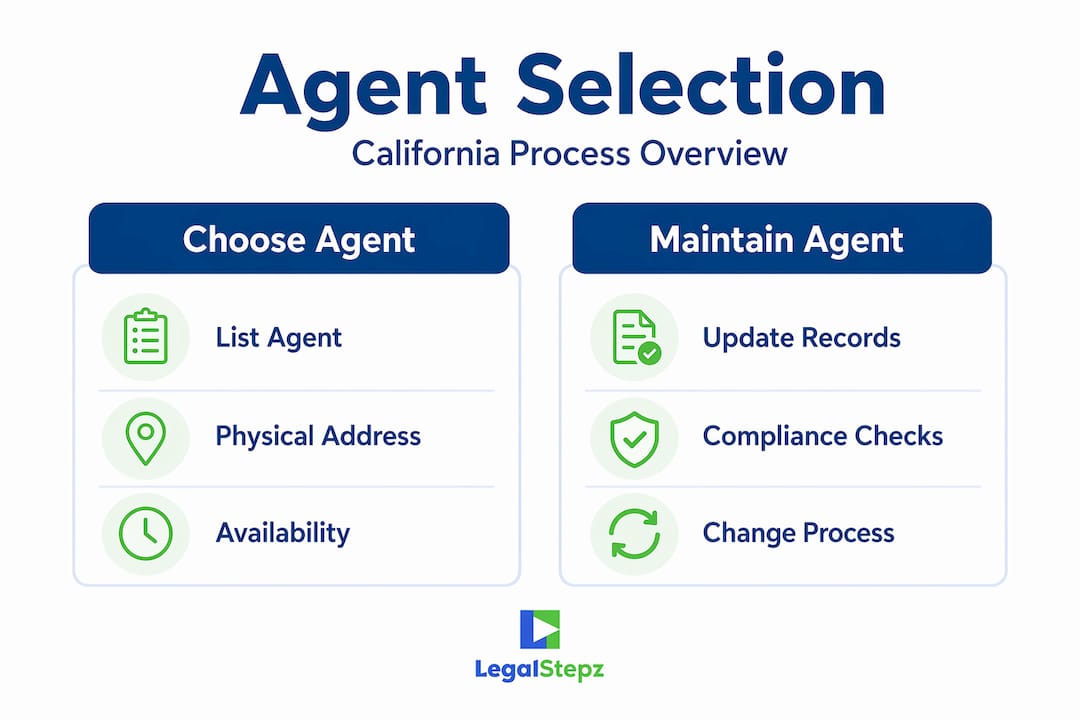
Pro Tip: Check your entity's listing on the California Secretary of State's business search right now. Your agent's name and address are publicly visible, and verifying accuracy takes less than two minutes.
What your agent actually does day to day
Understanding service agents California requires looking past the legal definition and into the practical role. Your agent is not just a name on a form. They are your business's official front door for legal and government communication.
Here is what that means in practice:
- Receiving lawsuits, subpoenas, and court orders delivered to your registered address
- Accepting tax notices and regulatory correspondence from state and federal agencies
- Forwarding those documents to you or your legal team quickly enough to meet response deadlines
- Serving as the address courts and agencies use when they need to reach your business officially
The "forwarding promptly" part deserves emphasis. A California legal process agent who sits on documents for a week is almost as dangerous as having no agent at all. Courts set deadlines from the date of service, not the date you personally received the paperwork. If your agent delays, your response window shrinks.
"Maintaining an accurate and accessible agent for service of process is essential to avoid default judgments and maintain your business's liability shield."
Consider a real scenario. A vendor files a breach of contract claim against your LLC. The process server delivers papers to your registered address on a Monday. Your agent, a family friend who agreed to be listed, is traveling and does not check the mail. Three weeks later, the court enters a default judgment. You now owe money you never had a chance to contest. This is not a hypothetical edge case. It happens regularly to small businesses that treat agent designation as a formality.
Service of process procedures and substitute service in California

Knowing how service actually works helps you understand why your agent's availability matters so much. California follows a structured process for delivering legal documents, and the rules protect plaintiffs more than defendants when agents are hard to reach.
Here is how standard service unfolds:
- A process server attempts to deliver documents directly to your designated agent at the registered address.
- If the agent is not available, the server makes additional attempts. Typically three due diligence attempts are required before substitute service is authorized.
- Under substitute service, papers are left with a competent adult at the address, and a copy is mailed within 24 hours.
- If no competent adult is available, the court may authorize additional alternative methods.
| Service method | When it applies | Business owner risk |
|---|---|---|
| Direct service | Agent is present and available | Lowest risk, fastest notice |
| Substitute service | Agent unavailable after multiple attempts | Moderate risk, notice may be delayed |
| Electronic service | Court-approved after failed traditional attempts | Highest risk, easy to miss |
Electronic service is not a shortcut. Under CCP § 413.30, courts require documented evidence of multiple good-faith attempts before permitting electronic delivery. But here is the problem: if service reaches you electronically and you miss the email, the court still considers you served. The clock still runs.
Service via the registered agent is treated as official legal notification. If your agent is unreachable and substitute service is used, there is no guarantee you will receive direct notice. The legal system does not pause while the papers find their way to you.
Pro Tip: If you use an individual as your agent rather than a professional service, build a written protocol for what they do the moment legal documents arrive. Speed matters. A same-day forwarding rule is not overkill.
How to select, change, and maintain your agent
This is where understanding service agents California moves from theory to practice. Choosing the right agent and keeping that information current is an ongoing compliance task, not a one-time decision.
Your agent options compared
| Option | Cost | Reliability | Privacy protection |
|---|---|---|---|
| Yourself | Free | High risk if you travel | None, your address is public |
| Employee or family member | Free | Depends on individual | Minimal |
| Professional registered agent | $100 to $300 per year | Consistent, business-hours coverage | Strong, shields personal address |
Professional registered agent services cost roughly $100 to $300 per year and typically include compliance reminders and document forwarding. For most business owners, that cost is worth it. Your personal home address becomes public record if you list yourself, and missing even one document can cost far more than a year of service fees.
When you need to change your agent, the process requires more than just telling someone new to expect mail. Changing your registered agent requires filing specific forms with the Secretary of State and obtaining the new agent's consent. For LLCs, that typically means updating your Statement of Information. For corporations, there is a separate change form.
Compliance experts recommend treating these changes like critical operations updates with confirmations and legal filings to avoid gaps in coverage. That means confirming the new agent has access to the address, verifying the filing was accepted by the state, and not assuming the old agent will forward anything that arrives in the transition period.
A few practical rules for maintaining your agent over time:
- Review your agent's information every time you file your Statement of Information
- Verify your agent listing on the Secretary of State's website at least once a year
- If your agent moves, update the filing immediately, not at the next renewal cycle
- If you use an individual agent who changes jobs or relocates, treat that as an urgent compliance task
For guidance on finding the right agent for your California LLC, the specifics of your entity type and situation matter more than most people realize.
My take on what most business owners get wrong
I have worked with enough California business owners to see a clear pattern. The agent for service of process gets treated like a form field, not a living compliance obligation. People pick a friend, a spouse, or themselves during formation and never think about it again. Then something changes. The friend moves. The spouse's schedule shifts. The business owner starts traveling more. And the registered address becomes a gap in the business's legal armor.
What I have found is that the risk is not theoretical. Courts are not sympathetic to "I never received the paperwork" when the paperwork was properly delivered to the address you designated. The legal system assumes you maintained what you filed. If you did not, that is your problem.
The other thing I see regularly is business owners who list a home address to save money, not realizing that address becomes searchable public record. Anyone can look up your entity on the Secretary of State's website and see exactly where your agent is located. For entrepreneurs who value privacy, that is a significant trade-off for a service that costs less than $300 a year to avoid.
My honest recommendation: treat your agent designation the same way you treat your business bank account. Review it regularly. Update it promptly when anything changes. And if you are not confident that your current agent will receive and forward documents within 24 hours, make a change before it costs you.
— Peter
How Legalstepz makes this easier
Running a California business means juggling enough compliance tasks already. The last thing you need is a gap in your agent coverage creating legal exposure you did not see coming.
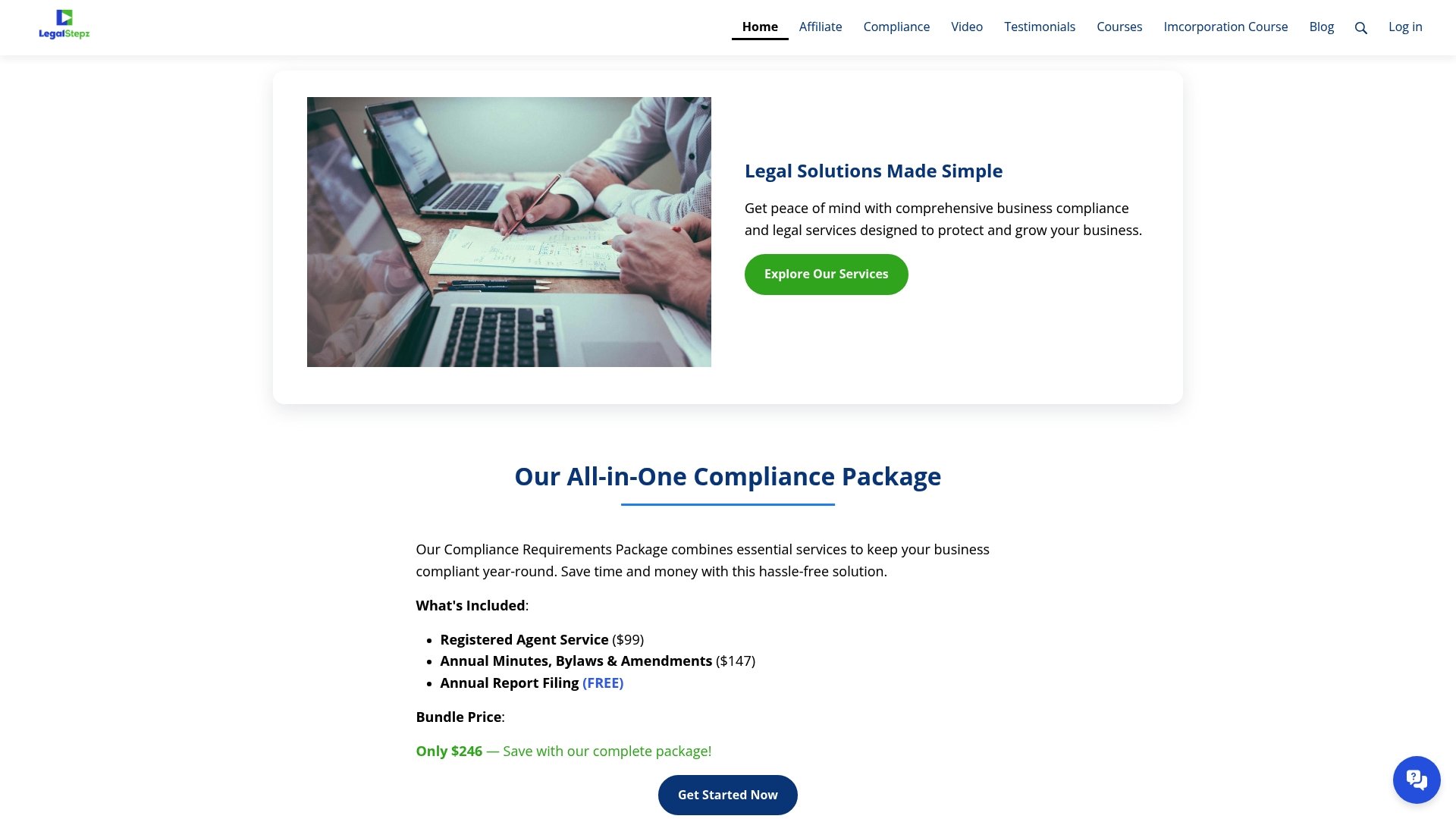
Legalstepz offers registered agent services built specifically for California entrepreneurs who want reliable coverage without the administrative headache. Whether you are forming a new entity or updating an existing one, Legalstepz handles the paperwork, tracks your filing deadlines, and makes sure your agent information stays accurate with the Secretary of State. You can also explore the Legalstepz Incorporation Course for a step-by-step walkthrough of agent designation, entity formation, and ongoing compliance. For business owners who want everything in one place, Legalstepz is worth exploring before your next filing deadline.
FAQ
What is an agent for service of process in California?
An agent for service of process is the legally designated individual or company authorized to receive lawsuits, government notices, and legal documents on behalf of your California business. Every registered entity in California must maintain one at all times.
Who needs a service agent in California?
Every California corporation, LLC, limited partnership, and foreign entity registered to do business in the state must designate an agent for service of process. There are no exceptions based on business size or revenue.
Can I be my own agent for service of process in California?
Yes, but you must be a California resident with a physical street address in the state and be available during normal business hours. Listing yourself also makes your home address part of the public record on the Secretary of State's website.
What happens if my agent misses a legal document?
If legal documents are delivered to your registered address and not received, courts can proceed without your participation and enter a default judgment against your business. You may also lose good standing with state agencies.
How do I change my agent for service of process in California?
You must file the appropriate form with the California Secretary of State, obtain the new agent's consent, and update your Statement of Information. Failing to file promptly can create gaps in service coverage and compliance issues.