

No, California does not require LLC newspaper publication. If you're forming an LLC here, skip that search entirely and focus on what actually matters: file your Articles of Organization (Form LLC-1), submit your Statement of Information (Form LLC-12) within 90 days, and budget for the minimum annual franchise tax required by the Franchise Tax Board. Miss those three, and you'll have real problems. Miss a newspaper notice, and nothing happens, because California never asked for one.
TL;DR:
- California does not require LLCs to publish notices in newspapers, unlike states such as New York, Arizona, and Nebraska.
- Instead, California mandates filing the Articles of Organization and the Statement of Information through the Secretary of State's online portal, with minimal fees.
- The primary compliance risks in California involve paying the $800 annual franchise tax and submitting the Statement of Information on time, not newspaper publication.
- Missing the 90-day deadline for the initial Statement of Information can result in a late penalty, while suspension due to unpaid taxes is a more serious concern.
- Regularly verifying filing statuses and deadlines on the Secretary of State's website helps prevent compliance issues and avoids unnecessary expenses.
Table of Contents
- Which states still require LLC publication, and why the confusion persists
- What California requires instead of newspaper publication
- Tax and compliance obligations that matter more than publication
- Practical compliance checklist for new California LLCs
- Where to file and how to verify filings and entity status
- Why the publication myth won't die (and how to stop chasing it)
- Skip the Guesswork on California Filings
- Sources
- FAQ
Which states still require LLC publication, and why the confusion persists
Only three states in the country still make LLCs publish formation notices in local newspapers: New York, Arizona, and Nebraska. Each handles it differently, and the differences matter if you're comparing notes with a founder who formed an entity elsewhere.
- New York requires publication in two newspapers for six consecutive weeks, often costing hundreds to over a thousand dollars depending on the county.
- Arizona requires publication only in certain counties (Maricopa and Pima are exempt) for three consecutive publications.
- Nebraska requires publication for three consecutive weeks in a newspaper near the LLC's registered office.
California isn't on that list, and the Secretary of State's own FAQ page confirms it directly: the state relies on public filings through its own system, not newspaper notices. The confusion usually starts when someone Googles "LLC publication requirements" using a generic checklist built for New York or copies formation advice meant for a different state entirely. That mismatch sends thousands of California founders searching for a filing step that flat out doesn't exist here.
What California requires instead of newspaper publication
California substitutes two filings for the job publication does elsewhere: getting your entity on record and keeping it current. Neither involves a newspaper.
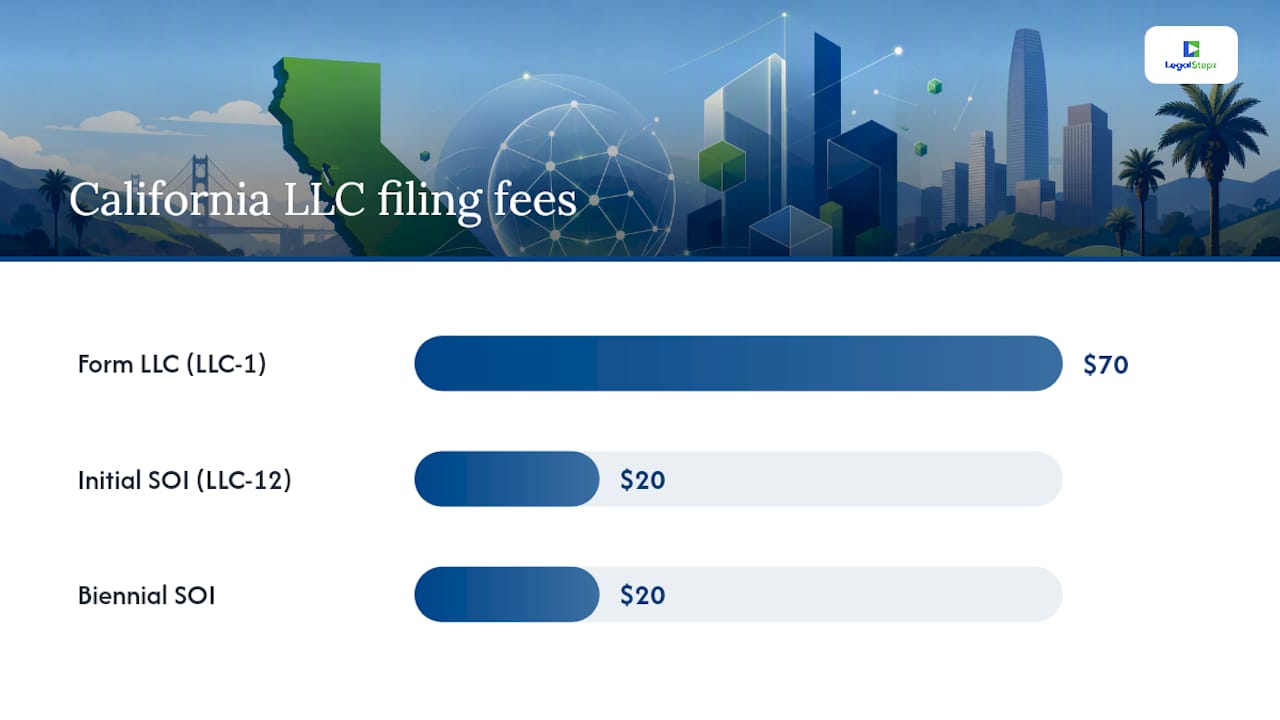
- Articles of Organization (Form LLC-1) creates your LLC. The filing fee is $70, submitted through the Secretary of State.
- Initial Statement of Information (Form LLC-12) must be filed within 90 days of registering your LLC, and every two years after that. The filing fee is set by the Secretary of State, currently a nominal amount, and it covers basics like your registered agent, principal office address, and management structure (member-managed or manager-managed).
Fee snapshot: $70 to form the LLC, $20 for the initial Statement of Information, $20 again every two years. That's the entire filing cost for staying current with the Secretary of State, no newspaper invoices involved.
You file both through bizfile.sos.ca.gov, the state's online portal, which also handles certified copies and amendment filings if you need to update your agent or address later. Processing times vary depending on volume, so filing online almost always beats mailing paper forms if you're on a deadline.
One line worth repeating because so many services try to sell against it: there is no affidavit of publication, no newspaper filing, and no proof-of-publication requirement anywhere in California's LLC formation process.
Tax and compliance obligations that matter more than publication
Here's where California actually gets strict, and it has nothing to do with newspapers.
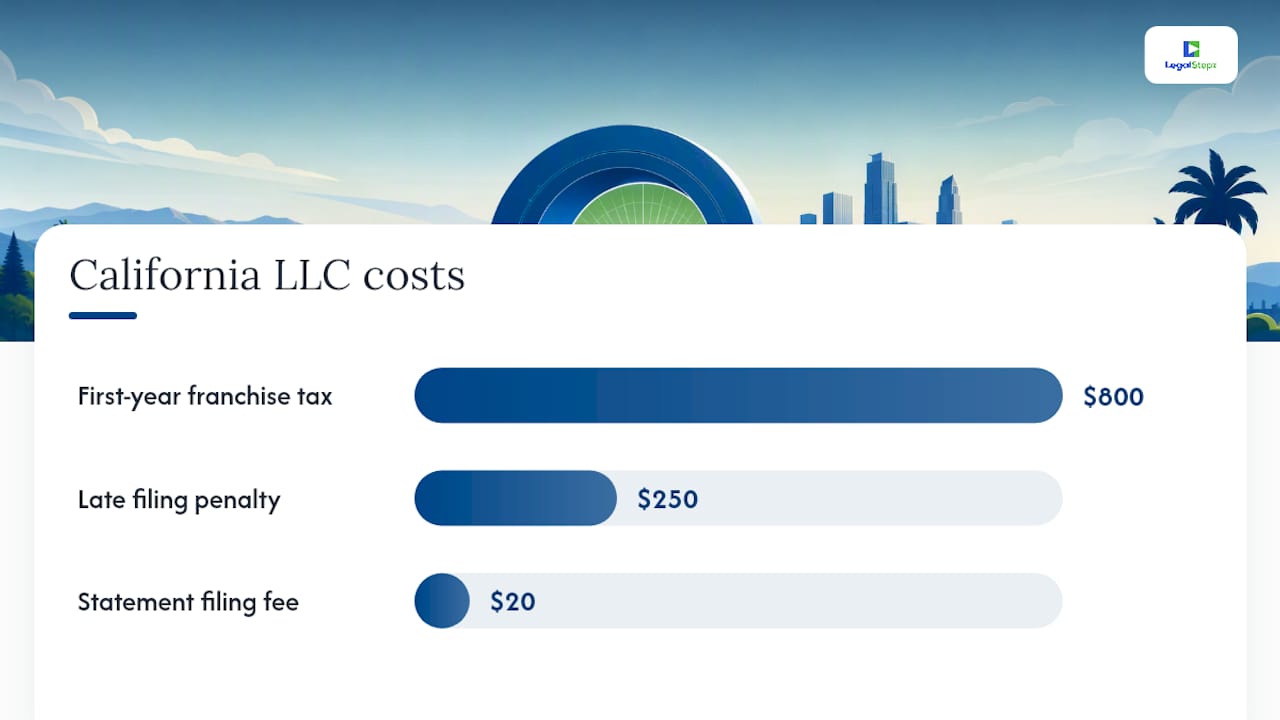
Every LLC doing business in the state owes an $800 minimum annual franchise tax, administered by the Franchise Tax Board. This applies whether your LLC made money or not, and it's due regardless of how small your operation stays. New LLCs typically owe their first payment by the 15th day of the fourth month after formation, then annually after that.
Beyond the flat tax, LLCs with California gross receipts above certain thresholds also owe an additional fee tied to income, reported on Form 568 (the LLC return of income). FTB Publication 3556 walks through the gross-receipts tiers and how to calculate what you owe.
- Failing to pay the minimum franchise tax can lead to suspension of your LLC's rights to conduct business in California.
- A suspended entity loses the ability to enforce contracts or bring a case in court until it's revived.
- None of this compares to a publication penalty, because California doesn't issue one. The franchise tax is the real financial pressure point, not a missed newspaper ad.
Practical compliance checklist for new California LLCs
Skip the publication research and work through this instead. It covers everything California actually enforces.
- File Articles of Organization (Form LLC-1). Confirm your SOS file number once it's processed. This is your legal starting point.
- File your initial Statement of Information (Form LLC-12) within 90 days. The $20 fee applies whether you file online or by mail, though online filing through bizfile.sos.ca.gov processes faster.
- Handle your FTB obligations. Pay your first $800 franchise tax payment and file Form 568 annually. If your gross receipts exceed the threshold, calculate the additional LLC fee using FTB guidance.
- Keep your registered agent and addresses current, and calendar your next LLC-12. It's due every two years from your original filing date, not from the calendar year.
Pro Tip: Set your 90-day Statement of Information reminder the same day you file your Articles of Organization. Waiting until you "have time" is how founders end up with a $250 late penalty instead of a $20 filing fee.
If you ever get a suspension notice, the Franchise Tax Board handles tax-related suspensions and the Secretary of State handles filing-related ones. Contacting the wrong agency wastes time you don't have when you're trying to revive an entity fast.
Where to file and how to verify filings and entity status
Every filing you make in California lands in a public database, which is the real reason the state skipped newspaper publication in the first place. The Business Search tool on the Secretary of State's site lets you pull up any LLC's Articles of Organization and Statement of Information history in seconds.
- Use bizfile.sos.ca.gov to check whether your LLC-1 or LLC-12 was accepted and when.
- Order certified copies of your filings through the same portal if a bank or investor asks for proof.
- Need to fix an error on a filing? You can submit a correction or amended Statement of Information rather than refiling from scratch.
- To check tax standing, contact the FTB directly. A suspended or forfeited status will show up in their records even if the Secretary of State's page still lists the entity as active.
Running both checks periodically, especially before a lease signing or loan application, catches problems before they become deal breakers.
Why the publication myth won't die (and how to stop chasing it)
Founders conflate California with New York and Arizona constantly, usually because they read a national "LLC formation checklist" that lumps every state's rules together. The moment publication shows up on page one of a generic guide, people assume it applies everywhere, including here.
The mistakes that actually hurt California LLCs are more serious than a missed newspaper ad. Forgetting the LLC-12 within 90 days triggers a real penalty. Skipping the $800 franchise tax payment triggers suspension. Both are avoidable with basic calendar discipline, yet both happen constantly because founders spend their attention on the wrong compliance step.
The fix isn't complicated: build a filing calendar the day you register, use a registered agent service that flags renewal dates, and check your entity status on the Secretary of State's site every few months. That habit catches problems before the FTB does.
— Peter
Skip the Guesswork on California Filings
Legal Stepz handles the filings California actually requires, so you never waste money on a publication service the state never asked for. We file your Statement of Information, provide registered agent coverage, and send compliance reminders ahead of your LLC-12 renewal and FTB deadlines.

DIY filing works fine if you have time to track every deadline yourself. If you'd rather not risk a $250 late penalty or an FTB suspension over a missed date, start your California LLC filing with Legal Stepz and get your Statement of Information and franchise tax reminders handled from day one.
Sources
- Frequently Asked Questions :: California Secretary of State
- Ftb
- Corporations Code §17702.09 — Statement of Information requirements
FAQ
Which States Have LLC Publication Requirements?
Only New York, Arizona, and Nebraska require LLCs to publish formation notices in newspapers. California does not have such a requirement, as confirmed by the Secretary of State's FAQ page.
How Do I File Proof of Publication in California?
You don't. California never requires an affidavit or proof of publication for LLC formation, so there's no form to file or newspaper to notify. Focus instead on filing your Statement of Information on time.
Does an Out-of-State LLC Have to Register in California?
If an out-of-state LLC is "doing business" in California, it generally must register with the Secretary of State and meet the same franchise tax obligations as a domestic LLC. Whether specific activity counts as "doing business" can be fact-specific, so check FTB and SOS guidance or consult a professional if you're unsure.
Do You Have to Put Your LLC in the Newspaper?
Not in California. That requirement only exists in New York, Arizona, and Nebraska, and companies marketing "California LLC publication" services are selling something the state never requires.
What Happens if I Miss the Statement of Information Deadline?
Missing the 90-day window for your initial Form LLC-12 can trigger a $250 late penalty. Repeated noncompliance can eventually affect your LLC's standing with the Secretary of State.