

File your Statement of Information through bizfileOnline during your statutory six-month window, calculated from your entity's Date Filed. Corporations file annually; most LLCs and nonprofits file every two years, but the initial statement is always due within 90 days of registration. Already current and nothing has changed? File the Statement of No Change (SI-550 NC) instead of redoing the full form.
TL;DR:
- Most entities must file the Statement of Information within 90 days of registration and then follow specific annual or biennial schedules depending on their type.
- Filing deadlines are based on your entity’s Date Filed and the registration month, requiring verification through the Secretary of State’s Business Search to avoid errors.
- Missing the deadline results in penalties, potential suspension, and forfeiture, which can only be reversed after resolving obligations with both the Franchise Tax Board and the Secretary of State.
- Starting in 2026, online filing requires creating verified portal access in bizfileOnline before submitting, making preparation crucial for timely compliance.
- Using a professional filing service can simplify submitting accurate statements, especially if you are short on time, dealing with suspensions, or unsure about the process.
Table of Contents
- Who Has to File a California Statement of Information and When
- What Information You Need Before You Start the Form
- How to File Your Statement of Information Online
- Calculating Your Six-Month Filing Window
- What Happens If You Miss the Deadline
- A Practical Filing Workflow Worth Stealing
- How Legal Stepz Handles Your Statement of Information
- Sources
- FAQ
Who Has to File a California Statement of Information and When
California requires this filing from domestic stock corporations, qualified out-of-state (foreign) corporations, nonprofit corporations, and LLCs, but the schedule isn't identical across entity types. Get the category wrong and you'll either file too often or miss your window entirely.
- Stock corporations and qualified foreign corporations file every year, no exceptions.
- LLCs and nonprofit corporations typically file every two years, timed to the calendar year they originally registered.
- Every entity type owes an initial Statement of Information within 90 days of its Date Filed, regardless of the ongoing cadence that follows.
The Secretary of State mails reminder notices roughly three months before your due date, but that notice is a courtesy, not a requirement. If it lands in a spam folder or goes to an old address, the deadline still stands. Corporations juggling multiple entities often find it easier to build a shared filing calendar rather than rely on the state to remember for them.
What Information You Need Before You Start the Form
Form SI-550 asks for specific data points, and having them ready before you open the online portal saves real time. You'll need the full names and business or residence addresses of your officers and directors, your principal executive office address, your California office address, and a mailing address if it differs from the office.

You'll also have to designate an agent for service of process. If that's an individual, California requires a physical street address in the state, not a P.O. box. Many corporations sidestep the privacy issue entirely by hiring a registered corporate agent instead of listing an owner's home address on a public record.
One more detail that trips people up: the labor-judgment question added by AB 3075. Every corporation must answer it truthfully on a complete SI-550 at least once since January 1, 2022. If your corporation has an unsatisfied labor judgment, you may need to attach Form SI-550A, and you can't use the no-change shortcut until that complete statement is on file.
Pro Tip: Pull your current entity record from the Secretary of State's Business Search before filling anything in. Filers who work from memory or an old file folder are the ones who accidentally submit an outdated address or a director who left the company two years ago.
How to File Your Statement of Information Online
Filing online through bizfileOnline is faster than mailing a paper form, and as of 2026 it's also the only route unless you set up portal access first.
- Confirm your Date Filed and entity number using the Secretary of State's Business Search tool. This number and date anchor everything else you enter.
- Establish User Access in bizfileOnline. Starting January 1, 2026, the Secretary of State requires that filers create verified portal access before the online filing option even appears. Do this before your deadline approaches, not the week of.
- Select the correct form. Stock corporations use SI-550, eligible filers with no changes use SI-550 NC, and nonprofits use SI-100.
- Complete every required field, upload SI-550A if the labor-judgment question applies to you, and review each entry against your Business Search record before submitting.
- Pay the filing fee, which runs $20 to $25 depending on entity type, and save your confirmation receipt.
If you need a copy of your filed statement later, the state charges $1.00 for the first page plus $0.50 per additional page, or $5.00 plus copy fees for a certified copy. Processing times fluctuate, so check current turnaround on the Business Entities page before assuming your filing posted immediately.
Calculating Your Six-Month Filing Window
Your filing window is your registration month plus the five months before it, based entirely on your Date Filed, not the calendar year or your fiscal year. The Secretary of State publishes a table mapping each registration month to its corresponding filing period, and it's worth checking directly rather than guessing.
Say your corporation's Date Filed is June 14. Your filing window runs January through June every year the statement is due. File any time in that six-month stretch and you're compliant. File in July, and you're already late.
- Always verify Date Filed through Business Search rather than relying on your own paperwork, since transcription errors happen more often than you'd expect.
- SI-550 NC is only available after a complete SI-550 has been filed at least once and the labor-judgment question has been answered.
- If literally nothing changed since your last complete filing, the no-change form takes a fraction of the time.
For a broader look at how these windows stack against other compliance dates, Legal Stepz's filing deadlines calendar lays out the full annual picture.
What Happens If You Miss the Deadline
Missing your window triggers consequences on two fronts. The Franchise Tax Board assesses penalties for failure to file, commonly $250 for domestic stock corporations and LLCs, with a lower figure of around $50 for some nonprofits. Keep filing late, or not at all, and the state moves toward suspension or forfeiture.
- Suspension strips real rights: a suspended corporation generally can't sue, defend a lawsuit, or legally use its business name.
- Revival is a two-agency job. You'll typically need to resolve both the FTB's outstanding obligations and the Secretary of State's filing requirements before the entity is reinstated.
- Penalty waivers exist, but the state requires you to file a current Statement of Information first and show reasonable cause before it will even consider waiving the fee.
Pro Tip: Don't wait for a suspension notice to act. If you know you're late, file the current statement immediately and submit your waiver request the same week, since a longer gap makes reasonable cause harder to argue.
For entities juggling both a lapsed Statement of Information and other compliance gaps, Legal Stepz's annual report guide walks through what reinstatement typically involves.
A Practical Filing Workflow Worth Stealing

Most corporations treat the Statement of Information as a once-a-year scramble instead of what it actually is: a maintenance filing that should happen the moment something changes. The pattern I'd recommend is simple. Confirm your Date Filed on Business Search, pull your current public record, and prepare either a complete SI-550 or an SI-550 NC before your window opens, not after it's already closing.
Corporations that adopt this record-first habit rarely end up suspended. The ones that don't are usually the same ones scrambling to revive a forfeited entity two years later, paying penalties on top of the original fee they were trying to avoid. Legal Stepz built its filing workflow around exactly this logic, because the cheapest compliance strategy is the one that never requires a waiver request in the first place.
— Peter
How Legal Stepz Handles Your Statement of Information
If you're staring down a deadline with no time to verify your Date Filed, cross-check your agent's address, and navigate the new bizfileOnline User Access step, The service files it for you, correctly, the first time. This service is an alternative to figuring out bizfileOnline's 2026 access requirements alone, handling the Statement of Information, registered agent service, and annual minutes and bylaws as one connected compliance package instead of three separate headaches.
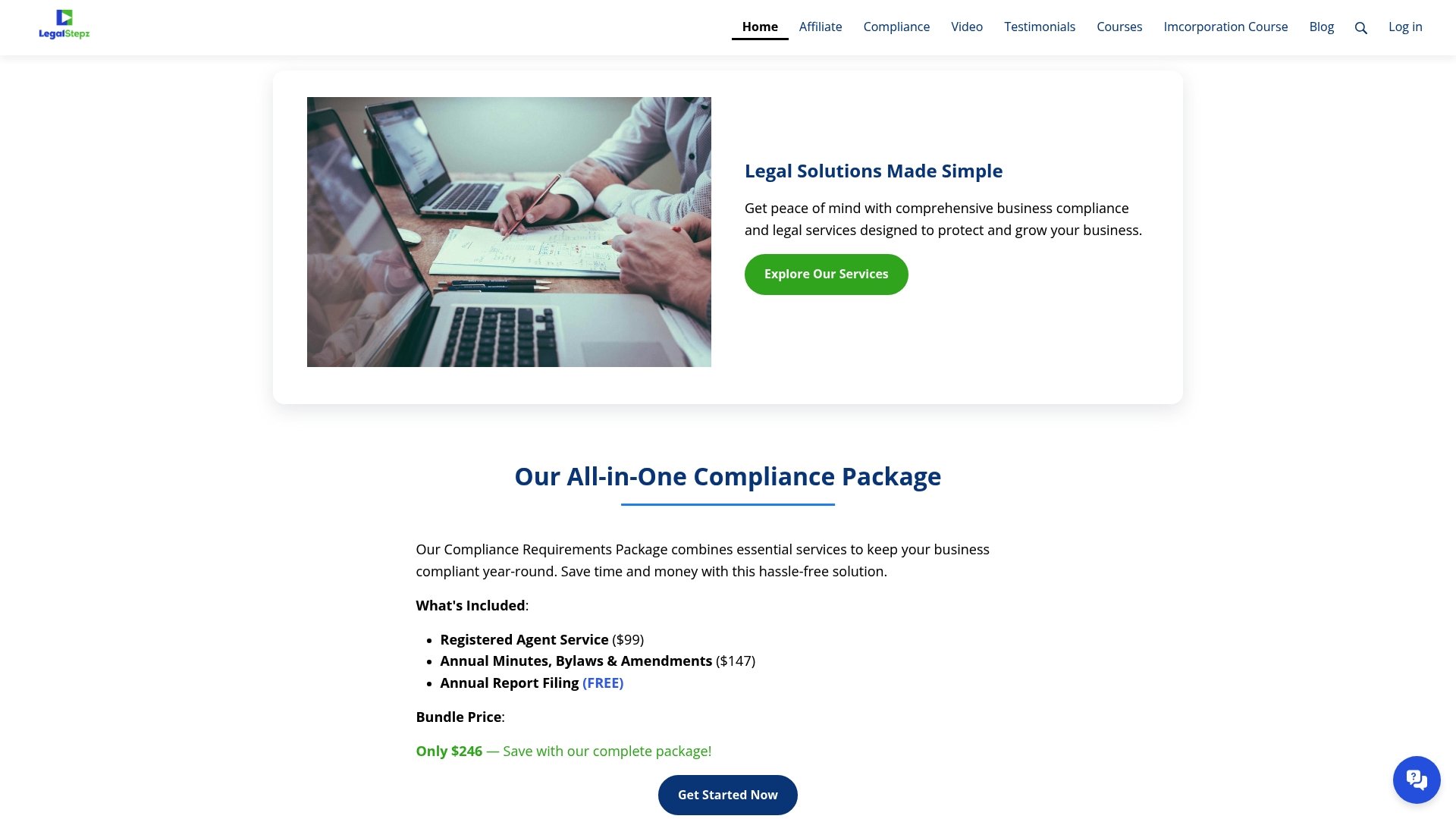
A filing service makes the most sense when you are short on time, unsure which form applies to your entity, or already dealing with a suspended status that needs untangling. If you'd rather understand the process yourself first, Step-by-step courses covering entity formation and trademark registration are also available for owners who want to handle filings in-house going forward. Either way, start at the Legal Stepz site to see current filing and registered agent packages.
This article is general information, not a substitute for advice from a qualified lawyer. Consult a qualified legal professional about your own circumstances before acting on anything here.
Sources
- Statements of Information Filing Tips :: California Secretary of State
- My business is suspended | California Franchise Tax Board
- Corporations and Cooperatives - California :: California Secretary of State (forms & fees)
- Instructions for Completing the Statement of Information (Form SI-550)
FAQ
What Is a California Statement of Information?
It's a periodic filing that updates the state's public record of your corporation's officers, directors, addresses, and agent for service of process. Stock corporations file it annually, while most LLCs and nonprofits file every two years, using Form SI-550, SI-550 NC, or SI-100 depending on entity type.
How Much Does It Cost to File?
Filing fees run $20 to $25, depending on your entity type, plus small optional fees if you need a copy or certified copy later. There's no fee for a no-fee termination document, which is separate from the standard Statement of Information.
What Happens If I File Late?
The Franchise Tax Board can assess a penalty, commonly $250 for stock corporations and LLCs, and continued nonfiling risks suspension or forfeiture. Reviving a suspended entity usually means resolving obligations with both the FTB and the Secretary of State.
Can I Use the Statement of No Change Every Time?
Only after you've filed at least one complete SI-550 that answers the AB 3075 labor-judgment question. If nothing on file has changed since then, SI-550 NC is faster than resubmitting the full form.
Do I Need an Account to File Online in 2026?
Yes. Starting January 1, 2026, the Secretary of State requires filers to establish User Access in bizfileOnline before the online filing option becomes available, so set this up before your deadline gets close.
How Do I Know If I Need Help Filing?
If you're uncertain about your entity's filing category, dealing with a suspended status, or simply don't have time to verify every field, a filing service like Legal Stepz can prepare and submit the statement correctly on your behalf.