

Changing your registered agent is a formal legal procedure, not a simple administrative update. California business owners who treat it as routine paperwork risk missed lawsuits, state penalties, and loss of good standing. The most common registered agent change mistakes include premature termination of the old agent, using non-qualifying addresses, skipping consent verification, and filing the wrong forms. Each error carries real consequences under California law. This guide breaks down every major pitfall, explains why it happens, and tells you exactly how to avoid it.
1. Common registered agent change mistakes: firing your old agent too soon
Terminating your current registered agent before the California Secretary of State officially accepts your change filing is one of the most damaging registered agent errors you can make. Your old agent remains legally responsible for receiving service of process until the state processes and approves the new appointment. That processing window can take anywhere from one to four weeks depending on filing volume and method.
Failing to notify your outgoing agent of the pending change creates a second problem. The agent may stop forwarding mail or flag your account as inactive, causing legal notices to fall through the cracks during the transition. A lawsuit summons or tax notice missed during this gap can result in a default judgment against your business.

Pro Tip: Keep your old agent's service active and paid until you receive written confirmation from the California Secretary of State that the new agent is on record. Overlap costs a few extra dollars. A default judgment costs far more.
The safest approach is to notify your outgoing agent in writing on the same day you submit your change filing. Confirm the date you expect the state to process the update, and ask your old agent to forward any mail received after that date.
2. Using a PO Box, virtual office, or mail-forwarding address
California law requires every registered agent to maintain a physical street address in the state. A PO Box, virtual office suite, or mail-forwarding service does not satisfy this requirement. The California Secretary of State will reject any filing that lists a non-qualifying address for the registered agent.
The consequences go beyond a rejected form. Non-qualifying addresses can block your ability to obtain a certificate of good standing, which you need for bank loans, contracts, and business licenses. State enforcement of address requirements has intensified as regulators work to prevent shell company fraud.
| Address type | Qualifies in California? | Risk if used |
|---|---|---|
| Physical street address | Yes | None |
| PO Box | No | Filing rejection |
| Virtual office | No | Filing rejection, loss of good standing |
| Mail-forwarding service | No | Missed legal notices, rejected filings |
Pro Tip: If you work from home and prefer privacy, use a professional registered agent service with a verified California street address rather than listing your home address on public state records.
California statutes require the registered agent to be physically present at the listed address during normal business hours. A virtual office that only receives mail does not meet that standard. Legalstepz provides a compliant California street address as part of its registered agent service, removing this risk entirely.
3. Skipping new agent consent before filing
Filing a registered agent change without first obtaining the new agent's explicit consent is a registered agent selection pitfall that catches many California business owners off guard. California statutes require the incoming agent to agree to the appointment before the filing is submitted. Submitting the form without that consent leads to rejection and delays.
Agent consent is not a formality. If a person or entity is listed as your registered agent without their knowledge, they have no obligation to accept legal documents on your behalf. Any service of process delivered to an unconsenting agent may be legally invalid, exposing your business to default judgments.
To document consent properly, follow these steps:
- Get written confirmation from the new agent before completing any state form.
- If using a professional service, obtain their acceptance letter or service agreement.
- If using an individual, have them sign a consent statement with the date.
- Keep this documentation on file even after the state accepts the filing.
- Verify the agent's California address at the same time you confirm consent.
Professional registered agent services like Legalstepz include consent documentation as part of their onboarding process, so you are never left guessing whether the requirement is met.
4. Submitting the wrong form or incorrect fee
California has specific form requirements for changing a registered agent, and submitting an outdated version or the wrong document type is a filing error that causes immediate rejection. The California Secretary of State processes agent changes through a Statement of Information or a dedicated agent change form depending on your entity type. Using the wrong one wastes weeks.
Filing fees for agent changes typically range from $10 to $60 depending on the state and filing method. California's fees fall within this range, and submitting the wrong amount causes rejection just as surely as the wrong form. Processing times run one to four weeks for standard filings, so an avoidable error doubles your exposure window.
Common filing errors that lead to rejection:
- Using an outdated form version downloaded from a third-party site
- Leaving required fields blank, including the agent's full legal name
- Submitting without an authorized signature from a company officer
- Paying the wrong fee or using an unaccepted payment method
- Forgetting to include the entity's exact legal name as registered with the state
Business owners often mistake updating internal records or operating agreements as fulfilling state requirements. Only a formally submitted and accepted state filing changes the agent of record. Updating your own files without filing with the state leaves your old agent listed publicly.
Pro Tip: Always download forms directly from the California Secretary of State's official website on the day you plan to file. Form versions change, and third-party copies are frequently outdated.
5. Forgetting to update agent information in every state
If your business operates as a foreign LLC registered in multiple states, changing your registered agent in California alone does not cover your compliance obligations. Each state requires a separate filing to update the agent of record. Missing even one state leaves your business exposed to missed legal notices in that jurisdiction.
This is one of the most overlooked mistakes during agent update processes for multi-state operators. A California LLC that also has foreign registrations in Nevada, Texas, and New York must file agent change documents with each of those states individually. Each has its own form, fee, and processing timeline.
The practical fix is to create a compliance checklist that lists every state where your business holds an active registration. When you initiate an agent change, work through that list state by state. Legalstepz can assist with multi-state filings to keep every registration current and consistent.
6. Letting your registered agent service lapse after the change
Completing the agent change filing is not the end of your obligation. Registered agent subscriptions must be actively maintained to avoid compliance risk. If your new agent cancels service because of a missed payment or account issue, your business loses its agent of record without any immediate notice from the state.
A lapse in registered agent service exposes your business to penalties and loss of good standing. California can administratively dissolve a business that fails to maintain a valid registered agent on file. Reinstatement after dissolution requires additional filings, fees, and time.
Best practices for maintaining continuous service:
- Set up automatic renewal for your registered agent subscription.
- Keep your billing information current with your agent service provider.
- Monitor your registered agent's status on the California Secretary of State's business search portal at least once a year.
- Store your agent service agreement and renewal dates in a central compliance file.
Pro Tip: Pair your registered agent renewal reminder with your annual Statement of Information deadline. Both are recurring California compliance obligations, and tracking them together prevents either from slipping.
Viewing the agent change as risk management rather than a one-time task is the mindset shift that separates businesses that stay compliant from those that face avoidable penalties. The ongoing relationship with your agent is as important as the initial filing.
Key takeaways
Avoiding registered agent transition errors requires precise filing, confirmed consent, a qualifying California address, and continuous service maintenance after the change is complete.
| Point | Details |
|---|---|
| File before terminating old agent | Keep the outgoing agent active until the state confirms the new appointment. |
| Use a physical California address | PO Boxes and virtual offices cause filing rejections and block good standing certificates. |
| Confirm new agent consent in writing | California law requires agent consent before submission; document it every time. |
| Use current official forms | Download forms directly from the California Secretary of State on the day of filing. |
| Maintain service after the change | Lapsed agent subscriptions can trigger administrative dissolution in California. |
What I've learned from watching California businesses get this wrong
Legal experts warn that owners often underestimate the registered agent change process, treating it as mere paperwork rather than a compliance obligation with real legal weight. I have seen that pattern play out repeatedly, and the consequences are almost always avoidable.
The mistake I see most often is not a filing error. It is a mindset error. Business owners focus on the destination, which is getting the new agent on record, and ignore the transition period. That gap between filing and state acceptance is where lawsuits get missed and default judgments get entered.
The second pattern I notice is overconfidence in DIY filings. California's forms look straightforward, but the address requirements, consent rules, and multi-state obligations add layers that trip up even experienced operators. Professional assistance is not a luxury for large companies. It is a practical safeguard for any business that cannot afford to lose good standing or miss a legal notice.
My advice is simple. Treat every registered agent change as a risk management exercise. Map out every state where you are registered, confirm consent before you file anything, and never cancel your old agent until the state sends confirmation. The process takes a few extra days done correctly. Fixing it after something goes wrong takes months.
— Peter
How Legalstepz helps California businesses change agents correctly
Changing your registered agent without errors requires the right address, confirmed consent, and accurate filings submitted on time.
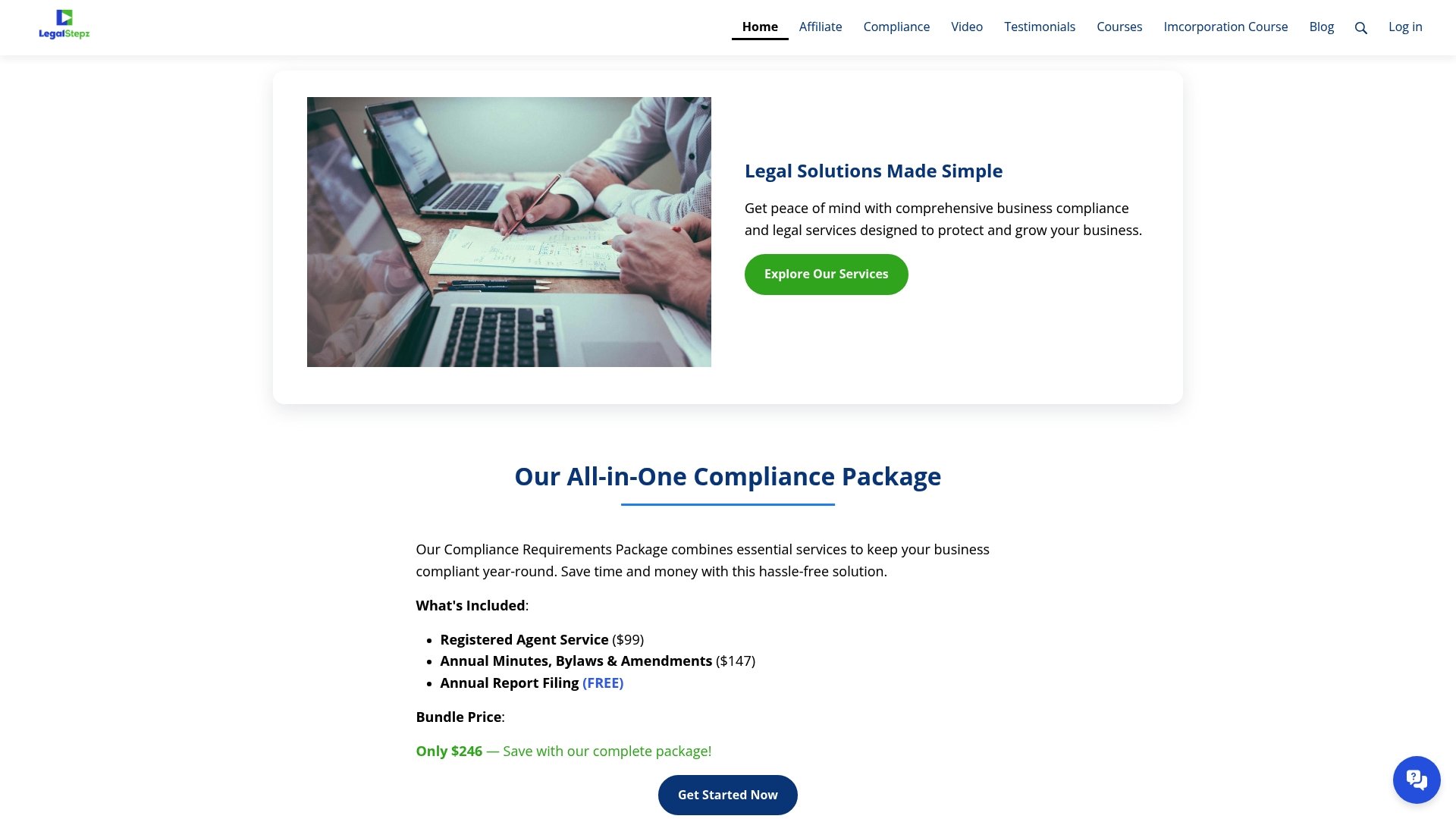
Legalstepz provides registered agent services with verified California street addresses that meet state requirements. The service includes consent documentation, form preparation, and ongoing account management so your agent status never lapses. Whether you are making your first agent change or managing registrations across multiple states, Legalstepz handles the compliance details that cause the most costly mistakes. Visit Legalstepz to get your agent change filed correctly the first time.
FAQ
What form do I use to change a registered agent in California?
California LLCs file a Statement of Information with the California Secretary of State to update their registered agent. Always download the current version directly from the Secretary of State's official website on the day you file.
Can I use a PO Box as my registered agent address in California?
No. California law requires a physical street address in the state. PO Boxes, virtual offices, and mail-forwarding services do not qualify and will cause your filing to be rejected.
Do I need my new agent's permission before filing the change?
Yes. California statutes require the incoming agent to consent to the appointment before the filing is submitted. Filing without consent leads to rejection and potential compliance gaps.
What happens if I forget to update my registered agent in another state?
Each state where your business holds a foreign registration requires its own separate agent change filing. Missing a state leaves your business without a valid agent of record in that jurisdiction, which exposes you to missed legal notices and penalties.
How long does a California registered agent change take to process?
Standard filings typically take one to four weeks to process. Keep your old agent active and paid throughout this window to avoid any gap in legal coverage.