

Forming a California LLC or corporation starts with three moves: run a name search on the California Secretary of State Business Search, file your Articles of Organization or Articles of Incorporation through bizfileOnline.sos.ca.gov and request an Employer Identification Number from the IRS. Once those are done, register with the California Franchise Tax Board (FTB) and, if you sell taxable goods, the California Department of Tax and Fee Administration (CDTFA). If you want hands-off help with any of these steps, Legalstepz handles formation filings, Statements of Information, and registered agent services for California entities.
- Confirm your entity name is available using BusinessSearch.sos.ca.gov
- Choose entity type: LLC or corporation
- File formation documents online at bizfileOnline.sos.ca.gov
- Appoint a registered agent with a California street address
- Get your EIN from the IRS at irs.gov
- Register with the FTB and CDTFA where applicable
- File your initial Statement of Information within 90 days
Table of Contents
- What forms, fees, and deadlines do you need before you start?
- How do you check and reserve your business name in California?
- How do you file formation documents with the California Secretary of State?
- What are the registered agent rules and Statement of Information deadlines?
- What tax registrations does a new California entity need?
- How do you find the local permits and licenses your business needs?
- What ongoing compliance keeps your California entity in good standing?
- What does it cost and how long does it take?
- Where do you get the official forms and authoritative help?
- Key Takeaways
- What California founders get wrong about registration
- Legalstepz makes California compliance straightforward
- Authoritative sources to verify forms, fees, and deadlines
What forms, fees, and deadlines do you need before you start?
Before you open a filing session, confirm you have the right form, the right fee, and the right deadline in front of you.
| Filing | Entity | Fee | Deadline |
|---|---|---|---|
| Articles of Organization (LLC-1) | Domestic LLC | — | At formation |
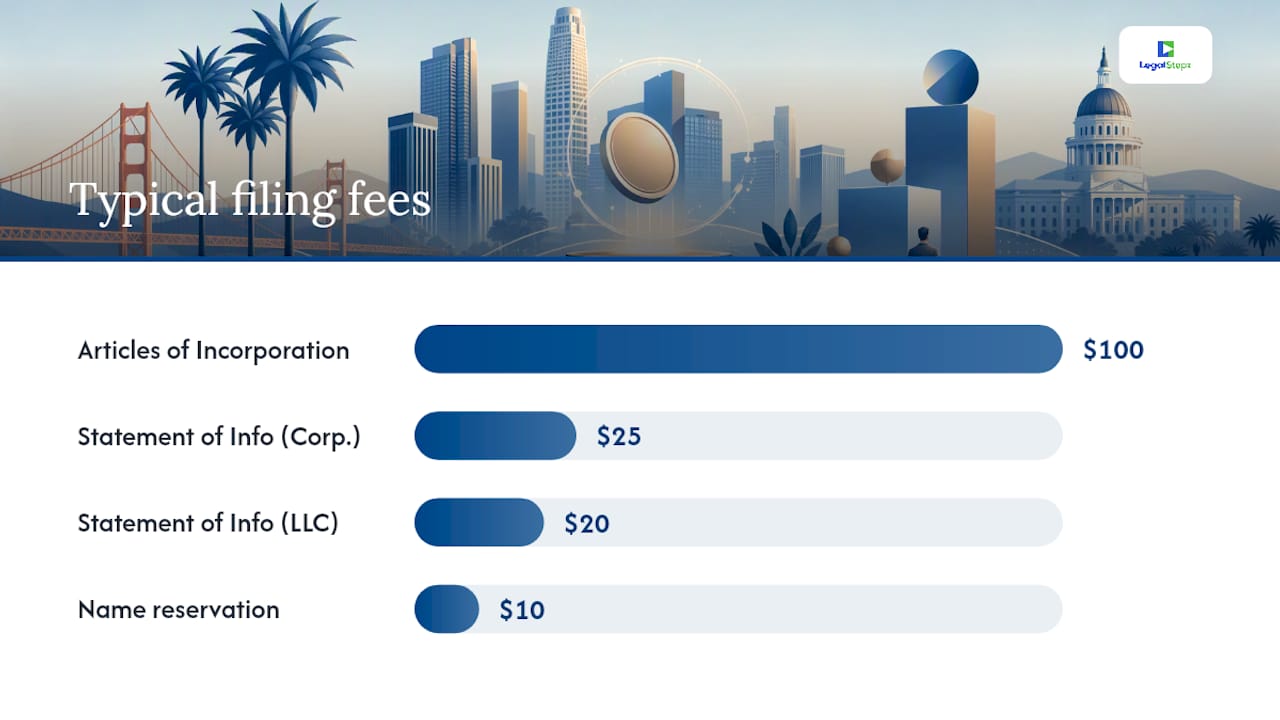
| Articles of Incorporation | Domestic corporation | $100 | At formation |
| Statement of Information (LLC-12) | LLC | $20 | Within 90 days, then biennial |
| Statement of Information (SI-550) | Stock corporation | $25 | Within 90 days, then annual |
| Name Reservation | All entities | $10 | Before filing if needed |
Preflight checklist before you file:
- Exact legal entity name, including required ending (LLC, Inc., Corp.)
- California street address for your principal office (no P.O. Boxes)
- Registered agent name and California street address
- EIN ready or applied for before opening a bank account
- Credit card for state filing fees
How do you check and reserve your business name in California?
Name problems are the single most common reason filings get rejected. Check availability before you spend a dollar on filing fees.
- Go to BusinessSearch.sos.ca.gov and search your proposed name. Look for exact matches and close variations.
- Confirm your name includes a required ending: "LLC," "L.L.C.," "Inc.," "Corp.," or another approved designator.
- Reserve the name through bizfileOnline.sos.ca.gov if you need 60 days before filing. The reservation fee is $10.
- If you plan to operate under a name different from your legal entity name, file a Fictitious Business Name (DBA) with the county clerk where your principal office sits.
- Check the USPTO trademark database at tmsearch.uspto.gov to confirm no one holds a federal trademark on your chosen name.
Pro Tip: State registration does not give you trademark rights. If your brand name matters to the business, file a federal trademark application or use Legalstepz's trademark registration course to understand the process before a competitor locks the name.
For a deeper look at common business name mistakes California founders make, Legalstepz has a practical guide worth reading before you commit to a name.
How do you file formation documents with the California Secretary of State?
Online filing is faster than mail and the Secretary of State recommends it for most entity types.
- Corporations: — File Articles of Incorporation at bizfileOnline.sos.ca.gov or businessfilings.sos.ca.gov. Include your entity name with required ending, registered agent, number of authorized shares, and incorporator signature.
Processing times: Online filings typically process faster than paper submissions. Mail filings can take several weeks depending on volume. If your timeline is tight, online is the only practical choice.
Once your formation documents are approved, the Secretary of State assigns your file number. Save it. Every future filing, including your Statement of Information, requires it.
What are the registered agent rules and Statement of Information deadlines?
Every California entity must have an agent for service of process with a physical California street address. You have two options: an individual who lives in California and consents to the role, or a registered corporate agent listed with the Secretary of State.
Initial Statement of Information deadlines:
- LLCs: file Form LLC-12 within 90 days of registration, then every two years
- Corporations: file Form SI-550 within 90 days of registration, then annually during a specific 6-month window
Missing the Statement of Information triggers penalties and can lead to suspension or forfeiture of your entity's active status, per the CA SOS filing guidelines. A suspended entity cannot legally conduct business or defend a lawsuit in California.
Common filing errors to avoid:
- Using a P.O. Box for the principal office or agent address (not accepted)
- Entering the wrong file number (always verify on BusinessSearch.sos.ca.gov first)
- Leaving the registered agent field blank or listing an agent not registered with the SOS
Legalstepz provides registered agent services and handles Statement of Information filings, so these deadlines do not fall through the cracks.
What tax registrations does a new California entity need?
Get these in order, because each one unlocks the next step.
- California Franchise Tax Board: Register your entity and expect the $800 minimum franchise tax in your first full year. The FTB also handles suspension and revivor if your entity falls out of good standing.
Timeline tip: Apply for your EIN the same day your formation documents are approved. Registration with the FTB follows automatically for most entities, but confirm your account is active before filing your first return.
How do you find the local permits and licenses your business needs?
State registration does not cover city or county requirements, and skipping local permits is a fast way to face fines or forced closure.
- Use CalGold (calgold.ca.gov) to search by business activity and address. It returns a list of permits required at the state, county, and city levels.
- Check your city's business license portal directly. Most California cities require a general business license regardless of industry.
- Food service: Requires a county health permit, seller's permit from CDTFA, and often a city zoning clearance.
- Contractors: Need a license from the California Contractors State License Board (CSLB) before taking paid work.
- Professional licenses: Doctors, attorneys, accountants, and real estate agents need state board licenses independent of entity formation.
Budget time and fees for local permits before you set an opening date; if you anticipate an exit in New York, consider how to sell your manufacturing business in New York metro as part of your long-term planning. Some permits take weeks to process.
What ongoing compliance keeps your California entity in good standing?
Formation is a one-time event. Compliance is permanent.
- Statements of Information: LLCs file biennially; corporations file annually. Both can be filed at bizfileOnline.sos.ca.gov.
- Recordkeeping: Keep your operating agreement or bylaws, meeting minutes, financial statements, and a copy of every filed document in a secure location. For guidance on annual compliance requirements, Legalstepz covers what California LLCs and corporations must maintain each year.
Penalty note: A $250 penalty applies for a late or missing Statement of Information, and the entity can be suspended. Reinstatement requires filing all overdue documents plus resolving any FTB balance.
What does it cost and how long does it take?
| Step | Typical Fee | Timeline |
|---|---|---|
| Articles of Organization (LLC) | — | Days online; weeks by mail |
| Articles of Incorporation | $100 | Days online; weeks by mail |
| Statement of Information (LLC) | $20 | Same day online |
| Statement of Information (Corp.) | $25 | Same day online |
| Registered agent (annual) | — | Immediate upon appointment |
| Name reservation | $10 | Same day online |
| County business license | Varies | 1–4 weeks |
For a full breakdown of LLC formation costs, including professional fees and registered agent options, Legalstepz has a dedicated guide. The fastest path to opening a bank account: file online, get your EIN the same day, and you can typically walk into a bank within a week of formation.
Where do you get the official forms and authoritative help?
Government portals:
- bizfileOnline.sos.ca.gov: Formation filings, Statements of Information, name reservations
- BusinessSearch.sos.ca.gov: Confirm entity name and file number before every filing
- ftb.ca.gov: Franchise tax accounts, suspension status, revivor
- cdtfa.ca.gov: Sales tax registration and returns
Legalstepz resources:
- Statement of Information filing service (LLC and corporation)
- Registered agent service with California address
- Formation courses for LLCs and corporations
- Trademark registration course
When to DIY: if you are comfortable with government portals and have a straightforward domestic LLC with one or two members, filing online yourself is reasonable. When to hire help: if you have multiple owners, need a registered agent for privacy, or want someone tracking your compliance deadlines, Legalstepz is built for exactly that. For founders unsure whether they even need a lawyer to incorporate, that guide walks through the decision clearly.
Key Takeaways
Registering a California LLC or corporation requires filing formation documents with the CA Secretary of State, obtaining an EIN from the IRS, and filing a Statement of Information within 90 days.
| Point | Details |
|---|---|
| File formation documents online | Use bizfileOnline.sos.ca.gov for faster processing than mail submissions. |
| Statement of Information deadline | Both LLCs and corporations must file within 90 days of registration or face penalties. |
| EIN before bank account | Apply at irs.gov immediately after formation approval; banks require it. |
| Ongoing franchise tax | California's $800 annual minimum applies to most entities; missing it triggers FTB suspension. |
| Legalstepz services | Handles Statement of Information filings, registered agent, and formation courses for California entities. |
What California founders get wrong about registration
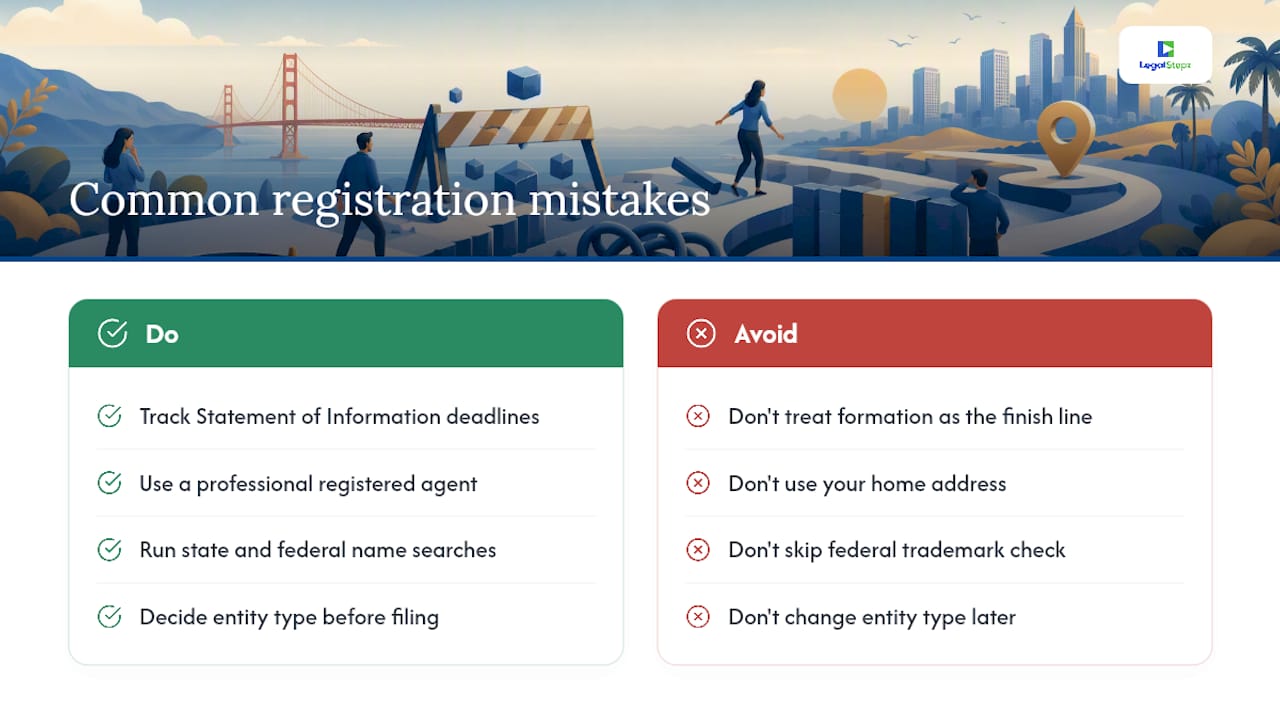
Most founders treat formation as the finish line. It is the starting gun.
The filings that actually get people into trouble are not the Articles of Organization. Those are straightforward. The problems cluster around the Statement of Information: founders file it once, assume it is done, and then miss the biennial or annual renewal because no one is tracking the deadline. By the time they discover the suspension, they have missed a contract, a bank requirement, or a funding round.
The second pattern is the registered agent problem. Using your home address works legally, but it means your name and address appear on a public state record that anyone can search. A professional registered agent solves that and guarantees someone is physically available to receive service of process during business hours.
One more thing worth saying plainly: the name search step gets rushed. Founders check the SOS database, see no exact match, and file. Then they discover a competitor holds a federal trademark on the same name. State registration and federal trademark protection are completely separate systems. Run both checks before you commit.
Pro Tip: If you are not sure whether to form an LLC or a corporation, read through the questions to ask when starting a business before you file anything. Changing entity type after formation is expensive and time-consuming.
Legalstepz makes California compliance straightforward
California compliance has real teeth: missed Statements of Information trigger $250 penalties, FTB suspension blocks you from conducting business, and a bad registered agent address can mean missed lawsuits. Legalstepz removes those risks directly.
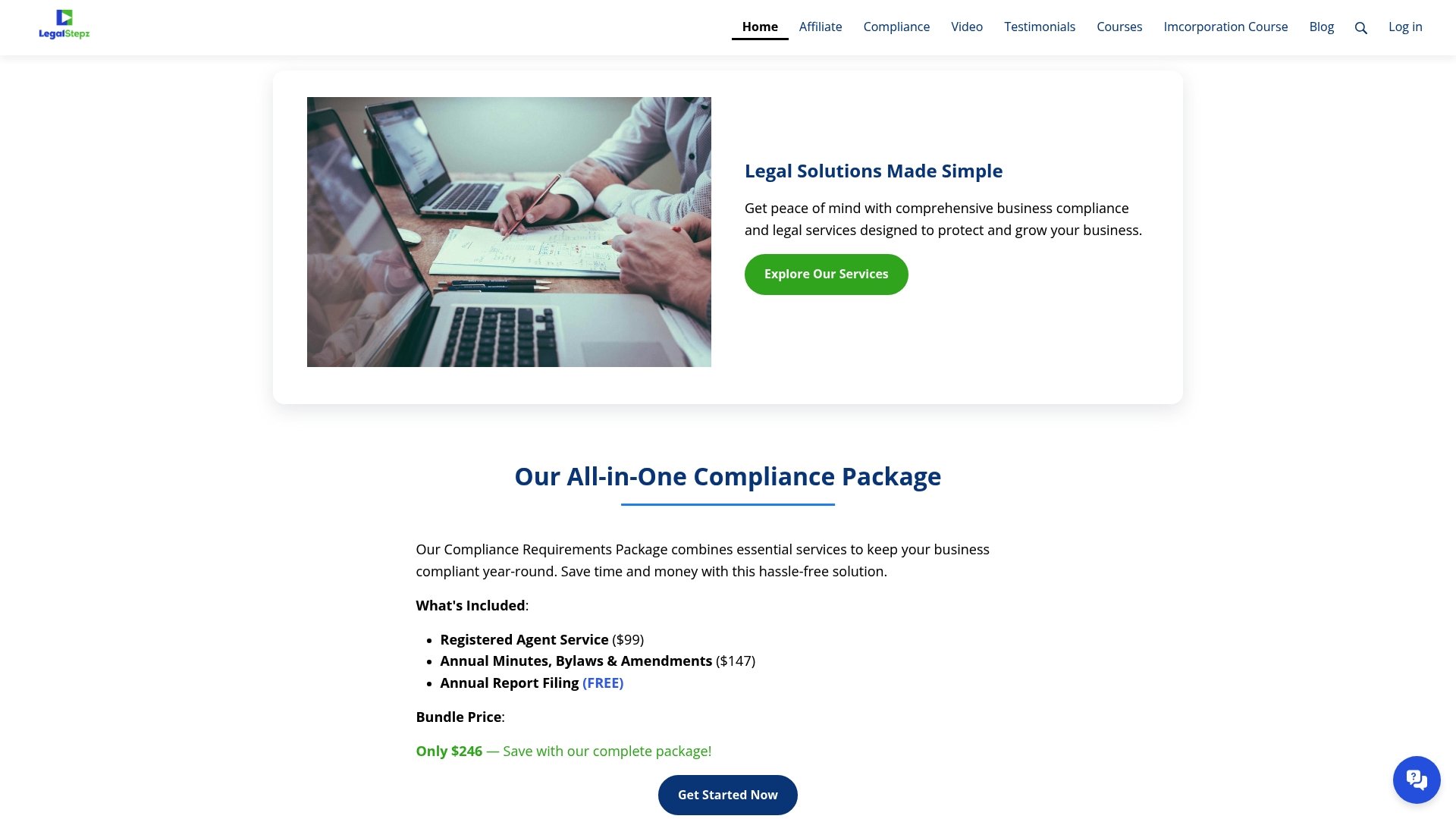
The services map to every step in this guide: file your Statement of Information (LLC-12 or SI-550), get a California registered agent address that keeps your home address off public records, draft your annual minutes and bylaws, and work through formation and trademark courses at your own pace. No retainer, no hourly billing. You buy what you need.
If you want hands-off compliance from day one, get started with Legalstepz today and pick the service that matches where you are in the formation process.
Authoritative sources to verify forms, fees, and deadlines
Before filing, confirm current fee amounts and required attachments directly on the official pages. Fees and processing times do change.
- Starting a Business – Entity Types :: California Secretary of State
- Frequently Asked Questions :: California Secretary of State
- Statements of Information Filing Tips :: California Secretary of State
- Instructions for Completing the Statement of Information (Form LLC-12)
- Instructions for Completing the Statement of Information (Form SI-550)
- bizfileOnline.sos.ca.gov
- Franchise Tax Board (referenced in CA SOS instructions)
Always run a BusinessSearch.sos.ca.gov lookup immediately before filing to confirm your exact entity name and file number. A single character mismatch causes rejection.
This article provides general information about California business formation and is not legal or tax advice. Verify current fees, deadlines, and requirements with the California Secretary of State, IRS, FTB, and CDTFA, or consult a qualified professional for your specific situation.