

Registering a business name in California is the legal process of claiming your company's identity with either the California Secretary of State or your county clerk, depending on your business structure. The path you take depends on whether you are forming a corporation or LLC at the state level, or operating as a sole proprietor under an assumed name at the county level. Both paths have distinct requirements, fees, and deadlines. This guide walks you through every step of the California business name registration process so you can operate legally and protect your brand from day one.
How to register a business name in california: two paths
California business name registration follows two separate tracks, and choosing the wrong one is the most common mistake new entrepreneurs make.
Track 1: State-level entity name registration applies to corporations, LLCs, and limited partnerships. When you file Articles of Incorporation or Articles of Organization with the California Secretary of State, your chosen entity name is registered at the state level. No two active entities can share the same name in California's state registry.

Track 2: County-level Fictitious Business Name (FBN) filing applies to sole proprietors, general partnerships, and any business operating under a name other than its legal name. This is commonly called a DBA, short for "doing business as." California DBA filing requirements apply whenever you operate under a name different from your own legal name or your registered entity name.
The distinction matters because the two tracks serve different legal purposes and involve different agencies, fees, and timelines. A sole proprietor named Maria Garcia who wants to operate as "Coastal Candles" must file a DBA with her county clerk. An entrepreneur forming "Coastal Candles LLC" files directly with the state through the bizfile online portal.
What types of businesses must register a name in california?
The requirement to register depends on your business structure and the name you plan to use.
- Sole proprietors using any name other than their own full legal name must file a DBA. Sole proprietors in California can operate without forming an entity, but the assumed name still requires county registration.
- General partnerships using a name that does not include the surnames of all partners must file an FBN statement.
- LLCs and corporations that operate under a brand name different from their registered entity name must also file a DBA at the county level, in addition to their state registration.
- LLCs and corporations using their exact registered entity name do not need a separate DBA filing.
A practical example: if you form "Garcia Enterprises LLC" but market your business as "Coastal Candles," you need both a state entity registration and a county DBA. The state registration covers the LLC name. The DBA covers the brand name you actually use with customers.
How do you check business name availability in california?
A name availability check is the first step before any filing. Skipping it wastes time and money if your chosen name is already taken.
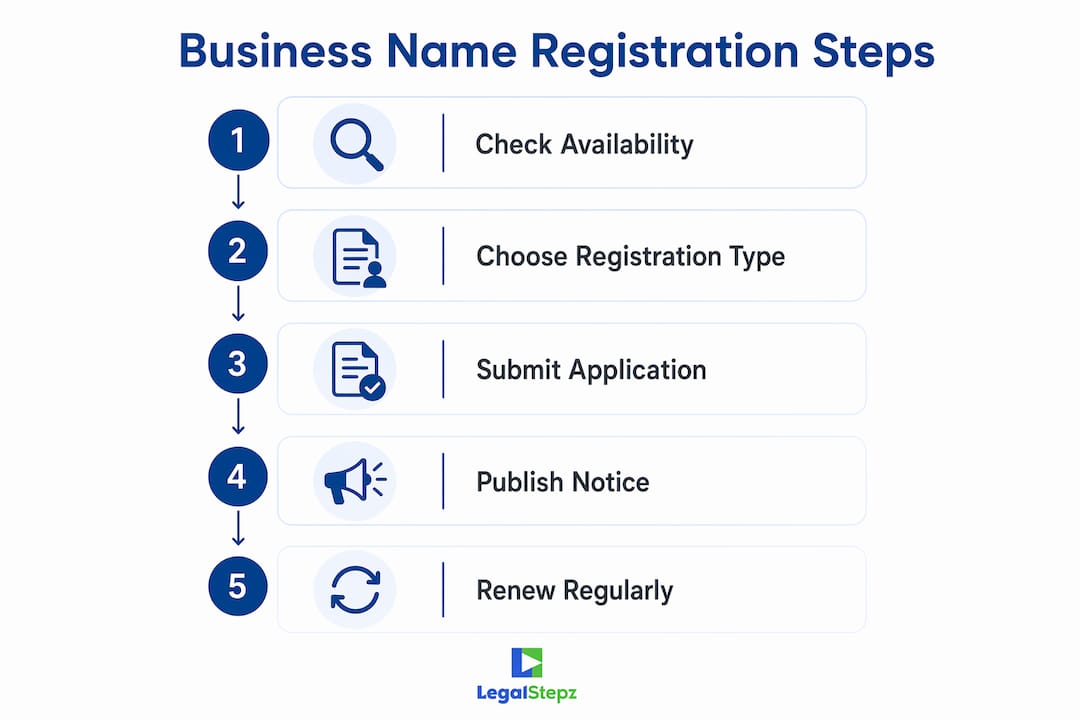
For state entity names, use the California Secretary of State's bizfile portal to search active entity names. The search is free and instant. Running this check early before drafting marketing materials avoids costly rework if the chosen name is unavailable at filing.
For county DBA names, visit your specific county clerk or recorder's website. Each county maintains its own database of registered fictitious business names. A name cleared in Sacramento County may already be taken in Los Angeles County.
Beyond state and county checks, you should also:
- Search the United States Patent and Trademark Office (USPTO) TESS database for existing federal trademarks on your name.
- Check domain name availability through registrars like GoDaddy or Namecheap.
- Search social media platforms to confirm your brand name is available across channels.
Pro Tip: Run all three checks simultaneously before you fall in love with a name. Clearing the state registry means nothing if a federal trademark holder can send you a cease-and-desist letter after you have already printed packaging.
Step-by-step: the california business name registration process
The steps differ depending on whether you are registering a state entity name or filing a county DBA. Here is how each path works.
Registering an LLC or corporation name with the state
- Search the bizfile portal for name availability and confirm your chosen name meets California naming rules (required designators like "LLC" or "Inc." must be included).
- Reserve the name (optional). California allows name reservation for 60 days at $10 per reserved name. This buys time before you file formation documents. Reservation does not grant trademark rights or guarantee final approval.
- File your formation documents. Submit Articles of Organization (for LLCs) or Articles of Incorporation (for corporations) through the bizfile portal. State filing fees apply and vary by entity type.
- Receive your endorsed documents. The California Secretary of State returns stamped copies confirming your entity name is officially registered.
Filing a county DBA (fictitious business name statement)
- Obtain the FBN form from your county clerk or recorder's office. Many counties post forms online, but county DBA filing procedures vary widely, so check your specific county's requirements before submitting.
- Complete and submit the form. Many counties require a signed paper form with payment to process DBA filings, even if initial forms are completed online. Filings become final and non-refundable once submitted.
- Pay the filing fee. DBA fees vary by county and typically range from $25 to $100 or more depending on the number of business owners listed.
- Publish in a qualifying newspaper. After filing, California requires publication in a qualifying newspaper for 4 consecutive weeks within about 45 days of filing. The newspaper must be adjudicated for legal notices in your county.
- File the affidavit of publication. After the publication run ends, the newspaper provides an affidavit. File this with your county clerk to complete the process.
Pro Tip: Keep endorsed copies of your FBN statement and the affidavit of publication in a dedicated compliance folder. Banks require these documents to open a business checking account under your DBA name.
State vs. county registration: quick comparison
| Point | State Entity Name (LLC/Corp) | County DBA (FBN) |
|---|---|---|
| Who files | LLCs, corporations | Sole proprietors, partnerships, entities using brand names |
| Where to file | California Secretary of State via bizfile | County clerk or recorder |
| Publication required | No | Yes, 4 consecutive weeks |
| Name exclusivity | Statewide | County only |
| Trademark protection | No | No |
What are the most common mistakes when registering a business name?
Knowing the pitfalls saves you from delays, rejected filings, and legal exposure.
- Skipping the publication requirement. Missed DBA publication invalidates your ability to enforce contracts under the business name. This is the most common compliance failure point.
- Assuming a DBA grants exclusive rights. Another business can register the identical name in a different county. A DBA is a transparency tool, not ownership of the name.
- Treating name reservation as final approval. A 60-day name reservation holds your chosen name temporarily. The California Secretary of State can still reject it during the formal filing review.
- Ignoring county-specific rules. Filing requirements, accepted payment methods, and supporting documents differ by county. What works in San Diego may not work in Alameda.
- Losing your compliance documents. Endorsed FBN copies and affidavits of publication are required by banks and other institutions. Losing them means requesting duplicates, which takes time and costs money.
"DBA registration is a transparency tool, not ownership of the name." This distinction is the most misunderstood aspect of California business name registration.
Pro Tip: Set a calendar reminder 30 days before your FBN statement expires (typically 5 years from filing). Renewing on time keeps your DBA active without restarting the publication process.
Does registering a business name protect your brand?
Business name registration does not grant exclusive rights to your name. This surprises many entrepreneurs, but it is a critical distinction.
Registering a business name with the state or county does not provide trademark rights. A competitor in another county or state can legally use the same name unless you hold a registered trademark.
To protect your brand fully, consider these additional steps:
- California state trademark registration through the California Secretary of State covers use within the state and costs less than federal registration.
- Federal trademark registration through the USPTO protects your name and logo nationwide and is the strongest form of brand protection available.
- Common law trademark rights arise automatically from actual use in commerce, but they are harder to enforce without registration.
Name registration and trademark registration serve distinct purposes and both deserve consideration for full brand protection. Working with an intellectual property attorney for trademark registration guidance is worth the investment if your brand name is central to your business value.
Key takeaways
Registering a business name in California requires choosing the correct track, completing state or county filings, and meeting publication and compliance obligations to operate legally and protect your brand.
| Point | Details |
|---|---|
| Two separate tracks | LLCs and corporations register with the state; sole proprietors file a county DBA. |
| Name availability check | Search the bizfile portal and your county clerk database before committing to a name. |
| DBA publication is mandatory | California requires 4 consecutive weeks of newspaper publication after filing an FBN statement. |
| Registration is not trademark protection | A registered business name does not stop others from using the same name in commerce. |
| Document retention matters | Keep endorsed FBN copies and affidavits of publication for banking and contract purposes. |
What i have learned after watching hundreds of california filings go wrong
Most entrepreneurs treat business name registration as a checkbox. They file the paperwork, pay the fee, and move on. The publication requirement is where things fall apart. I have seen business owners discover months later that their DBA is unenforceable because they used a newspaper that was not properly adjudicated for legal notices in their county. That is not a technicality you can fix retroactively.
The second thing I keep seeing is the confusion between a registered name and a protected name. Registering "Sunrise Bakery" with your county clerk does not stop a competitor across town from using the same name. Only a trademark does that. Most small business owners do not think about trademark registration until someone else files first, and by then the legal costs dwarf what early registration would have cost.
My honest advice: run your name searches before you print a single business card. Check the bizfile portal, your county DBA database, and the USPTO TESS database on the same afternoon. Then decide on your name. The benefits of forming an LLC in California extend well beyond name registration, but the name is where your brand identity starts. Get it right before you build anything on top of it.
— Peter
How Legalstepz helps you register and form your california business
Getting your business name registered correctly in California takes more than filling out a form. Legalstepz guides California entrepreneurs through the full formation process, from forming a California LLC to handling DBA filings and staying compliant after formation.
The Legalstepz Incorporation Course walks you through name reservation, entity formation, and the filing steps that trip up most first-time business owners. Legalstepz also supports registered agent services, annual minutes, bylaws, and statement of information filings so your business stays in good standing year after year. If you are ready to register your business name and form your California entity the right way, Legalstepz is built for exactly that.
FAQ
What is the cost to register a business name in california?
State entity name reservation costs $10 for 60 days through the California Secretary of State. County DBA filing fees vary by county and typically range from $25 to $100 or more, with additional costs for newspaper publication.
How long does a california DBA registration last?
A California Fictitious Business Name statement is valid for 5 years from the filing date. You must renew before expiration to keep the registration active.
Is a DBA the same as an LLC in california?
No. A DBA is a registered assumed name with no liability protection. An LLC is a legal entity that separates your personal assets from business liabilities and is registered with the California Secretary of State.
Can two businesses have the same DBA name in california?
Yes. DBA registration is county-specific, so two businesses in different counties can legally register the same fictitious business name. Only a trademark prevents others from using your name statewide or nationally.
Do i need a lawyer to register a business name in california?
California law does not require an attorney to file a DBA or form an LLC. However, professional guidance reduces errors, missed deadlines, and compliance gaps that cost more to fix later.