

A North Carolina limited liability company gives owners personal asset protection and pass-through taxation, with no corporate-level state income tax on the LLC itself. The NC Secretary of State makes formation straightforward: file Articles of Organization, and your LLC legally exists the moment the office processes them.
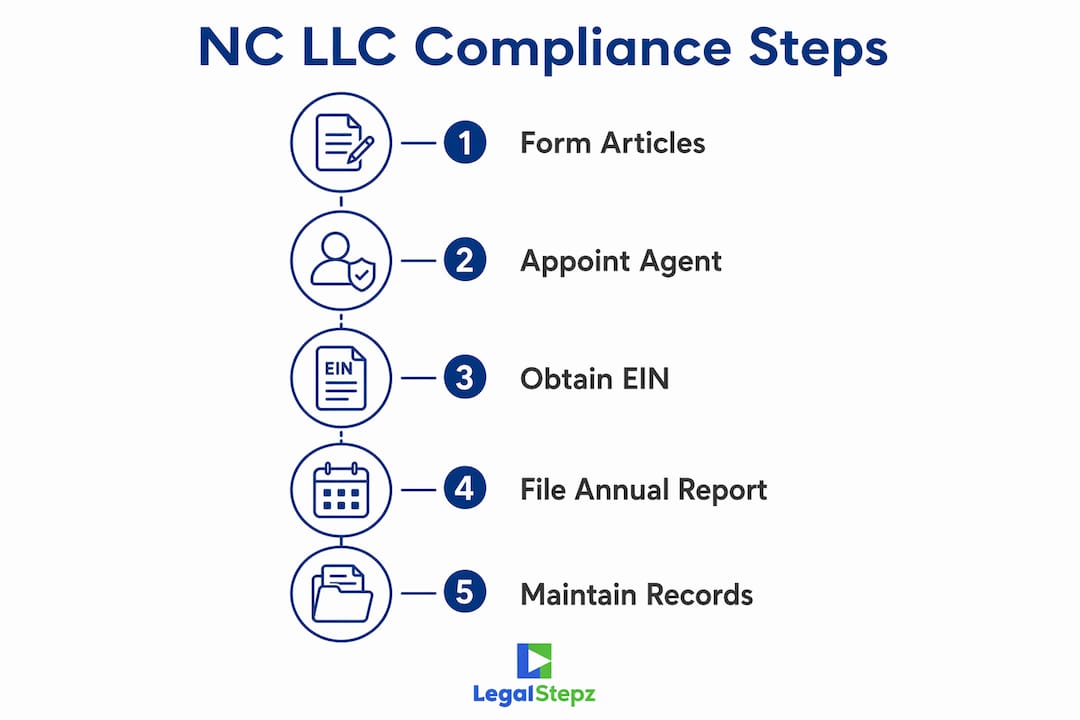
Your immediate formation checklist:
- Search name availability and file Articles of Organization with the NC Secretary of State ($125 state filing fee)
- Appoint a registered agent with a North Carolina physical address
- Obtain a federal EIN from the IRS (free, online)
- Register with NCDOR for a state account ID covering withholding and sales/use tax
- Calendar your annual report deadline: the annual report is due each year by the specified deadline imposed by the NC Secretary of State.
Missing that April 15 filing can trigger administrative dissolution, and reinstatement means back fees plus penalties. Set a recurring reminder the day you form.
Table of Contents
- Does your North Carolina LLC need an operating agreement and EIN?
- When should you consult an attorney or accountant?
- What liability protection does an NC LLC actually give you?
- How do you keep your NC LLC in good standing beyond the annual report?
- How do you dissolve an NC LLC?
- Single-member vs. multi-member LLCs in North Carolina
- What naming rules apply to North Carolina LLCs?
- Does North Carolina impose a franchise or excise tax on LLCs?
- Legalstepz helps California founders stay compliant
- Key Takeaways
Does your North Carolina LLC need an operating agreement and EIN?
Neither is technically required by statute, but both are non-negotiable in practice. The IRS issues an EIN at no cost through its online portal, usually within minutes, and you need it to open a business bank account, hire employees, or elect S-corp taxation.
The operating agreement matters more than most founders expect. Under Chapter 57D of the North Carolina General Statutes, if you have no written agreement, statutory default rules govern everything: profit splits, voting rights, and what happens when a member wants out. Those defaults rarely match what founders actually want. A written agreement lets you customize profit distribution, transfer restrictions, and buy-sell terms from day one.
When should you consult an attorney or accountant?
The NC Secretary of State recommends reviewing Chapters 57D and 55D with legal counsel before filing, especially when the entity structure has long-term tax or governance implications. For a solo founder with a simple business, a CPA can handle most of the tax registration questions. Bring in an attorney when you have multiple members, outside investors, or real estate involved.
California entrepreneurs face an extra layer: if your NC LLC is "doing business" in California, meaning you have employees, an office, or California-sourced revenue, California requires foreign LLC registration and its own annual fees. A tax professional familiar with both states can tell you quickly whether you have CA nexus.
What liability protection does an NC LLC actually give you?
Member liability is limited to each member's capital contribution. Personal assets, your home, savings, and car, stay protected from business debts and lawsuits. That shield holds as long as you maintain it. NC State Extension flags the risk clearly: commingling personal and business funds or ignoring basic recordkeeping can let a court "pierce the corporate veil" and reach your personal assets.

How do you keep your NC LLC in good standing beyond the annual report?
The annual report is the most visible requirement, but it is not the only one. Keep separate business bank accounts, document major decisions in writing, and maintain basic financial records. If you operate under a name different from your LLC's legal name, file an assumed-name certificate with the county Register of Deeds. Business licenses vary by activity and locality; check NCBOLD or contact an EDPNC small business advisor to confirm what your specific business needs.
How do you dissolve an NC LLC?
Voluntary dissolution requires a member vote per your operating agreement (or Chapter 57D defaults), followed by filing Articles of Dissolution with the NC Secretary of State. Before filing, wind up business affairs: pay or settle debts, distribute remaining assets, and notify creditors. The LLC's legal existence ends when the Secretary of State processes the dissolution filing.
Single-member vs. multi-member LLCs in North Carolina
A single-member LLC is taxed as a disregarded entity by default; the IRS treats it like a sole proprietorship on your personal return. A multi-member LLC defaults to partnership taxation. Both structures get the same liability protection under NC law, but governance and tax treatment diverge significantly. Multi-member LLCs need a written operating agreement far more urgently, since Chapter 57D's default rules on profit allocation and member exit can create real disputes without one.
What naming rules apply to North Carolina LLCs?
Your LLC name must include "Limited Liability Company," "LLC," or "L.L.C." It cannot imply a connection to a government agency or use restricted words like "bank," "trust," or "insurance" without regulatory approval. The name must be distinguishable from existing entities on the NC Secretary of State's records. You can reserve a name for 120 days by filing a Name Reservation form. If you plan to operate under a trade name, file a DBA with the county Register of Deeds where your principal office sits.
Does North Carolina impose a franchise or excise tax on LLCs?
North Carolina does not impose a separate franchise tax on LLCs the way it does on corporations. LLCs with pass-through taxation pay state income tax at the member level, not the entity level. However, if your LLC elects to be taxed as a C-corporation, the corporate income tax rate applies. Register with the NC Department of Revenue after formation; many account IDs issue instantly online, making this one of the faster post-formation steps.
Legalstepz helps California founders stay compliant
California entrepreneurs often form in North Carolina and then realize they still need California compliance, especially if they have any presence or activity in the state.
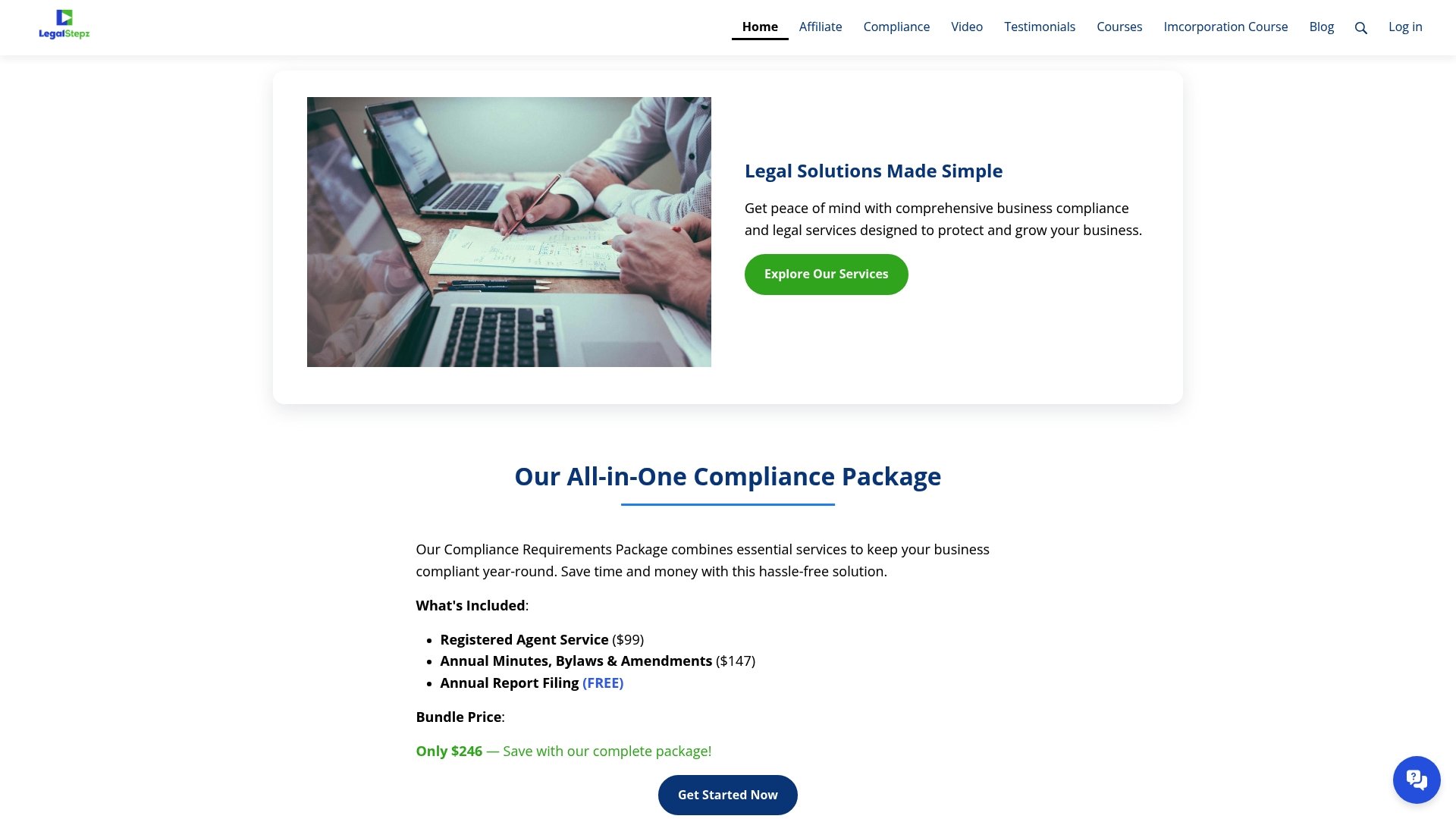
Legalstepz handles the California side: filing your Statement of Information, preparing annual corporate minutes and bylaws, and providing registered agent services so nothing slips through. The LLC formation course walks you through entity setup step by step, without attorney fees for tasks you can handle yourself.
Pro Tip: If your NC LLC has even one California-based employee or a California office address, register as a foreign LLC in California before you start operating there. Skipping this step creates back taxes, penalties, and a compliance gap that costs far more to fix than to prevent.
The practical next step: check whether your business activity creates California nexus, then use Legalstepz to handle the annual compliance requirements that keep both your NC and CA registrations in good standing. Visit legalstepz.com to see the compliance packages built for California entrepreneurs.
| NC Fee / Requirement | Details |
|---|---|
| Articles of Organization | $125 state filing fee (one-time) |
| Annual report | Due April 15 each year; missed filing risks dissolution |
| NCDOR account ID | Free; often issues instantly online |
This article is general information, not legal or tax advice. Confirm current requirements with the NC Secretary of State, NCDOR, or a qualified professional for your specific situation.
Key Takeaways
Forming a North Carolina LLC requires filing Articles of Organization, appointing a registered agent, obtaining an EIN, registering with NCDOR, and filing an annual report by April 15 every year.
| Point | Details |
|---|---|
| Formation filing | File Articles of Organization with the NC Secretary of State; $125 state fee. |
| Annual report deadline | April 15 each year; missing it risks administrative dissolution and reinstatement penalties. |
| Operating agreement | Not required by statute, but Chapter 57D defaults rarely match what founders actually want. |
| CA nexus risk | NC LLC owners with California employees or offices must register as a foreign LLC in California. |
| Legalstepz | Handles California Statement of Information, registered agent services, and annual compliance for CA-based entrepreneurs. |