

File a Statement of Information (Form LLC-12) at bizfileOnline.sos.ca.gov to update your LLC's address with the California Secretary of State. That filing is separate from notifying the IRS, which requires Form 8822-B, and from your Franchise Tax Board obligations, which don't disappear just because your address did. Handle them in that order: state record first, then federal, then state tax agency and local accounts.
TL;DR:
- Address changes for LLCs must be filed with the California Secretary of State using Form LLC-12, not an article amendment, for record updates.
- Filers should verify their exact entity name and SOS number because discrepancies cause most rejection errors.
- Online filing through bizfileOnline offers the fastest processing, but mail and in-person options are available with longer processing times.
- Updating your California public record does not automatically update your IRS or Franchise Tax Board information, which require separate filings.
- Address change doesn't alter your LLC's $800 annual tax or its due date, which remain fixed regardless of your new location.
Table of Contents
- What to File With the California Secretary of State (and Why It's Not an Amendment)
- How to File the Address Change: Online, by Mail, or in Person
- Which Address Goes Where? Field Rules That Trip People Up
- What Happens After You File: Timing, Fees, and Confirmation
- Updating Everyone Else: IRS, FTB, and Beyond
- The Checklist That Prevents a Rejected Filing
- When an Address Change Triggers Bigger Compliance Questions
- Why the Real Work Starts After the Filing Confirms
- How Legal Stepz Handles Your Address Change Filing
- Sources
- FAQ
What to File With the California Secretary of State (and Why It's Not an Amendment)
Your instinct might be to amend your articles of organization when your address changes. Don't. California Corporations Code §17702.02 makes clear that changing your principal office, mailing address, or agent for service of process runs through a Statement of Information, not an articles amendment. Amendments exist for structural changes to your operating terms. Addresses are a records update, and the Secretary of State built a specific form for exactly that.
Corporations Code §17702.09 requires every LLC to file a Statement of Information within 90 days of formation and every two years after that. The same statute lets you file a current statement whenever the information on file changes, which is the legal hook that makes an address update possible outside your regular biennial window. You're not waiting for your renewal date. You file the moment your address changes, and that new statement supersedes the old one.
Form LLC-12 asks for more than just one address line. The fields include:
- Principal office street address (the LLC's main business location, cannot be a P.O. Box)
- Mailing address, if it differs from the principal office
- California office address, required only for foreign LLCs registered to do business in the state
- Manager or member names and addresses, depending on how the LLC is managed
- Agent for service of process name and address
Each field serves a distinct legal purpose, and the Secretary of State's guidance treats the Statement of Information as the single correct document for updating any of them. Skip the confusion of trying to figure out which form applies to which change. If it's an address, it's Form LLC-12.
One detail trips up more filers than anything else: your entity's exact legal name and its 12-digit Secretary of State entity number must match what's on record precisely. A shortened business name, a missing "LLC," or a transposed digit in the entity number is enough to get your filing kicked back. Pull your entity number from a prior filing confirmation or look it up on bizfileOnline before you start.
How to File the Address Change: Online, by Mail, or in Person
Online filing through bizfileOnline is the fastest route, and it's the one the Secretary of State directs most businesses toward. Here's the sequence:
- Gather your exact entity name and 12-digit SOS number before you open the portal. Having these wrong is the single most common reason filings bounce.
- Log in to bizfileOnline.sos.ca.gov and select the correct filing type. If you're filing outside your regular biennial period specifically to update an address, choose the Statement of Information option for your entity type rather than any renewal-specific variant.
- Complete every address field that applies to your LLC. Domestic LLCs skip the California office field; foreign LLCs must complete it.
- Attach Form LLC-12A if you need to list additional managers or members beyond what the main form accommodates. This is a supplemental attachment, not a separate filing.
- Review every field against your entity's actual records before submitting, particularly the entity name and number.
- Submit and save your confirmation. bizfileOnline generates a filed copy immediately for online submissions.
Mailing a paper LLC-12 still works if you'd rather not file online. Download the current PDF from the Secretary of State's forms page, complete it by hand or by typing into the fillable fields, and mail it with payment to the SOS Document Filing Support unit's PO Box in Sacramento. Mail filings take longer to process than online ones, and you lose the instant confirmation you get with bizfileOnline.
In-person drop-off at the Sacramento office is available too, and it's the route to take if you need faster turnaround and are willing to pay an expedited processing fee. Counter service isn't free, but it beats waiting weeks if you have a deadline tied to a lease, a loan application, or a licensing renewal.
Pro Tip: Whichever method you use, download and save your filed confirmation the same day. If a bank, landlord, or licensing agency asks for proof of your current address within the next few months, that confirmation is the document they want to see, not a screenshot of your dashboard.
Which Address Goes Where? Field Rules That Trip People Up
Every rejected Statement of Information traces back to the same handful of mistakes, and almost all of them come from confusing one address field for another.
Your principal office is the LLC's actual place of business, and it has to be a physical street address. The Secretary of State won't accept a P.O. Box here, full stop. Your mailing address is where you want correspondence sent, and this one can be a P.O. Box if you use one for that purpose. The distinction matters because filers regularly put their P.O. Box in the principal office line, assuming any address will do.
If your LLC formed outside California and registered to do business here as a foreign LLC, you have a third address to manage: the California office address. This is where you keep records accessible within the state, and it triggers different disclosure requirements than your out-of-state principal office does. Domestic California LLCs never fill in this field.
Manager and member addresses follow their own logic. If your LLC is manager-managed, you list managers; if it's member-managed, you list members. Either way, once your roster of managers or members outgrows what fits on the standard LLC-12, Form LLC-12A picks up the overflow. It's an attachment, filed alongside the main statement, not a replacement for it.
A few formatting notes worth flagging before you submit:
- Suite, unit, or PMB numbers are fine in a street address as long as the underlying address is a physical location, not a mail drop disguised as one.
- Do not abbreviate your entity name differently than how it's registered, even if the abbreviation seems obvious.
- Foreign LLCs skipping the California office field when they're required to complete it is one of the most common reasons a filing gets returned for correction.
What Happens After You File: Timing, Fees, and Confirmation
California LLCs file a Statement of Information within 90 days of formation and then biennially, on a schedule tied to your formation month. That regular cycle is separate from an address-triggered filing. You don't need to wait for your window to open. Filing early to correct an address simply resets the clock, since the new statement supersedes whatever was on file before it.
Processing speed depends entirely on how you file. The Secretary of State publishes current processing-date estimates for online, mail, and in-person submissions, and the gap between them can be significant, especially during peak filing periods early in the year when biennial renewals cluster. Online filings through bizfileOnline post fastest. Mail filings sit in a queue behind whatever backlog the office is working through that week.
Standard Statement of Information filings carry a state filing fee, and expedited in-person service costs extra on top of that. Check the current fee schedule on bizfileOnline before you file, since fees are subject to change and vary depending on whether you're filing the standard biennial statement or a same-year correction.
Once your filing posts, search your entity on the Secretary of State's business search tool to confirm the new address shows on the public record. That's your real proof the update took effect, not just the confirmation email.
Updating Everyone Else: IRS, FTB, and Beyond
Here's the part almost every LLC owner misses: filing with the Secretary of State updates California's public entity record. It does nothing for your federal tax records and nothing for the Franchise Tax Board. Each agency keeps its own file, and none of them talk to each other automatically.
For the IRS, file Form 8822-B to report a changed business mailing address or business location. The IRS generally takes several weeks to process the update, and if your responsible party changed too, that has to be reported within 60 days. File this one right after your SOS statement posts, since the two together cover your state and federal footprint.
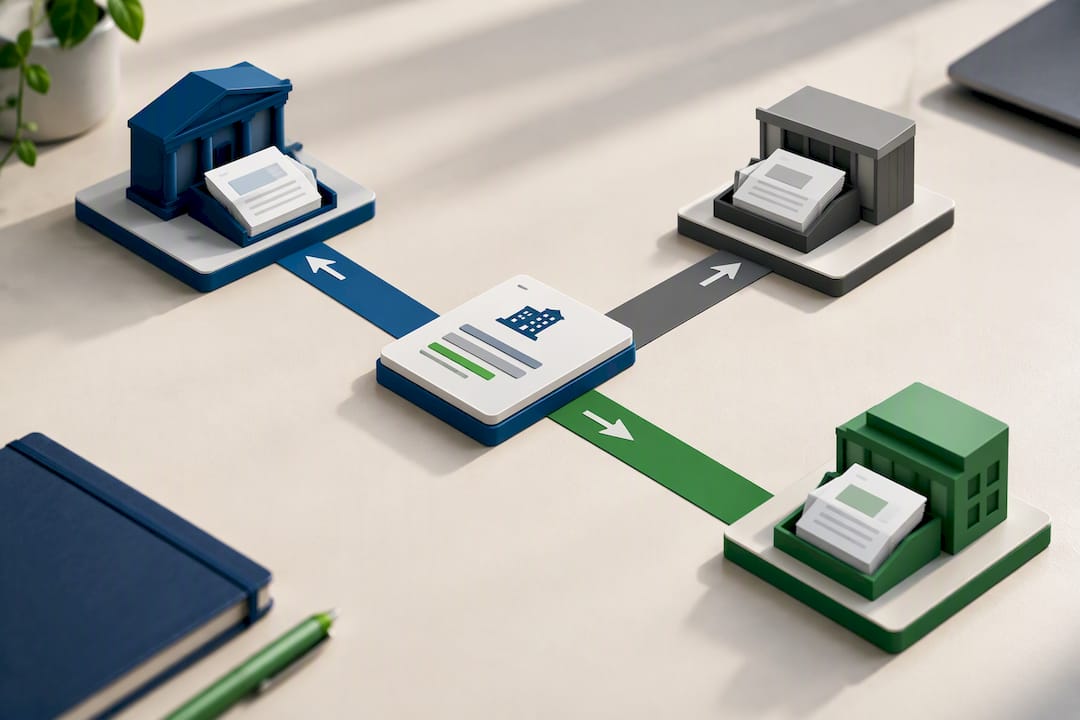
The Franchise Tax Board is where owners get caught off guard. Updating your address doesn't touch your tax obligations. Every LLC that meets California's filing conditions still owes the $800 annual tax and Form 568 by the original due date, regardless of where your mail goes. An address change and a tax bill are two entirely separate conversations, and treating them as connected is how owners end up with penalty notices they didn't see coming.
Beyond the two big agencies, a full move touches more accounts than most owners expect:
- City or county business license and local tax registration accounts
- Bank accounts tied to your LLC, since banks require current address verification for compliance reasons
- Business insurance policies, which price and cover based partly on location
- Payroll providers, if you have employees and your withholding jurisdiction changed
- Vendors and contract counterparties who need your current notice address for legal correspondence
| Who to notify | What changes | Rough timing |
|---|---|---|
| California Secretary of State | Public entity record | Fastest online, slower by mail |
| IRS | Federal mailing address | About 4 to 6 weeks |
| Franchise Tax Board | Tax correspondence address | Ongoing, tied to Form 568 filings |
| Bank, insurer, payroll provider | Account and policy records | Varies by institution |
A dedicated checklist for coordinating these updates is worth building once and reusing every time your business moves, because the sequence rarely changes even when the specifics do.
The Checklist That Prevents a Rejected Filing
Most rejected Statements of Information fail for the same predictable reasons, and every one of them is avoidable if you check these items before you hit submit:
- Confirm your exact entity name and 12-digit SOS number match your last filed document, character for character.
- Verify your principal office address is a street address, never a P.O. Box, even if that's how you receive mail today.
- Select the correct Statement type on bizfileOnline for your entity classification, domestic or foreign.
- Attach Form LLC-12A if your manager or member list runs longer than the main form's space.
- Include payment with mail filings; missing payment is an automatic hold.
Pro Tip: If a filing does get rejected, the Secretary of State's notice will tell you exactly which field failed. Fix only that field and refile rather than starting over from scratch, since resubmitting the whole form from memory is how a second error slips in.
Ignoring an outdated address isn't a passive risk. Notices about your biennial filing requirement, tax correspondence, and legal service of process all go to whatever address is on file. Miss enough of them, and California can suspend your LLC's status, which cuts off your ability to bring lawsuits, defend against them, or enter binding contracts until you're reinstated.
When an Address Change Triggers Bigger Compliance Questions
An address update sounds administrative until it collides with something that isn't. Your $800 annual tax and Form 568 filing obligation stays fixed to your LLC regardless of where your office sits, and the Franchise Tax Board's filing conditions and due dates don't shift just because your mailing address did.
A few situations deserve a second look after you move:
- If you moved into a new city or county, check whether payroll withholding accounts need updating for local tax jurisdictions.
- If your new location changes your sales tax nexus or local business activity, confirm your seller's permit registration reflects the new address.
- If your registered agent's address changed along with your business address, that's technically a separate update on the Statement of Information, and getting it wrong means service of process notices go to the wrong place.
- If you use a registered agent service rather than serving as your own agent, confirm your agent's records match what you filed with the state.
None of these are optional cleanup items. They're the difference between an address change that's fully resolved and one that leaves a gap somewhere a state or federal agency can find it later.
Why the Real Work Starts After the Filing Confirms
Most owners treat the Statement of Information as the finish line. It's the starting gun. Filing with the Secretary of State is the easy, mechanical part, a form with clear fields and a clear portal. The part that actually determines whether you avoid a penalty notice six months from now is what you do in the following weeks: filing Form 8822-B, confirming your Franchise Tax Board correspondence address, and closing the loop with your bank and insurer.
The owners who get burned aren't the ones who filed the wrong form. They're the ones who filed the right one and assumed everything else updated itself. It doesn't. Every agency keeps its own file, and the gap between "I updated my address" and "every agency that matters has my current address" is exactly where missed notices and lapsed compliance live. Build a habit around it: one folder for every confirmation, a calendar reminder for your biennial filing window, and a standing rule that no address change is finished until IRS, FTB, and your bank all confirm it independently.
Experience shows that taking ten minutes to double check your entity number against your SOS record can save weeks of correction cycles later.
— Peter
How Legal Stepz Handles Your Address Change Filing
There are services available that can file your Statement of Information directly and confirm it posts to the public record, saving you from tracking down forms, verifying entity numbers, and determining appropriate address fields.
Filing yourself works fine if you're confident reading statutory field requirements and comfortable double checking your own entity number against state records. A paid filing service earns its cost when you'd rather not risk a rejected filing eating into a deadline tied to a lease, a loan, or a license renewal. Some providers offer registered agent service and compliance bundles that pair your address update with the recurring biennial Statement of Information you'll need again in two years, helping you manage recurring compliance obligations.
After you order, expect proof of filing sent directly to you, along with a clear timeline for when the update posts to California's public entity record. Start your filing at Legalstepz and get your LLC's address squared away with the state without spending an afternoon cross-referencing statutes.
Sources
- Frequently Asked Questions - California Secretary of State
- About Form 8822-B, Change of Address or Responsible Party - Business | Internal Revenue Service
- Limited Liability Company (LLC) - California Franchise Tax Board
- California Corporations Code §17702.09
FAQ
How Do I Change My LLC's Mailing Address in California?
File a Statement of Information (Form LLC-12) through bizfileOnline.sos.ca.gov, listing your updated mailing address in the correct field. This updates the public record with the Secretary of State but doesn't notify the IRS or Franchise Tax Board, which require separate updates.
How Can I Update My LLC's Information With the State?
Any change to your LLC's address, manager or member list, or agent for service of process goes through a Statement of Information, filed online, by mail, or in person. California Corporations Code §17702.09 allows you to file a current statement whenever this information changes, rather than waiting for your biennial renewal.
Can I Change My LLC's Address Whenever I Need To?
Yes. You're not restricted to your biennial filing window. A new Statement of Information supersedes your prior one the moment it's filed and processed, so you can update your address as soon as it changes.
Do I Still Owe the $800 California LLC Fee After Changing My Address?
Yes. The $800 annual tax and Form 568 filing requirement stays tied to your LLC regardless of address, as long as your LLC meets the Franchise Tax Board's filing conditions. Changing your address has no effect on this obligation or its due date.
How Long Does It Take for an Address Change to Show on My LLC's Record?
Online filings through bizfileOnline typically post fastest, while mail filings take longer depending on current SOS processing volume. Check the Secretary of State's processing-dates page for current estimates, and confirm the update by searching your entity on the state's business search tool once you receive filing confirmation.