

Yes, you can be your own registered agent in California — but three conditions are non-negotiable:
- You must be at least 18 years old
- You must be a California resident
- You must have a physical street address in California (no PO boxes) where you are personally available during normal business hours
That's the legal floor. Whether it's the right move for your business is a separate question. Serving as your own agent costs nothing directly, but it puts your home address on the public record and creates real legal exposure if you're ever unavailable when a process server shows up.
Key Takeaways
You can legally be your own registered agent in California if you are 18 or older, a California resident, and available at a physical California street address during normal business hours — but missing even one service of process can result in a default judgment entered without your knowledge.
| Point | Details |
|---|---|
| Three conditions to qualify | You must be 18+, a California resident, and available at a physical CA street address during business hours. |
| Business cannot self-designate | A California LLC or corporation cannot name itself as its own agent — the agent must be a separate individual or qualified corporate agent. |
| Biggest DIY risk | Substituted service through the Secretary of State can proceed legally even if you never receive actual notice, leading to default judgments. |
| How to change your agent | File a Statement of Information via bizfile Online promptly — there is no grace period and every day without a valid agent is a compliance gap. |
| Legalstepz registered agent service | Legalstepz provides California registered agent coverage, Statement of Information filing, and compliance reminders to keep your business in good standing. |
Table of Contents
- What does a registered agent actually do for your California business?
- California registered agent requirements: who qualifies and what the law says
- Pros and cons of acting as your own registered agent in California
- How to designate or change your registered agent in California
- What happens if you fail to maintain a valid registered agent?
- How to keep your home address off the public record
- When does hiring a professional registered agent make sense?
- The real cost of "free" when you're your own registered agent
- Legalstepz handles your registered agent and compliance filings
- Sources
What does a registered agent actually do for your California business?
A registered agent, formally called an agent for service of process, is the official point of contact for your business when courts, government agencies, or opposing attorneys need to deliver legal documents. Think lawsuits, subpoenas, tax notices, and compliance correspondence from the California Secretary of State.
The role matters more than most new business owners realize. When a process server delivers a complaint to your registered agent, legal deadlines start running immediately. Miss those deadlines and you risk a default judgment — a court ruling against your business simply because no one responded. The California Secretary of State's FAQ makes clear that the agent's name and physical street address become public record, accessible through the SOS Business Search.
Here's a concrete picture of how it plays out: a process server arrives at your registered agent's address on a Tuesday morning with a civil complaint. Your agent accepts the papers, notes the date, and gets them to you. You now have a fixed window to respond. If no one is at that address to accept service, the situation escalates quickly.
Key things the registered agent receives on your behalf:
- Lawsuits and civil complaints filed against your business
- Subpoenas requiring documents or testimony
- Government notices from the California Franchise Tax Board or Secretary of State
- Annual compliance reminders and Statement of Information notices
For a deeper look at the full scope of the role, the registered agent role explained resource from Legalstepz covers the duties in detail.
California registered agent requirements: who qualifies and what the law says
Every LLC and corporation doing business in California must designate and continuously maintain an agent for service of process. This isn't optional and there's no grace period for lapses. California Corporations Code section 17701.13 spells out the requirement for LLCs specifically: the agent must be an individual resident of the state or a qualified corporate agent registered under Corporations Code section 1505.
Individual agent requirements under California law:
- Age: 18 or older
- Residency: must be a California resident
- Address: a physical street address in California (PO boxes and mail-forwarding addresses are not accepted)
- Availability: must be present at that address during normal business hours on business days
One rule trips up a lot of new business owners: a business entity cannot be its own registered agent. Your LLC cannot list itself. Your corporation cannot list itself. The agent must be a separate individual or a qualified corporate agent. When businesses go the DIY route, the most practical choice is typically an officer, director, or member of the entity who works from a fixed California location.
California Corporations Code § 17701.13 requires every LLC to "designate and continuously maintain" an agent for service of process who is either an individual resident of California or a corporation that has complied with section 1505 of the Corporations Code. There is no licensing requirement for individual agents — the only tests are residency, age, and physical availability.
There is no licensing exam or certification needed to serve as an individual agent. The California Secretary of State's FAQ confirms this: any qualifying individual can take on the role without special credentials.
Pro Tip: If you're designating yourself as the agent, use your office address rather than your home address whenever possible. It satisfies the physical-address requirement and keeps your personal residence off the public record.

For corporate-specific agent rules and officer responsibilities, the corporate registered agent responsibilities guide covers the additional compliance layer for corporations.
Pros and cons of acting as your own registered agent in California
The decision comes down to your daily routine and your tolerance for public exposure. Here's an honest breakdown:
Pros of serving as your own agent:
- No direct cost. There's no annual fee for naming yourself, which matters when you're bootstrapping.
- Full document control. You receive legal papers directly, with no intermediary delay.
- Simple address updates. If you move within California, you can update your agent address through a new Statement of Information without switching providers.
Cons — and these are real:
- Your address becomes public record. The moment you list a home address as your registered office, it's searchable on the SOS Business Search by anyone. Many owners discover this only after the fact, which is a frequent reason businesses later switch to a commercial agent.
- Availability risk. You must be at that address during business hours every business day. A process server who can't reach you creates a substituted-service situation that can proceed without your knowledge.
- Business continuity gaps. If you leave the company, change roles, or relocate out of state, the agent designation becomes invalid immediately. Every day without a valid agent increases legal risk.
Consider two scenarios. An owner who runs a home-based consulting business in Sacramento, works a consistent schedule, and rarely travels is a reasonable candidate for DIY. An owner who manages a retail operation across three locations, travels to trade shows, and works irregular hours is not — the availability requirement alone creates too much exposure.
For a full breakdown of what commercial agent coverage typically costs versus DIY, the registered agent cost guide from Legalstepz is worth a read before you decide.
How to designate or change your registered agent in California
The process is straightforward, but the timing matters. Here's how it works from formation through any future changes.
At formation: When you file your Articles of Organization (LLC) or Articles of Incorporation (corporation) with the California Secretary of State, you name your registered agent directly in that document. Individual agents are listed by name and physical street address.
To change your agent after formation, file a Statement of Information. California LLCs file the Statement of Information (Form LLC-12), and corporations file their own version. The SOS recommends using bizfile Online for faster processing.
Exact information required for the filing:
- Agent's full legal name (first and last)
- Physical street address in California (city, state, ZIP — no PO boxes)
- Your entity's SOS file number
- Entity name as it appears in SOS records
Practical timing notes:
- File a Statement of Information as soon as your agent changes. There is no defined grace period, and every day without a valid agent on file is a compliance gap.
- Changes take effect when the SOS processes the filing, not when you submit it. Online filings through bizfile Online typically process faster than paper submissions.
- LLCs must file a Statement of Information within 90 days of formation and then every two years; corporations file annually. An agent change can be made on the regular filing or as a standalone update.
To avoid the most common filing mistakes, the registered agent change mistakes resource from Legalstepz covers the pitfalls that delay processing or leave businesses temporarily uncovered.
What happens if you fail to maintain a valid registered agent?
The consequences are more serious than most business owners expect, and they can unfold without any direct warning.
When a process server cannot effect personal service at your registered agent's address, California law allows the plaintiff to pursue substituted service through the Secretary of State. Under SOS service of process procedures, once a court authorizes substituted service, the lawsuit proceeds. The business is legally considered served even if the owner never actually received the documents.
That last point is the one most owners underestimate. Vacating a default judgment after the fact is difficult and expensive. Courts are not sympathetic to "I never got the papers" when the business failed to maintain a valid agent.
Substituted service through the Secretary of State can proceed without the business owner's knowledge. Once authorized by a court, the service is legally valid regardless of whether the owner received actual notice.
The SOS fee schedule documents administrative fees connected to certain filings and services, including fees associated with substituted service processing.
Consequences of failing to maintain a valid agent:
- Default judgment risk from missed lawsuit deadlines
- Suspension or forfeiture of the business entity by the California Secretary of State
- Missed government notices leading to tax penalties or compliance violations
- Inability to conduct business while suspended, including inability to open bank accounts or enter contracts
- Administrative penalties for late or missing filings
LegalClarity's practitioner summary on California registered agent rules reinforces that missed service is one of the most common and preventable causes of default judgments against small businesses.
If you ever receive notice that a lawsuit has proceeded without your knowledge, consulting an attorney quickly is critical. A legal counsel resource for California can help you understand your options for responding to unexpected legal notices.
How to keep your home address off the public record
If privacy is a concern, the most direct solution is a commercial registered agent service. These services provide their own California street address as your registered office, accept service on your behalf, and forward documents to you promptly. Your personal address never appears in the SOS Business Search.
How commercial registered agent services work:
- They maintain a physical California address that satisfies the street-address requirement
- They are staffed during normal business hours every business day
- They scan and forward received documents, often the same day
- They typically send compliance reminders for Statement of Information deadlines
Other alternatives worth considering:
- A reliably available officer or employee who is a California resident and works from a fixed location. This keeps the role in-house without using your personal address, provided that person is genuinely available during business hours.
- A trusted friend or family member who meets the residency and age requirements and has a stable California address. The practical risk: if that person moves, changes their schedule, or becomes unavailable, you have an immediate compliance problem.
Two things to avoid: PO boxes are explicitly prohibited as registered office addresses under California law. Mail-forwarding services that use a street address format but don't provide actual physical presence at that address also don't satisfy the requirement. The agent must be a real person at a real location.
Pro Tip: If you're working from home and value privacy, a commercial registered agent service typically costs less per year than a single hour of attorney time to respond to a missed-service situation. The math usually favors paying for coverage.
When does hiring a professional registered agent make sense?
For some business owners, DIY is the right call. For others, the risk profile clearly points toward a paid service. Here's a quick checklist to help you decide.
Consider hiring a commercial agent if:
- You don't have a stable, staffed physical office in California
- You travel frequently or work irregular hours
- You run the business from home and want your address kept private
- You own multiple entities and need consistent coverage across all of them
- You've had a recent address change and want to avoid a compliance gap
Legalstepz provides registered agent services for California businesses alongside Statement of Information filing and annual compliance support. The combination matters because the most common compliance gap isn't the agent designation itself — it's the failure to update the Statement of Information promptly when the agent changes.
Pro Tip: Transitioning from DIY to a paid agent is simple: designate the new commercial agent in your next Statement of Information filing, confirm the new agent has accepted the role, and file before your current agent's availability changes. Never cancel the old arrangement before the new one is confirmed on file.
For a broader view of what the registered agent role covers and how Legalstepz approaches compliance support, the company's explainer is a practical starting point.
The real cost of "free" when you're your own registered agent
Here's the view from someone who has worked through California compliance questions with a lot of small-business owners: the DIY registered agent route is genuinely fine for a narrow set of situations, and genuinely risky for a much larger one.
The owners who handle it well share a few traits. They work from a fixed California location every business day. They're not planning to move. They understand that "available during normal business hours" is a legal standard, not a suggestion. And they've thought through what happens if they get sick, take a vacation, or eventually sell the business.

The owners who run into trouble are usually the ones who listed themselves as agent during formation because it was the path of least resistance, then never thought about it again. They moved. They started traveling more. They hired employees and shifted to a different location. The agent designation stayed the same, pointing to an address where no one is reliably available anymore.
The $50 substituted service fee is not the real cost. The real cost is a default judgment entered while you were at a trade show in Las Vegas, or a suspension notice you never received because it went to an address you vacated two years ago.
Legalstepz handles your registered agent and compliance filings
Staying compliant as a California business owner means more than naming an agent once and forgetting about it. Legalstepz offers registered agent services, Statement of Information filing, and annual compliance reminders — all in one place, so nothing slips through the cracks.
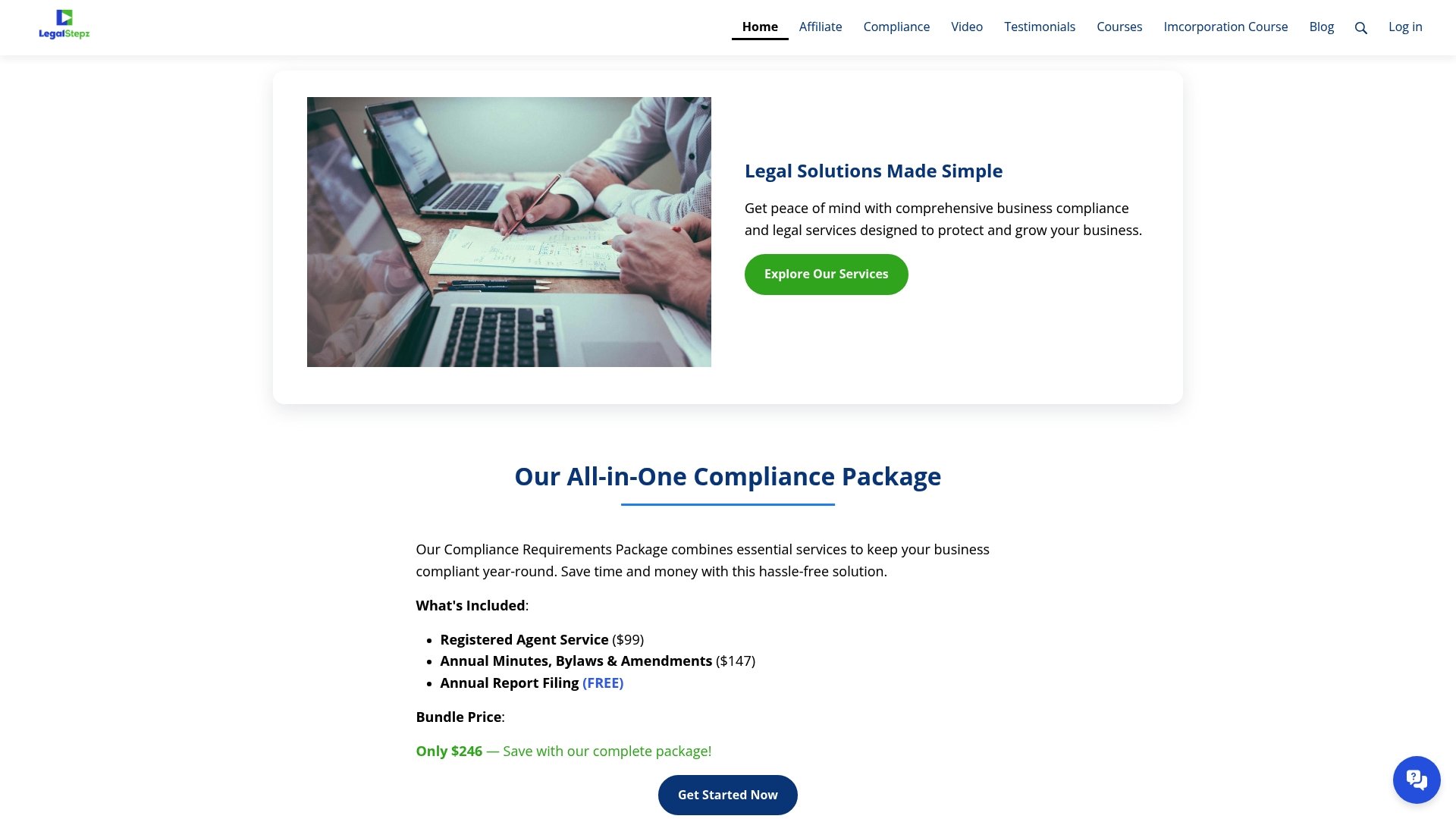
Privacy, continuity, and filing support are the three things California business owners consistently need from a registered agent arrangement. Legalstepz delivers all three: your personal address stays off the public record, a qualified agent is available at a California address every business day, and your Statement of Information filings are handled on time.
Ready to hand off the compliance work? Get registered agent coverage from Legalstepz and keep your California business in good standing without the availability risk.
Sources
For direct verification of the requirements and forms covered in this article:
- Frequently Asked Questions :: California Secretary of State
- California Code, CORP 17701.13
- California Registered Agent Rules and Requirements - LegalClarity
This article provides general information about California registered agent requirements and is not a substitute for legal advice. Confirm current rules with the California Secretary of State or a qualified California attorney.