
California corporate minutes don't legally require a signature under Corporations Code Section 1500, but every corporation should still get them signed. The safest move: have the corporate secretary certify and sign each set of minutes, then file the original in the minute book right after approval. That single habit closes most of the gaps that create trouble later.
TL;DR:
- Signing minutes by the secretary or chair significantly strengthens their legal evidence, particularly under California law, which does not require signatures for validity.
- Properly drafted minutes should include detailed attendance, quorum, specific resolutions, deliberation summaries, exhibits, and a signature block for certification.
- Digital signatures are acceptable as long as they include an audit trail, authenticating the signer's identity, timestamp, and storage in a secure, convertible format.
- Using written consent is suitable for unanimous approvals on routine matters but lacks the deliberation record necessary for complex or contentious decisions.
- Maintaining organized, permanent minute books with signed, well-structured minutes supports legal defenses, audits, and smoother M&A due diligence.
Table of Contents
- Do You Legally Need to Sign Corporate Minutes in California?
- Who Should Sign or Certify California Corporate Minutes?
- What Should California Corporate Minutes Actually Include?
- How Do You Physically Sign Corporate Minutes?
- Can You Sign California Corporate Minutes Electronically?
- When Should You Use Written Consent Instead of Minutes?
- Sample Signing Language You Can Adapt
- Where Should You Store Signed Minutes, and for How Long?
- Common Minute-Drafting Mistakes That Create Legal Risk
- Legalstepz Services, Templates, and When to Get Help
- The Real Priority Isn't the Signature, It's What Comes Before It
- Get Your California Corporate Minutes Drafted, Signed, and Organized
- Sources
- FAQ
Do You Legally Need to Sign Corporate Minutes in California?
California law requires corporations to keep minutes. It doesn't require a signature on them. Section 1500 of the California Corporations Code says every corporation "shall keep adequate and correct" minutes of shareholder, board, and committee proceedings, along with a record of shareholders, a share register, and books of account. That's the statutory floor.
The statute is silent on signatures. It doesn't say who signs, when, or what happens if nobody does. That silence is exactly why so many California corporations skip the step, and it's exactly why they shouldn't.
Section 1500 also addresses format, not just content. Records can be kept in written form or in any form capable of being converted into clearly legible tangible form within a reasonable time, per the statutory text. That means a properly maintained digital minute book satisfies the law, provided you can produce a readable paper or PDF version on demand. A spreadsheet of bullet points scribbled during a call and never formalized does not.
Recordkeeping and signing are two different obligations that often get conflated:
- Recordkeeping is mandatory under §1500. You must keep minutes, period.
- Signing is not mandated by statute, but it's the mechanism that turns a document into evidence.
- Storage location matters too. Minutes and other required records must generally be kept at the corporation's principal executive office, or wherever the board designates, often with a transfer agent or registered office.
- Conversion clause. Electronic minutes are fine as long as they convert cleanly to a tangible, legible format when someone (a court, an auditor, a buyer) needs to see them.
Here's the distinction that trips up a lot of first-time officers: keeping minutes satisfies the law. Signing minutes protects the company. You need both, but they solve different problems. A folder of unsigned Word documents technically checks the §1500 box. It does almost nothing for you in a dispute, an audit, or a due diligence review during a sale or financing round.
Who Should Sign or Certify California Corporate Minutes?
Three roles typically touch the signature line on California corporate minutes: the corporate secretary, the chair or presiding officer, and, for certain board or committee actions, the officer who ran the meeting.
The secretary carries the most weight here. Corporations Code Section 314 gives a real legal boost to minutes that are certified by the secretary or an assistant secretary: they become prima facie evidence of the meeting's due holding and of everything stated in them. That's not a minor technicality. It shifts the burden in a dispute. Instead of you having to prove the meeting happened the way you say it did, the certified minutes are presumed accurate unless someone proves otherwise.
Common signing patterns look like this:
- Board minutes: signed or certified by the corporate secretary, sometimes countersigned by the chair.
- Shareholder meeting minutes: signed by the secretary, occasionally alongside the meeting chair.
- Committee minutes: signed by whoever chaired the committee meeting, then filed alongside board minutes.
Practitioners who work with corporate governance documents routinely recommend signatures even though §1500 doesn't demand them, according to analysis published on JD Supra. The reasoning is straightforward: an unsigned document is much easier for a director or shareholder to later claim they never approved, disputed, or even attended. A signature (or a secretary's certification) makes that kind of walk-back far harder to pull off.
Signatures also matter more than people expect when notice and waiver issues come up. If a shareholder later claims they weren't properly notified of a meeting, a signed waiver attached to signed minutes is a much stronger defense than an unsigned recollection of "we're pretty sure we sent that email."
Pro Tip: Get in the habit of having the secretary sign minutes within the same week the board approves them at the following meeting. Delay is where signature gaps quietly pile up until nobody remembers who was supposed to sign what.
What Should California Corporate Minutes Actually Include?
Minutes that hold up under scrutiny share a common structure. Skip any of these pieces and you weaken the document's evidentiary value, even if the meeting itself was handled perfectly.
- Meeting basics. Date, start and end time, location (physical address, video platform, or hybrid), and a note on how each attendee participated.
- Attendance and roles. Who attended, in what capacity (director, officer, shareholder, invited advisor), and who presided. Note absences, especially for directors who missed a vote.
- Notice and waiver documentation. Confirm proper notice was given, or attach a signed waiver of notice if one was needed. This single line prevents a huge share of later disputes.
- Quorum statement. A short sentence confirming quorum was met before any business was conducted. Without this, every action taken at the meeting is vulnerable to challenge.
- Resolutions, motions, and votes. Record the exact language of each resolution considered, who made the motion, who seconded it, and the vote count or unanimous consent. Vague summaries ("the board discussed compensation") are far weaker than specific language ("the board approved a $15,000 signing bonus for the incoming CFO by unanimous vote").
- Deliberation summary, not a transcript. Capture the reasoning behind material decisions and the risks the board considered, without recording verbatim dialogue. Courts and counsel weigh this kind of documented deliberation heavily when a company later needs to defend its decisions.
- Attachments and exhibits. Financial statements, consultant reports, or term sheets referenced during the meeting should be labeled as exhibits (Exhibit A, Exhibit B) and physically or digitally attached to the minutes.
- Signature block. Space for the secretary's signature and date, positioned at the close of the document. (Sample language for this appears later in this guide.)
Corporate minute books that follow this structure consistently tend to hold up far better when someone, whether that's a court, an auditor, or an acquiring company's legal team, actually needs to rely on them.
How Do You Physically Sign Corporate Minutes?
Signing mechanics matter more than most officers assume. The signature line usually sits at the bottom of the document, below the last recorded resolution, and includes a certification statement rather than a bare signature.
A basic certification line reads something like: "I certify that the foregoing is a true and correct copy of the minutes of the meeting held on [date], as approved by the board of directors." The secretary signs and dates directly below that language.
A few mechanical points that get overlooked:
- Board minutes get signed by the secretary who took them. Shareholder minutes follow the same pattern. Committee minutes are typically signed by the committee chair, then routed to the corporate secretary for the master file.
- Draft, circulate, adopt. A practical, defensible sequence: draft the minutes within a few days of the meeting, circulate a single marked draft to directors for review, adopt them formally at the next meeting with a motion, then have the secretary sign and date the approved version.
- Corrected minutes. If an error surfaces after approval, don't just edit the old file. Note the correction as a new item at a subsequent meeting, reference the original minutes by date, and have the secretary sign the amendment separately.
Pro Tip: Never let unsigned minutes stack up for months. If you're behind, prioritize signing chronologically, oldest first, so your minute book doesn't have a random gap sitting in the middle of your corporate history.
Can You Sign California Corporate Minutes Electronically?
Yes. The California Secretary of State's filing guidance confirms that an electronic signature can be as simple as a typed name or a checked box indicating intent to sign. What matters legally isn't the format of the mark. It's whether you can show authentication and genuine signatory intent.
That distinction should shape how you set up digital signing for minutes:
- Use a platform with an audit trail. Whatever tool captures the signature should log the signer's identity, timestamp, and IP address, not just a typed name floating in a document.
- Keep file formats stable. PDF/A or standard PDF works well because it resists formatting drift over years of storage. Avoid formats that require specific, aging software to open.
- Preserve conversion capability. Section 1500 permits records kept in a form convertible to clearly legible tangible form. Practically, that means your digital minutes need to print or export cleanly, with signatures visible, not just exist as a database entry.
- Back up in at least two places. A cloud storage account plus a local or secondary cloud copy protects against a single point of failure.
Pro Tip: If you're using e-signature software for board approvals, save the completed audit trail report alongside the signed PDF, not just the signed document itself. That trail is often what actually proves intent if a signature is ever challenged.
When Should You Use Written Consent Instead of Minutes?
Unanimous written consent lets directors or shareholders approve an action without holding a formal meeting at all. It's a legal substitute for minutes, not a lesser version of them, provided every eligible director or shareholder signs.
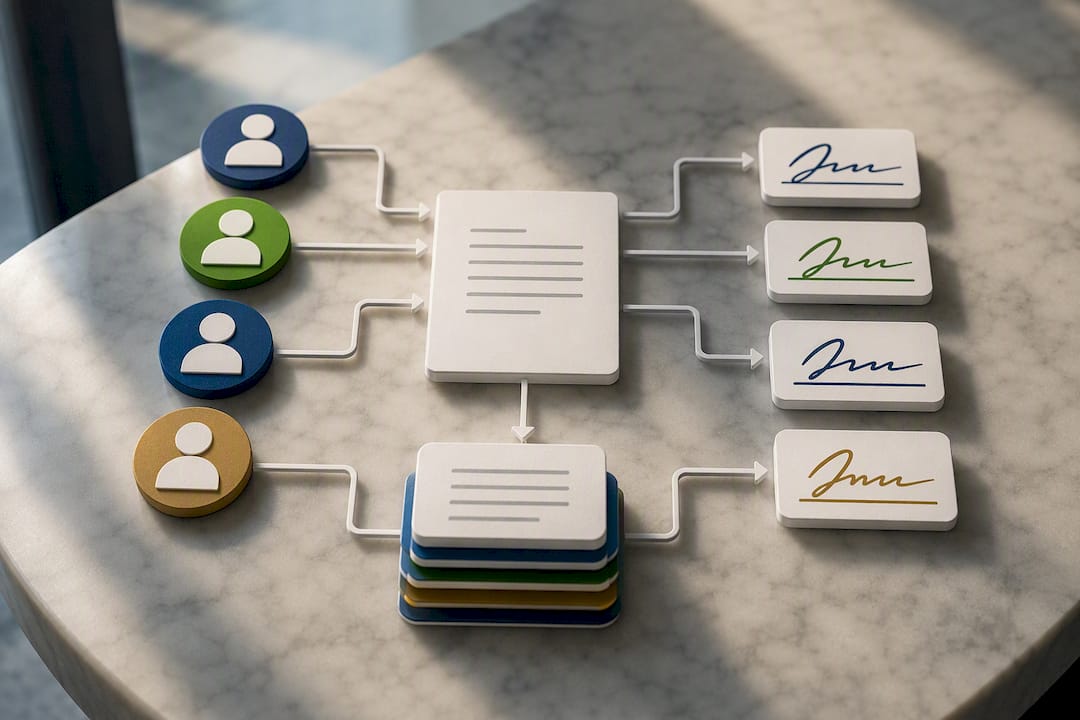
Written consent works well for routine or time-sensitive approvals: opening a bank account, approving a standard contract, ratifying an officer appointment. It's a poor fit for decisions that benefit from real debate, like executive compensation disputes or a contested merger vote, because consent skips the deliberation record that protects the board later.
To carry the same evidentiary weight as signed minutes, a written consent needs:
- A clear statement of the exact action being approved, in the same specific language you'd use in a resolution.
- Signature lines for every director or shareholder whose consent is required, since "unanimous" means everyone, not a majority.
- A date for each signature, since consents can technically be signed on different days unless your bylaws say otherwise.
Once signed, consents get stored in the minute book exactly like meeting minutes, filed chronologically and cross-referenced if they relate to an earlier board action. For single-shareholder corporations, which describes a large share of small California businesses, written consent is often the more practical tool day to day. Even so, you still need one for anything material, an owner's memory of "deciding" something in their head doesn't create a legal record.
Sample Signing Language You Can Adapt
Signing blocks don't need to be complicated, but they need the right components. Here are compact examples for the three most common documents.
Board minutes signature block: "Approved and adopted by the Board of Directors on [date]. Respectfully submitted, [Secretary Name], Corporate Secretary." Followed by a signature line and date.
Shareholder meeting minutes certification: "I, [Name], Secretary of [Corporation Name], certify that the foregoing is a true and accurate record of the shareholder meeting held on [date]." Signature and date below.
Unanimous written consent block: Individual signature lines for each director or shareholder, each with "Dated: [date]" beneath their name, rather than a single shared signature line.
These templates work for standard governance structures. If your bylaws specify a different approval process, unusual quorum rules, or a nonstandard officer title, adjust the certification language to match, since a mismatch between your bylaws and your minutes is its own kind of red flag in a later review.
Pro Tip: Keep one master template for each document type instead of rebuilding the signature block from scratch each meeting. Consistency across years of minutes actually helps demonstrate good governance practice. Legalstepz's downloadable minutes template covers all three formats if you want a starting structure rather than building one from a blank page.
Where Should You Store Signed Minutes, and for How Long?
Signed minutes belong in a single, organized minute book, whether that's a physical binder or a secure digital repository. Physical binders still work fine for small corporations. Digital repositories (a dedicated folder structure in secure cloud storage, or governance software built for this purpose) scale better once you're managing multiple years of records or multiple entities.
Retention policy here is simple: keep minutes permanently. There's no expiration date on their usefulness, and corporations that discard old minutes routinely regret it during a sale, an audit, or a dispute years later. Maintain at least one backup copy in a separate location from the primary minute book.
Organize by year, then by document type within each year: board minutes, shareholder minutes, committee minutes, written consents, and exhibits, each clearly labeled. That structure lets you or your attorney pull a specific record in minutes instead of hours.
Shareholders generally have inspection rights over corporate records, including minutes, under California law. A well-organized minute book turns an inspection demand from a scramble into a routine document pull, which is precisely the outcome you want if that demand ever shows up.
Reviewed and organized minute books also come up constantly during M&A due diligence, where buyers and their counsel comb through years of corporate records to build disclosure schedules before a deal closes. Gaps in signed minutes at that stage tend to slow negotiations or invite lower valuations.
Common Minute-Drafting Mistakes That Create Legal Risk
Most minute-related legal exposure traces back to a handful of repeat mistakes, not exotic governance failures.
- Vague resolution language. "The board discussed and approved the matter" tells a court nothing about what was actually approved.
- Missing quorum statements. Without one, every vote taken at that meeting is arguably invalid.
- Unrecorded votes. No record of who voted which way makes it impossible to show individual director diligence later.
- Inconsistent filing. Minutes drafted but never signed, or signed but never filed in the minute book, are functionally useless when someone needs them.
These gaps matter most in litigation. Plaintiffs' counsel routinely scrutinize board minutes for exactly these weaknesses when challenging a fiduciary duty decision. Well-drafted minutes that show real deliberation, including the risks the board considered and the advisors consulted, can help a company defend against stockholder litigation and support early dismissal, according to governance analysis from Harvard Law School's Forum on Corporate Governance. Contemporaneous minutes, drafted close to the actual meeting rather than reconstructed months later, carry particular weight with courts because they read as more reliable evidence.
The preventive fix is straightforward: draft promptly, record specific language, confirm quorum every time, and sign consistently.
Legalstepz Services, Templates, and When to Get Help
Some service providers draft California corporate minutes, prepare bylaws, file Statements of Information, and provide registered agent services to help corporations that prefer not to manage these tasks themselves. For minutes specifically, that means properly formatted board and shareholder minutes, secretary certification language built in, and a structured minute book setup from day one.
Peter's related posts on the Legalstepz blog walk through annual minutes drafting in more depth, along with how bylaws and minutes interact and how to keep a compliant records book organized long term.
A template works fine if your governance structure is simple and you have time to manage it yourself. Bringing in professional help makes more sense once you're juggling multiple approvals a year, prepping for outside financing, or catching up on years of missing signatures.
The Real Priority Isn't the Signature, It's What Comes Before It
Most guidance on this topic treats the signature as the finish line. It isn't. A signature on a vague, thin, poorly dated set of minutes doesn't protect anyone, it just adds false confidence to a weak document. The real work happens earlier: capturing the actual resolution language, recording who voted and how, and noting the risks the board actually weighed.
Conventional advice tends to fixate on whether §1500 technically requires a signature. That's the wrong question. The right one is whether your minutes would survive someone challenging them in a deposition two years from now. A signed, vague document loses that fight just as easily as an unsigned one.
If you take one thing from this guide, prioritize contemporaneous drafting over signature formality. Get the substance right within days of the meeting, then let the secretary's certification do its job. Signing an empty document doesn't create protection. Signing a specific, well-reasoned one does.
— Peter
Get Your California Corporate Minutes Drafted, Signed, and Organized
Some services assist with turning rough meeting recaps into properly structured, signature-ready minutes with certification language, organized and filed in a minute book from the start.

If you're drafting minutes yourself, a template gets you most of the way there. If you're catching up on missing signatures, prepping for outside investment, or just don't want to build a compliance calendar from scratch, that's where professional drafting earns its cost back quickly. Certain providers prepare board and shareholder minutes, bylaws, Statements of Information, and registered agent filings for California corporations, following established governance standards.
Start by checking what your corporation needs at Legalstepz and get your minute book caught up before your next board meeting, not after it.
This article is general information, not a substitute for advice from a qualified lawyer. Consult a qualified legal professional about your own circumstances before acting on anything here.
Sources
- California Corporations Code Section 1500 (Justia)
- Filing Tips - California Secretary of State
- The angels in the details: The importance of well-drafted board minutes (Harvard Law School Forum on Corporate Governance)
- Should/must corporate minutes be signed? (JDSupra analysis)
FAQ
Are California Corporations Required to Keep Minutes?
Yes. Corporations Code Section 1500 requires every California corporation to keep adequate minutes of shareholder, board, and committee proceedings.
Do Corporate Meeting Minutes Need to Be Signed?
Not under §1500 itself, but signing them, ideally through secretary certification, is strongly recommended because it creates prima facie evidence under Corporations Code §314 and makes approvals much harder to dispute later.
What Should Be Included in Corporate Minutes?
Solid minutes cover the meeting date and location, attendance, notice or waiver confirmation, quorum, exact resolution language and vote counts, a summary of deliberation, and any exhibits referenced during discussion.
What Are the Legal Requirements for Meeting Minutes in California?
The core legal requirement is recordkeeping under §1500: minutes must exist and be kept in written or convertible tangible form. Beyond that baseline, signature practices, certification, and storage follow best practices rather than a specific statutory mandate.
Can I Sign Corporate Minutes Electronically in California?
Yes. The California Secretary of State treats a typed name or a checked signature box as valid, provided you can show authentication and clear signatory intent behind it.