
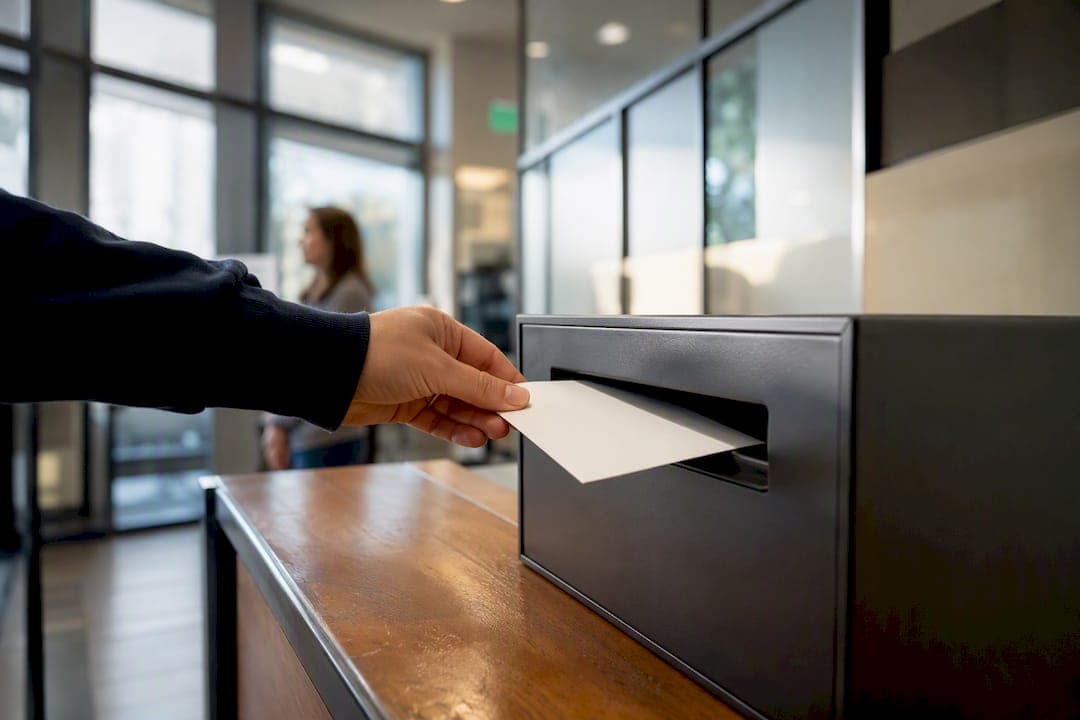
Yes. A Statement of Information filed with the California Secretary of State is a public record, viewable and copyable by anyone through bizfile Online the moment it's submitted. There's no waiting period, no approval process, and no opt-out. According to the Secretary of State's own guidance, information becomes public as soon as it's filed, which means whatever you type into that form is searchable by strangers, competitors, and data brokers within hours.
If you're filing one this year, here's what gets exposed:
- Officer, director, member, and manager names
- Business street and mailing addresses, plus your agent for service of process
The rest of this guide covers exactly which fields count as public record information, how to search for a filing, and what you can legally do to keep your home address off the internet.
Key Takeaways
A California Statement of Information becomes a public record the instant it's filed, so the only real privacy control an owner has is choosing what goes on the form before submitting it.
| Point | Details |
|---|---|
| Public the moment you file | Names, business addresses, and agent for service of process become searchable immediately on bizfile Online. |
| Sensitive data stays off | Social Security numbers, driver's license numbers, and banking details are not collected or are redacted when found. |
| Missing a deadline has teeth | Late or unfiled Statements of Information can trigger Franchise Tax Board penalties and entity suspension. |
| Corrections supersede old filings | A new complete Statement of Information can replace and purge an earlier one that overshared personal details. |
| Legalstepz files and shields | Legalstepz handles Statement of Information filing and registered agent service so a home address never has to appear on the public record. |
This article is general information, not a substitute for advice from a qualified lawyer. Consult a qualified legal professional about your own circumstances before acting on anything here.
Table of Contents
- What Fields on a Statement of Information Are Public Record?
- Why Does California Make These Filings Public?
- How to Locate Public Records and Get Copies
- Filing Deadlines, Fees, and Penalties for Missing Them
- How to Reduce Your Privacy Exposure Without Skipping Compliance
- Balancing Transparency With Business Privacy
- Let Legalstepz Handle the Filing and the Exposure
- Sources
What Fields on a Statement of Information Are Public Record?
Nearly everything on the form becomes part of the state's public database. That includes the entity name and number, formation date, current status, and the names and business addresses of officers, directors, members, or managers depending on entity type. Your agent for service of process and their address go public too, along with the entity's filing due date.
By the numbers: the Secretary of State's guidance confirms that once a Statement of Information is filed and accepted, the office cannot selectively hide fields like names or business addresses. It's all part of the record.
What stays out of public view:
- Social Security numbers
- Driver's license numbers
- Banking or credit card information
The Secretary of State doesn't collect these on the standard form, and when sensitive data slips through, the office will redact it where identified. Publicly traded corporations face extra disclosure requirements beyond the standard fields, and the exact list of required items shifts depending on whether you're a corporation, an LLC, or a partnership. Check the entity-specific forms page before you file to see what applies to your structure.
Why Does California Make These Filings Public?
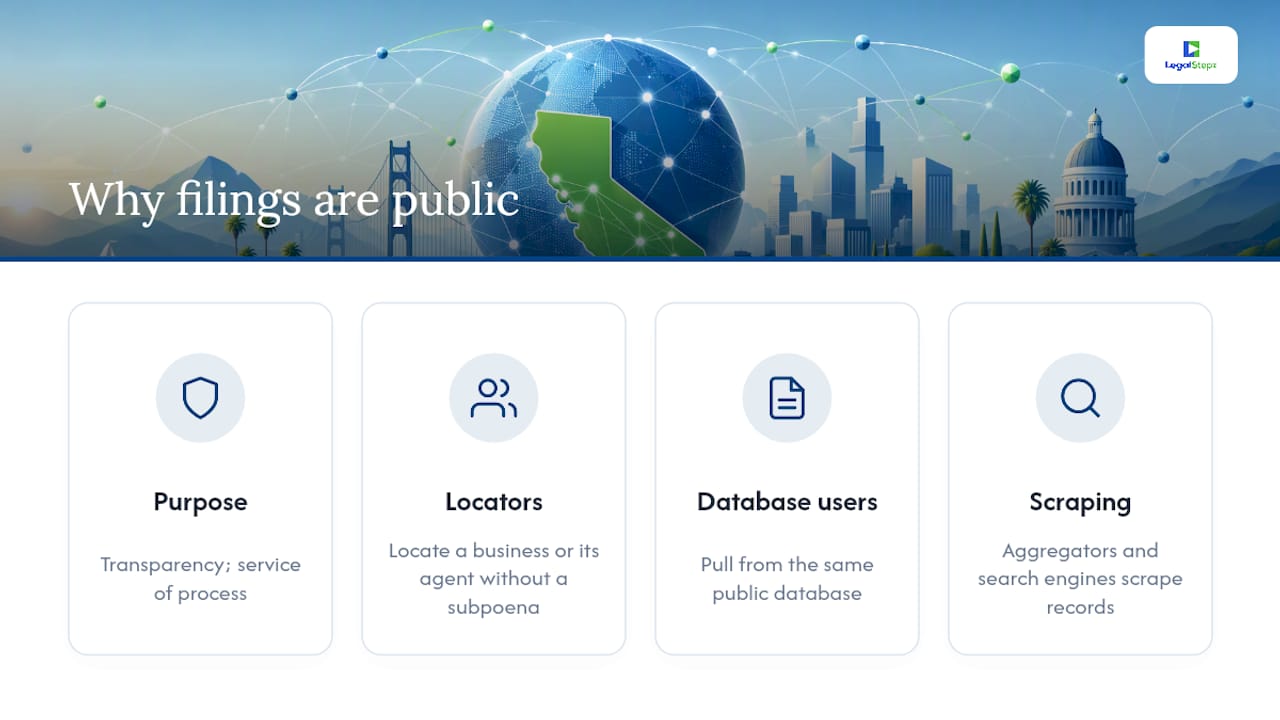
The statutory purpose is straightforward: transparency and service of process. California wants creditors, vendors, courts, and legal representatives to be able to locate a business or its agent without a subpoena, and the Secretary of State's FAQ page frames this as the core reason filings stay open to the public.
In practice, that means potential business partners, regulators, and due-diligence firms all pull from the same public database you filed into. Third-party data aggregators and search engines also scrape these records regularly, which is a separate issue worth understanding before you decide what to write on the form.
How to Locate Public Records and Get Copies
Searching for a filing takes about two minutes on bizfile Online.
- Go to bizfile Online and search by entity name or entity number.
- Review the results for status, filing history, and current officers or agent for service.
- Choose between a plain copy or a certified copy of the Statement of Information.
A few things to know about the copies themselves:
- Plain copies print directly from the portal at no cost in most cases.
- Certified copies carry a fee and are typically requested when you need proof for a court, lender, or licensing agency.
- The Secretary of State does not retain owner phone numbers or emails as part of the entity record, so don't expect those fields in your search results.
Pro Tip: Stick to the official Secretary of State portal for anything you're relying on legally. Third-party "business lookup" sites often mirror outdated data and sometimes charge for information that's free on bizfile Online.
Filing Deadlines, Fees, and Penalties for Missing Them
Timing depends on entity type. A domestic stock or agricultural cooperative corporation must file its first Statement of Information within 90 days of filing initial articles of incorporation, then again on a recurring schedule during an applicable filing window around the anniversary date.
Filing fees vary by entity type, and the SI-200 instructions outline both the standard filing cost and the certified copy fee separately, so budget for both if you need documentation.
Miss the deadline and the consequences escalate fast:
- The Franchise Tax Board can assess penalties for a missed or late filing
- The Secretary of State can suspend or forfeit the entity's powers, rights, and privileges
That second point matters more than most owners realize. A suspended entity generally can't defend itself in court, enter binding contracts, or maintain good standing with lenders until the filing is corrected and reinstatement is processed.
How to Reduce Your Privacy Exposure Without Skipping Compliance
You can't opt out of the public record requirement, but you can control what personal information ends up in it. A few tactics work well:
- Use a commercial mailing address or a registered agent's address instead of your home address wherever the statute allows it.
- Hire a commercial agent for service of process, which keeps your personal address off the form entirely while still satisfying the legal requirement.
- Leave optional contact fields blank when the form doesn't require them.
If you've already overshared, you're not stuck. Filing a new, complete Statement of Information supersedes the prior one, and the earlier version with the mistake can be purged from the state's active records under these circumstances. The Secretary of State will also redact Social Security numbers, driver's license numbers, and banking details from public view once flagged, though ordinary business addresses generally remain visible.
Pro Tip: Starting August 1, 2026, bizfile Online requires established User Access to submit filings online, a change designed to stop unauthorized edits to your entity's public record. Set this up as soon as it's available rather than waiting until you need to make a correction under pressure.
Every mitigation option has a tradeoff, whether it's the annual cost of a registered agent service or the administrative step of filing a correction. Legalstepz handles both the filing and the registered agent side for California entities that want to stay compliant without putting a home address on a public form.
Balancing Transparency With Business Privacy
California's disclosure rules exist for good reasons: creditors need a way to serve papers, and the public deserves to know who's running the businesses they deal with. But "public by design" doesn't mean you have to hand over more than the law requires. A registered agent and a commercial business address satisfy the statute just as well as your home address does, without the exposure. Compliance first, privacy by smart choices second, that's the order that actually works.
Let Legalstepz Handle the Filing and the Exposure
Legalstepz is the alternative to filing this yourself and hoping you didn't overshare. Instead of guessing which fields are optional or discovering your home address is now searchable on three different data broker sites, you get the Statement of Information filed correctly the first time, a registered agent address standing in for your own, and a correction filing ready to go if an earlier submission exposed more than it should have.
That matters most in the months around your filing deadline, when a missed correction turns into a Franchise Tax Board penalty or a suspended entity. Legalstepz also sets up bizfile Online User Access on your behalf once that requirement takes effect in August 2026, so you're not the one troubleshooting portal permissions while a filing deadline closes in. Get your Statement of Information filed and your registered agent set up in one pass.
Sources
- FAQs - Personal Information in Public Filings :: California Secretary of State
- Instructions For Completing Form SI-200 (Statement of Information) :: California Department of Industrial Relations (SI-200 PDF)