

A registered agent is the designated person or entity authorized to receive legal documents, lawsuits, and official government correspondence on behalf of your California corporation or LLC. Every business entity formed in California must name one before the state will approve its formation. This role is not optional, not administrative window dressing, and not something you can skip by listing a P.O. box. Understanding what a registered agent does, who qualifies, and how to choose wisely protects your business from consequences that can be severe and surprisingly fast to materialize.
What is a registered agent and what do they actually do?
A registered agent is the official recipient of legal documents such as lawsuit summons, tax notices, and compliance correspondence on behalf of a corporation or LLC. The California Secretary of State requires every business entity to identify this person or service at the time of formation, and the designation must remain current as long as the business operates.
The scope of the role is broader than most entrepreneurs expect. Your registered agent receives critical government correspondence including tax forms, compliance updates, annual report reminders, and lawsuit notifications. Missing any one of these can trigger penalties, missed deadlines, or worse, a default judgment entered against your company because no one was present to accept the summons.

Think of the registered agent as the legal front door of your business. Courts and government agencies need a guaranteed point of contact, staffed and available, not a voicemail or an email address that gets checked twice a week. The registered agent's physical address becomes the official location where process servers deliver time-sensitive documents, and that address is recorded in the public record.
Why registered agent requirements are legally mandatory in California
Every state requires corporations and LLCs to maintain a registered agent, and California is no exception. The California Corporations Code mandates that every domestic and foreign corporation, LLC, and limited partnership designate an agent for service of process. This is not a one-time filing task. It is an ongoing obligation.
The consequences of failing to maintain a valid registered agent are serious:
- Default judgments. If a lawsuit is filed against your business and the summons cannot be delivered because your agent is unavailable or no longer at the listed address, a court can enter a default judgment against you. You lose without ever knowing the case existed.
- Administrative dissolution. The California Secretary of State can dissolve your business entity for failure to maintain a registered agent, stripping your LLC or corporation of its legal standing.
- Loss of good standing. Banks, investors, and potential partners check your standing with the state. A lapse in registered agent status can disqualify you from contracts, loans, and licensing.
- Missed compliance deadlines. Annual report notices and tax correspondence sent to an outdated agent address never reach you, leading to penalties that compound over time.
Without a registered agent, businesses risk default judgments and administrative dissolution. That combination can effectively end a business that was otherwise operating profitably. California entrepreneurs who treat this requirement as a formality often discover its importance only after something goes wrong.
Pro Tip: Set a calendar reminder every year to verify that your registered agent's address and contact information are still accurate with the California Secretary of State. A single outdated filing can create compliance gaps you won't notice until a lawsuit arrives.
Who can serve as a registered agent in California?
California law sets specific eligibility requirements for registered agents. Understanding them helps you avoid appointing someone who does not qualify, which creates the same risks as having no agent at all.
The requirements are straightforward:
- The agent must be a California resident who is at least 18 years old, or a business entity authorized to conduct business in California.
- The agent must maintain a physical street address in California. P.O. boxes are not accepted.
- The agent must be available at that address during normal business hours, typically 9 a.m. to 5 p.m. on weekdays.
- The business entity itself cannot serve as its own registered agent. California law prohibits this.
These rules exist because courts and government agencies need a reliable, physical point of contact. An unstaffed or unreliable address increases litigation risk by delaying the delivery of legal notice. A process server who cannot complete delivery at the registered address creates procedural complications that can harm your legal position.
Your options in practice come down to three categories. You can appoint yourself as an individual owner if you meet the residency and availability requirements. You can appoint a trusted employee or officer of the company. Or you can hire a professional registered agent service. Each option carries different trade-offs, which the next section addresses directly.
Pro Tip: If you operate your business from a home office, think carefully before listing your home address as the registered agent address. That address becomes a public record searchable by anyone, including opposing counsel in a lawsuit.
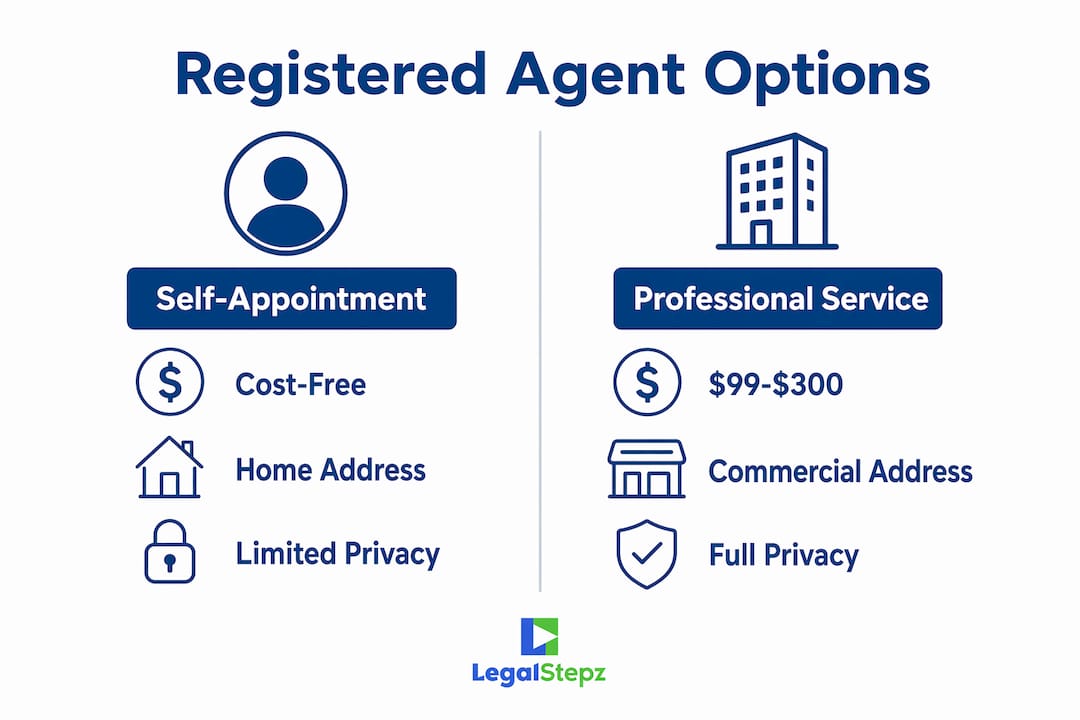
Acting as your own agent vs. hiring a registered agent service
This is the decision most California entrepreneurs face after learning what a registered agent is. Both paths are legal. Neither is universally better. The right choice depends on your business model, your schedule, and how much you value privacy.
| Factor | Self-appointment | Professional service |
|---|---|---|
| Annual cost | $0 direct cost | $99 to $300 per year |
| Privacy | Personal address becomes public record | Service address used instead of yours |
| Availability | You must be present during business hours | Service handles availability |
| Reliability | Dependent on your schedule and location | Consistent, staffed coverage |
| Document handling | You manage receipt and forwarding | Service scans and forwards promptly |
| Compliance alerts | Your responsibility | Often included with service |
Registered agent services in California typically cost between $99 and $300 annually. For most small business owners, that cost is modest relative to the protection it provides.
The case for self-appointment is primarily financial. If you work from a fixed commercial location, maintain regular business hours, and have no privacy concerns about your address appearing in public filings, serving as your own agent is a legitimate choice. Many sole proprietors and early-stage founders take this route.
The case against self-appointment is practical. Self-appointed registered agents must have a physical address and be available during business hours. If you travel for client meetings, work remotely across different locations, or simply step out of the office regularly, you create gaps in availability. A process server who arrives during one of those gaps and cannot complete delivery does not wait. The legal clock keeps running regardless.
Privacy is the second major consideration. Your registered agent's address is a public record. Listing your home address means anyone can find it through a basic Secretary of State search. Professional services use their own address, keeping yours off the public record entirely. For entrepreneurs who work from home or want to separate their personal and business lives, this alone often justifies the annual fee.
There is also the question of what happens when you are unavailable for an extended period. Vacations, medical leave, and business travel are all situations where a professional service maintains continuity without interruption. If your registered agent resigns or becomes unavailable, you must designate a replacement promptly to avoid penalties. A professional service eliminates that risk entirely.
How to choose and maintain a registered agent in California
Choosing a registered agent is a decision worth making deliberately. Here is a practical process for getting it right and keeping it current.
- Verify the physical address. Confirm the agent has a real street address in California, not a mailbox service or virtual office that cannot accept in-person delivery from a process server.
- Confirm business hours coverage. The agent must be reachable during standard business hours on every business day. Ask directly how they handle holidays and unexpected closures.
- Check document forwarding speed. Legal documents are time-sensitive. A registered agent who holds documents for days before forwarding them can cost you critical response time in a lawsuit.
- Look for compliance monitoring. The best registered agent services do more than receive mail. They track your annual report deadlines, statement of information due dates, and other ongoing compliance requirements and alert you before deadlines pass.
- Update your agent information with the Secretary of State whenever anything changes. A name change, address change, or agent resignation all require a formal update. Failing to file that update means the state still has the old information on record, and documents will go to the wrong place.
The most common mistake California entrepreneurs make is treating the registered agent designation as a one-time task completed during formation and never revisited. Business circumstances change. Agents move, resign, or close. Reviewing your registered agent status annually takes five minutes and prevents problems that can take months and significant legal fees to resolve.
For non-resident founders or entrepreneurs expanding into California from another state, the registered agent requirement for non-residents is especially critical, since you cannot personally serve as the agent without California residency.
Key takeaways
A registered agent is a legal requirement for every California corporation and LLC, and choosing the wrong one or neglecting to maintain one creates compliance and litigation risks that can dissolve your business.
| Point | Details |
|---|---|
| Legal definition | A registered agent receives service of process and official government documents on behalf of your business. |
| California requirement | Every corporation and LLC must designate a qualified agent with a physical California address. |
| Self vs. service | Professional services cost $99 to $300 per year and provide privacy, reliability, and compliance alerts. |
| Privacy protection | Using a service keeps your personal address off the public record maintained by the Secretary of State. |
| Ongoing maintenance | Update your agent's information with the state whenever contact details or personnel change. |
Why most entrepreneurs underestimate this role
I have worked with hundreds of California business owners, and the registered agent conversation almost always goes the same way. Founders treat it as a checkbox during formation, pick the cheapest or most convenient option, and move on. Then, two or three years later, something changes. They move offices, their agent retires, or they start traveling more. The agent designation quietly becomes outdated, and nobody notices until a lawsuit arrives at an old address.
The part that surprises people most is how fast a default judgment can happen. Courts do not wait for you to figure out your mail situation. If service of process is completed at your registered address and you never receive it because the agent is gone or the address is wrong, the clock on your response window starts running anyway. I have seen profitable, well-run businesses face serious legal exposure over something that a $150 annual service fee would have prevented entirely.
My honest advice is this: if you are operating a home-based business or a business where you are frequently away from your primary location, hire a professional service from day one. The privacy benefit alone is worth it. If you are working from a fixed commercial address with consistent staffing, self-appointment is defensible, but build a review into your annual compliance calendar. The California agent of service process is not complicated, but it demands consistency.
— Peter
How Legalstepz can handle this for your California business
Legalstepz provides registered agent services, LLC formation support, and ongoing compliance tools built specifically for California entrepreneurs. If you are forming a new LLC or corporation, or if your current registered agent situation needs an update, Legalstepz handles the paperwork and keeps your business in good standing with the California Secretary of State.
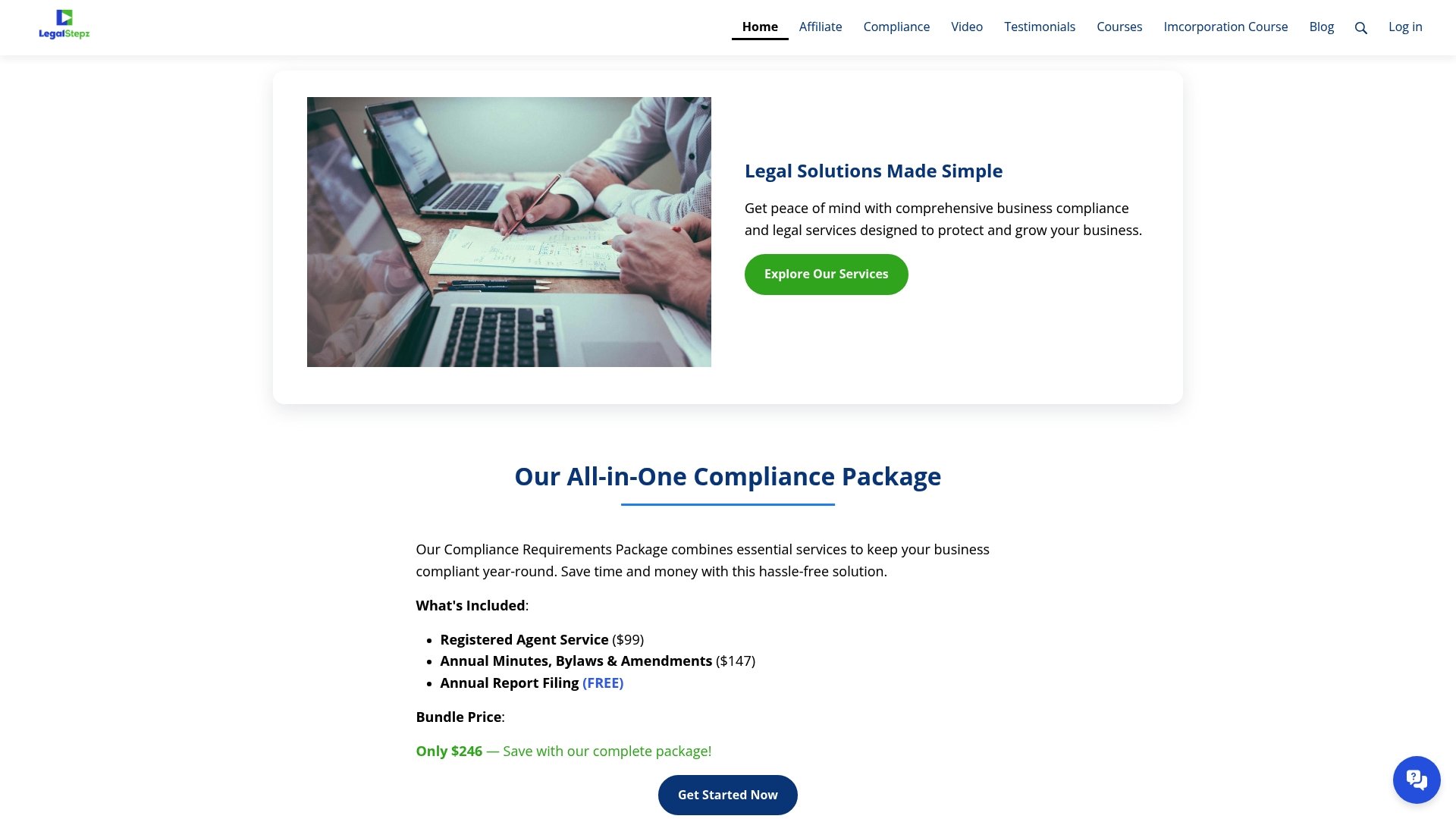
The LLC formation course at Legalstepz walks you through every step of forming and maintaining a California LLC, including registered agent selection, annual compliance requirements, and how to form a California LLC correctly from the start. Whether you are a first-time founder or restructuring an existing entity, Legalstepz gives you the tools to stay compliant without hiring a full-time attorney.
FAQ
What is a registered agent in simple terms?
A registered agent is the person or business designated to receive legal documents, lawsuits, and government notices on behalf of your corporation or LLC. Every California business entity is required by law to maintain one with a physical in-state address.
Can I be my own registered agent in California?
You can self-appoint if you are at least 18 years old, a California resident, and have a physical street address where you are available during business hours. Your address will become part of the public record.
What happens if my business does not have a registered agent?
Businesses without a valid registered agent risk default judgments in lawsuits, administrative dissolution by the California Secretary of State, and loss of good standing. These consequences can occur without any direct notice to the business owner.
How much does a registered agent service cost in California?
Professional registered agent services in California typically cost between $99 and $300 per year. That fee generally covers document receipt, forwarding, and compliance reminders.
How do I change my registered agent in California?
You file a Statement of Information or a specific agent change form with the California Secretary of State. The update must be filed promptly whenever your agent resigns, moves, or is replaced to avoid gaps in your compliance status.