

A statutory agent is the officially designated individual or entity appointed by a corporation to receive service of process, lawsuits, court summons, and official state correspondence on behalf of the business. In California, every corporation must appoint a statutory agent, also commonly called a registered agent, and file that designation with the California Secretary of State. This role sits at the center of your company's legal compliance. Without a properly appointed agent, your corporation cannot reliably receive notice of legal actions, tax correspondence, or state compliance documents.
What is a statutory agent and what do they actually do?
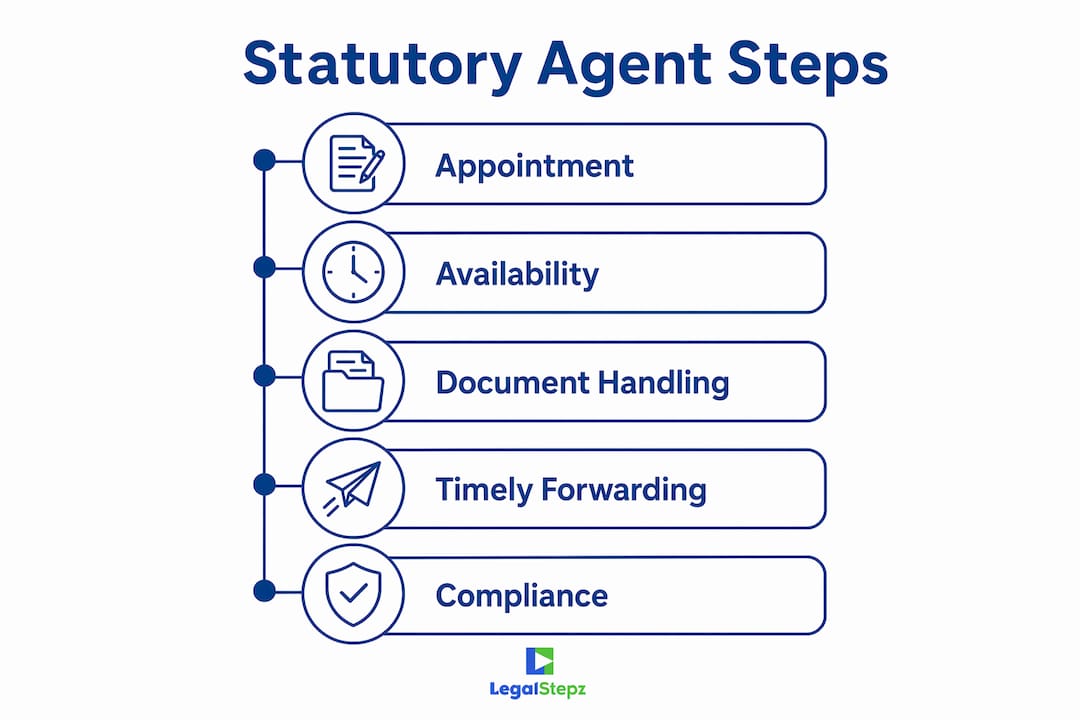
A statutory agent's primary legal function is to receive service of process and official state correspondence on behalf of a business entity, triggering compliance deadlines the moment documents arrive. That single function carries enormous weight. A lawsuit filed against your corporation gets delivered to your statutory agent first. If that agent misses the delivery, your corporation may not know a case exists until a judgment has already been entered.

The statutory agent role is fundamental to due process. The state court system depends on a reliable point of contact to properly notify a business entity of legal actions administered against it. Without that contact point, courts cannot guarantee fair notice, and the legal system treats that as the corporation's problem, not the court's.
Beyond lawsuits, the agent also receives:
- Tax notices from the California Franchise Tax Board
- Annual report reminders and compliance documents from the Secretary of State
- Subpoenas and regulatory correspondence
- Notices of administrative actions
Pro Tip: Keep a dedicated email address and phone number on file with your statutory agent so they can reach the right person inside your company the moment a document arrives.
Statutory agents must be available during standard business hours, typically 9 AM to 5 PM, to receive documents in person on behalf of the corporation. That availability requirement is not optional. It exists to prevent a corporation from dodging service by simply never being reachable.
Timely forwarding of legal and official documents by the statutory agent is vital to ensure compliance with filing deadlines and avoid costly penalties. A document that sits unforwarded for even a few days can cause a corporation to miss a response window that triggers automatic penalties.
What are the risks of not maintaining a proper statutory agent?
Failing to maintain a properly designated statutory agent creates serious legal and financial exposure for your California corporation. The consequences fall into three categories: legal, financial, and operational.
On the legal side, missing critical legal documents due to improper statutory agent designation can result in default judgments against the corporation without notice, which are difficult and costly to overturn. A default judgment means the court rules against your company simply because you did not respond. Overturning one requires filing motions, hiring attorneys, and proving you never received proper notice, which courts do not easily accept.
The financial consequences compound quickly:
- Default judgments can result in wage garnishments, bank levies, or liens on business assets.
- Failure to maintain a statutory agent can result in administrative dissolution of a corporation by the California Secretary of State, plus fines and penalties.
- Reinstating a dissolved corporation requires paying back fees, filing delinquent reports, and potentially losing the corporation's name to another registrant.
- Missed tax notices lead to accrued interest and late penalties from the Franchise Tax Board.
Administrative dissolution is the operational consequence most business owners underestimate. Once dissolved, your corporation loses its legal standing. That means contracts signed during the dissolution period may be unenforceable, and personal liability protection can collapse.
If a statutory agent is unavailable or improperly registered, courts may permit service by alternative methods, increasing the risk that businesses face default judgments without knowledge. Alternative service methods include posting notice at the business address or serving the Secretary of State directly. Neither method guarantees the corporation's principals actually receive the documents in time to respond.
How to choose and appoint a statutory agent in California
California law defines exactly who qualifies to serve as a statutory agent. California statutory agents must be either individuals residing in California or business entities authorized to conduct business in the state. They must maintain a physical street address in California and be available during normal business hours.
That leaves California entrepreneurs with two practical options.
Appointing yourself or an employee
You can designate yourself, a co-founder, or a trusted employee as the statutory agent. This costs nothing upfront and keeps document handling internal. The drawbacks are real, though. If you travel frequently, work remotely, or change office locations, your agent's availability and address may lapse without you realizing it. Missing even one document delivery can trigger the cascade of consequences described above.
Using a professional statutory agent service
Professional services maintain a permanent physical address, staff the office during all business hours, and forward documents immediately. They also handle address changes automatically when you update your account. For most California corporations, this is the lower-risk option.
Key criteria for evaluating any statutory agent:
- Confirmed physical street address in California (no P.O. Boxes accepted)
- Documented availability during 9 AM to 5 PM business hours
- Clear process for forwarding documents to the corporation
- Experience with California Secretary of State filing requirements
- Ability to update agent information with the state when needed
Filing the appointment requires submitting the correct form to the California Secretary of State. For corporations, that means including the agent's name and physical address in the Articles of Incorporation or updating it via a Statement of Information. Legalstepz handles both the registered agent designation and the associated state filings, reducing the chance of a clerical error that could invalidate the appointment.
Pro Tip: Set a calendar reminder 60 days before your Statement of Information due date to verify your statutory agent's address and availability are still current with the Secretary of State.
Common misconceptions about statutory agents in California
Several widely held beliefs about statutory agents are simply wrong, and acting on them creates compliance risk.
Misconception 1: The statutory agent can act on behalf of the corporation.
Statutory agents do not have authority to act on behalf of the corporation beyond accepting document service. They cannot sign contracts, make decisions, or bind the company legally. Many business owners assume that because the agent receives legal documents, they have some authority to respond to them. They do not. The agent's job ends when the document is forwarded.
Misconception 2: A P.O. Box works as a registered office address.
Using a P.O. Box for the registered office address of the statutory agent is rejected by the state and causes filing delays or outright refusal. California requires a physical street address where a person can physically receive documents in person. A P.O. Box cannot satisfy that requirement because no one is physically present to accept service.
Misconception 3: Any address in the state qualifies.
The address must be a location where the agent is actually present during business hours. A home address works legally, but only if the agent is reliably there from 9 AM to 5 PM on business days. A vacation home or a property the agent rarely visits does not meet the spirit or letter of the requirement.
| Misconception | Reality |
|---|---|
| Agent can sign contracts for the corporation | Agent only receives and forwards documents |
| P.O. Box is an acceptable registered address | Physical street address required; P.O. Boxes rejected |
| Any California address qualifies | Agent must be physically present during business hours |
| Agent appointment is a one-time task | Address and availability must stay current with the state |
Pro Tip: If you use a home address for your statutory agent, build a process to notify the Secretary of State immediately if you move. Outdated addresses are one of the most common causes of missed service of process.
Key Takeaways
A statutory agent is a mandatory compliance role for every California corporation, and gaps in agent availability or address accuracy create direct legal and financial risk.
| Point | Details |
|---|---|
| Statutory agent definition | The agent receives service of process and official state documents on behalf of the corporation. |
| Physical address requirement | A physical California street address is required; P.O. Boxes are rejected by the state. |
| Business hours availability | The agent must be present during 9 AM to 5 PM to accept documents in person. |
| Consequences of noncompliance | Missing documents can trigger default judgments, fines, and administrative dissolution. |
| Agent authority limits | Statutory agents receive documents only; they cannot sign contracts or act for the corporation. |
Why I think most entrepreneurs underestimate this role
Peter here. After years of watching California corporations navigate compliance issues, the statutory agent role is the one that surprises business owners the most when it goes wrong.
The problem is that nothing happens for months or years. You appoint an agent, file the paperwork, and move on. Then one day a lawsuit gets served to an address you moved away from two years ago. The clock on your response window starts ticking the moment that document is delivered, not the moment you find out about it. By the time you learn a case exists, you may already be in default.
The business owners I see get into trouble are almost always the ones who appointed themselves or a family member as the statutory agent, then changed offices, hired a remote team, or simply stopped being reliably available during business hours. The agent change process is straightforward, but people forget to do it.
My honest recommendation: treat the statutory agent appointment as a recurring compliance task, not a one-time checkbox. Verify the agent's address and availability at least once a year, ideally when you file your Statement of Information. If you are using a professional service, confirm they still have your current contact information for forwarding. A few minutes of verification once a year is far cheaper than a default judgment.
— Peter
How Legalstepz supports your statutory agent compliance
California corporations need a statutory agent who is reliable, properly registered, and ready to forward documents without delay.

Legalstepz provides registered agent services for California corporations, including maintaining a compliant physical address, handling document forwarding, and keeping your agent information current with the Secretary of State. Legalstepz also handles Statements of Information, annual minutes, and bylaws, so your corporation stays in good standing across every compliance requirement. If you need to appoint or update your statutory agent, Legalstepz makes the filing process straightforward and accurate from the start.
FAQ
What is the difference between a statutory agent and a registered agent?
A statutory agent and a registered agent are the same role described by different terms. California most commonly uses "agent for service of process," but all three terms refer to the designated individual or entity that receives legal documents on behalf of a corporation.
Can I be my own statutory agent in California?
Yes. An individual California resident can serve as their own statutory agent, provided they maintain a physical street address in the state and are available during normal business hours. The risk is that personal schedule changes or address updates can create compliance gaps.
What happens if my statutory agent misses a document delivery?
If the agent is unavailable, courts may permit alternative service methods, including serving the California Secretary of State directly. The corporation may never receive actual notice, and a default judgment can be entered without the business knowing a lawsuit existed.
Does a statutory agent need to be an attorney?
No. A statutory agent does not need to be an attorney or have any legal credentials. The role requires only that the agent be a California resident or an authorized business entity with a physical address and consistent availability during business hours.
How do I update my statutory agent with the California Secretary of State?
California corporations update their statutory agent by filing a Statement of Information with the Secretary of State. The form requires the agent's name and physical California street address. Legalstepz can file your Statement of Information and update your agent designation in one step.