

A corporate compliance officer is the executive responsible for designing, implementing, and overseeing an organization's adherence to applicable laws, regulations, and internal policies to safeguard against legal, financial, and reputational risks. The role sits at the intersection of law, operations, and ethics, making it one of the most consequential positions in any corporation. Demand for compliance professionals is growing 15–20% annually as regulatory frameworks like GDPR, the EU AI Act, and ESG reporting requirements expand. Understanding why corporations need compliance officers is no longer optional for executive teams. It is a governance imperative.
Why corporations need compliance officers: the core case
Corporate compliance officers translate complex regulatory requirements into practical, enforceable policies across every department. They do not simply read laws and file reports. They build the systems that keep a company out of court, out of the headlines, and trusted by investors.
The regulatory environment in 2026 is more demanding than at any prior point. Corporations now face overlapping frameworks including GDPR, HIPAA, SOC 2, ISO 27001, and emerging AI governance standards. Each framework carries its own audit requirements, documentation standards, and penalty structures. A compliance officer integrates these standards into a single, coherent program that the board can monitor and regulators can verify.

Compliance is also a strategic asset signaling market maturity to investors. That means a well-run compliance function does not just prevent fines. It actively supports capital raises, M&A due diligence, and enterprise sales cycles where customers demand proof of regulatory adherence before signing contracts.
What primary responsibilities do compliance officers perform?
The compliance officer role covers far more ground than most executives realize. The core responsibilities fall into five distinct functions.
- Policy development: Compliance officers draft, update, and communicate internal policies that reflect current regulatory requirements. They translate legal language into plain procedures that employees in IT, sales, finance, and HR can actually follow.
- Training and monitoring: They design and deliver compliance training programs across departments, then monitor adherence through audits, reporting systems, and key risk indicators.
- Regulatory liaison: Compliance officers handle external communications with regulators, manage regulatory filings, and represent the company during examinations or investigations.
- Risk identification: They run proactive risk assessments to catch gaps before regulators do. This includes reviewing new products, partnerships, and market entries for compliance exposure.
- Internal investigations: When potential violations surface, the compliance officer leads or coordinates the internal investigation, documents findings, and recommends corrective action.
The reporting line matters as much as the job description. Compliance officers report directly to the board or audit committee, not to the CEO or General Counsel, to preserve independence. Successful compliance programs include clear policy statements, training, proactive monitoring, independent audits, and a culture that encourages misconduct reporting without retaliation.
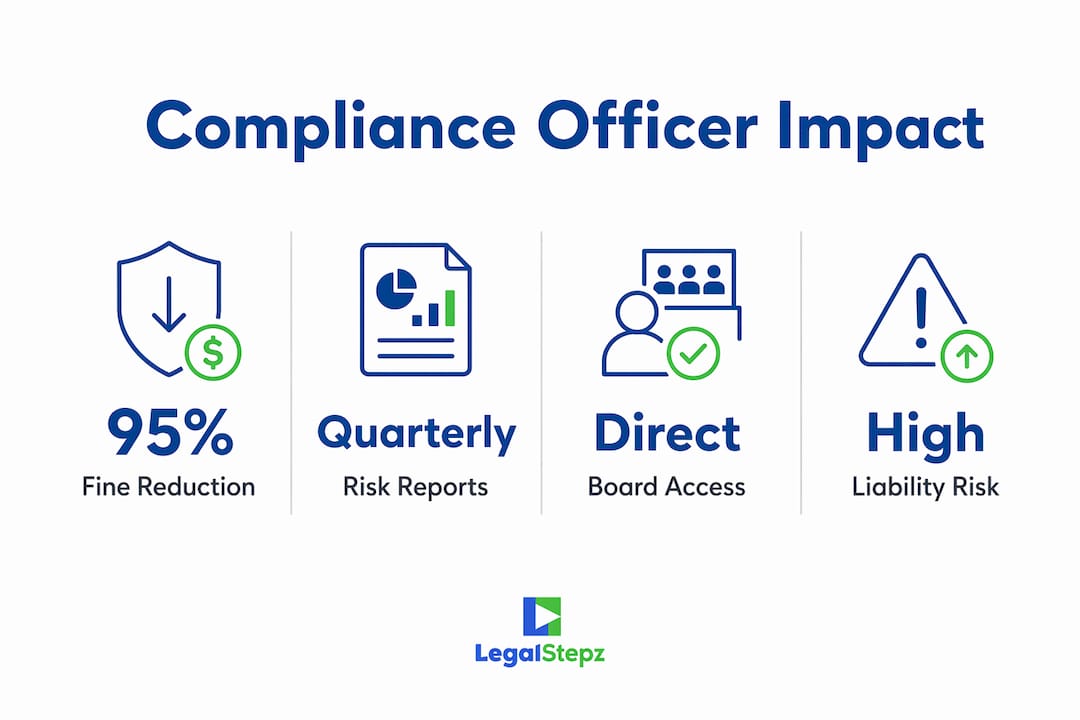
Pro Tip: Require your compliance officer to present a quarterly risk report directly to the board, not filtered through the CEO. That single structural choice is what separates a compliance program regulators respect from one they dismiss.
How do compliance officers protect corporations from fines and legal penalties?
The financial case for hiring a compliance officer is direct. Companies with formal compliance programs can reduce potential federal fines by up to 95%. That figure reflects how seriously the U.S. Department of Justice and federal regulators weigh the existence of a genuine compliance program when calculating penalties.
The mechanism is straightforward. A compliance officer identifies regulatory exposure before it becomes a violation. They build the documentation trail that proves good faith effort. When a regulator does find an issue, that documented program is the difference between a warning letter and a consent decree.
Reputational risk carries its own financial weight. A single enforcement action can trigger customer churn, stock price drops, and loss of government contracts. Compliance officers manage this exposure by keeping the corporation's public regulatory record clean. They also protect shareholder trust by giving the board accurate, timely information about the company's risk profile.
| Compliance function | Risk it addresses | Financial impact |
|---|---|---|
| Policy and procedure development | Operational non-compliance | Reduces audit findings and remediation costs |
| Regulatory filing management | Missed deadlines and reporting gaps | Avoids late fees and regulatory sanctions |
| Proactive risk monitoring | Emerging regulatory exposure | Prevents enforcement actions before they start |
| Independent internal audits | Undetected misconduct | Limits liability and supports fine reduction |
| Board-level reporting | Governance failures | Demonstrates good faith to regulators and courts |
Compliance officers also carry personal accountability. Compliance officers face personal liability if they participate in wrongdoing or ignore red flags during investigations. That accountability structure creates a strong incentive for rigorous, honest program management.
When should a corporation hire a dedicated Chief Compliance Officer?
The timing of the first Chief Compliance Officer hire is one of the most consequential decisions a board makes. Delaying a CCO hire can lead to enforcement actions, costly consent decrees, and severe regulatory scrutiny. Six-figure legal bills and management upheaval are common outcomes of late or poor hires.
Three triggers signal that a corporation needs a dedicated CCO rather than a part-time compliance function or outsourced arrangement. First, rapid scaling. When headcount, revenue, or geographic footprint grows quickly, the compliance surface area expands faster than informal processes can track. Second, entry into regulated markets. Financial services, healthcare, defense contracting, and data-intensive industries carry compliance obligations that require full-time, specialized leadership. Third, sensitive data handling. Any corporation collecting personal data at scale under GDPR or HIPAA needs a compliance officer who understands both the legal requirements and the technical controls.
Corporations should hire an in-house CCO when risk and scale increase beyond what outsourced compliance can manage. Outsourced compliance works for early-stage companies with limited regulatory exposure. Subordinate compliance roles, where a compliance manager reports to the General Counsel, work for mid-size firms. But a dedicated CCO reporting directly to the board is the standard for any corporation operating in complex or heavily regulated environments.
Pro Tip: The strongest CCOs combine legal knowledge, business judgment, and technical literacy in areas like data security and AI governance. When you hire, test for all three. A compliance officer who cannot read a SOC 2 report or understand an AI risk model will miss the violations that matter most in 2026.
What organizational structure makes compliance officers effective?
Authority and independence are the two structural requirements that determine whether a compliance program works or fails. Executive-level authority is essential for compliance officers to hold all departments accountable for regulatory adherence. Without it, the compliance function becomes advisory at best and decorative at worst.
The reporting line is the clearest indicator of genuine independence. Regulators view a CCO who reports to the General Counsel as a yellow flag. The concern is that legal strategy and compliance obligations can conflict, and a compliance officer embedded within the legal function may prioritize attorney-client privilege over regulatory transparency. Direct board reporting and independence from legal counsel are the structural standard regulators expect.
Effective compliance officers also need documented authority to cross departmental lines. They must be able to require corrective action from IT, HR, finance, and operations without needing CEO approval for each intervention. Compliance officers must have documented independence and authority to report directly to boards, bypassing CEOs if necessary.
The practical implications for corporate leaders are clear:
- Place the CCO at the C-suite level with a direct board reporting line.
- Document the CCO's authority in the corporate bylaws or a board resolution.
- Give the CCO budget authority for audits, training, and outside counsel.
- Separate the compliance function from the legal department organizationally.
- Require the board's audit committee to meet with the CCO without management present at least once per year.
These structural choices are what regulators require to recognize a compliance program as genuine rather than performative.
Key Takeaways
A corporation without a properly structured compliance officer is not managing regulatory risk. It is deferring it until the cost becomes unmanageable.
| Point | Details |
|---|---|
| Financial protection | Formal compliance programs can reduce federal fines by up to 95%. |
| Hire timing matters | Delay a CCO hire and face enforcement actions, consent decrees, and six-figure remediation costs. |
| Independence is structural | CCOs must report directly to the board, not the General Counsel, to maintain regulatory credibility. |
| Compliance drives growth | A strong compliance record supports investor confidence, M&A due diligence, and enterprise sales. |
| Authority must be documented | CCOs need cross-departmental enforcement authority written into bylaws or board resolutions. |
Compliance is a business function, not a legal tax
Most executives I work with treat compliance as a cost center they tolerate. That framing is the most expensive mistake a board can make.
The compliance officer role has evolved well beyond enforcement. The best CCOs I have seen operate as trusted business advisors who sit at the table when new products are designed, new markets are entered, and new technology is deployed. They catch the problems that would otherwise surface during a regulatory examination or a data breach investigation, when the cost is ten times higher.
The common pitfalls are predictable. Corporations hire a compliance officer too late, after the first enforcement action. They give the role insufficient authority, burying it under the General Counsel. They hire for legal knowledge alone and miss the technical literacy that modern compliance requires. And they treat the compliance program as a document-filing exercise rather than a living culture.
The corporations that get this right treat compliance as a legal necessity and governance standard from day one. They give their CCO a seat at the executive table, a direct line to the board, and the authority to say no to any department. That structure does not slow the business down. It protects the business from the decisions that would have stopped it entirely.
— Peter
How Legalstepz supports corporate compliance governance
Building a compliance program from the ground up requires more than hiring the right officer. It requires the right corporate documents, governance structures, and annual filings to be in place before regulators come looking.
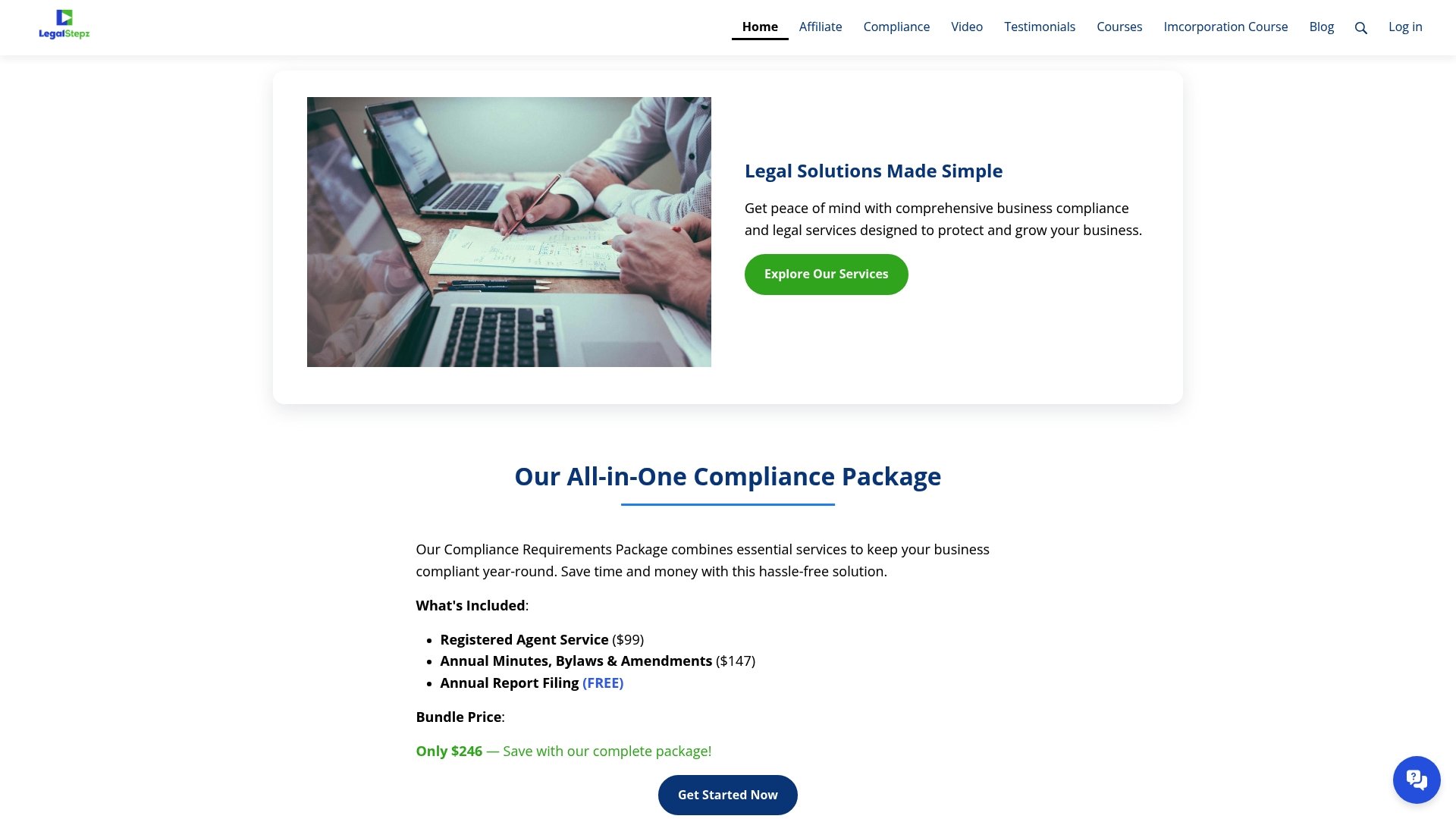
Legalstepz helps corporations establish the foundational governance infrastructure that compliance programs depend on. From drafting annual minutes and bylaws to filing statements of information and providing registered agent services, Legalstepz handles the corporate maintenance tasks that keep your compliance record clean. Boards that work with Legalstepz have the documentation trail regulators expect to see. Visit legalstepz.com to learn how Legalstepz can support your corporation's compliance governance from the ground up.
FAQ
What does a compliance officer do day to day?
A compliance officer develops policies, delivers training, monitors regulatory adherence, manages regulatory filings, and leads internal investigations. They report risk findings directly to the board or audit committee on a regular basis.
How much can a compliance program reduce corporate fines?
Companies with formal compliance programs can reduce potential federal fines by up to 95%. Regulators weigh the existence and quality of a compliance program when calculating penalties.
When should a corporation hire a Chief Compliance Officer?
A corporation should hire a dedicated CCO when it scales rapidly, enters regulated markets, or handles sensitive personal data at scale. Delaying this hire risks enforcement actions and costly consent decrees.
Can a compliance officer be held personally liable?
Compliance officers face personal liability if they participate in wrongdoing or ignore red flags during regulatory investigations. This risk makes ethical conduct and thorough documentation non-negotiable for anyone in the role.
Why does the CCO reporting line matter?
Regulators treat a CCO who reports to the General Counsel as a governance red flag. Direct board reporting is the structural standard that demonstrates genuine independence and program credibility.