

A likelihood of confusion exists under U.S. trademark law when consumers are likely to mistake the source, sponsorship, or approval of goods or services because two marks create a similar commercial impression. It is the single most common reason the USPTO refuses registration, and the core question in most infringement disputes. Whether your application survives, or your brand faces a legal challenge, usually comes down to a multi-factor analysis courts and examiners apply case by case.
TL;DR:
- The most common reason for USPTO refusal is a likelihood of confusion, mainly based on mark similarity and relatedness of goods.
- The du Pont factors, especially similarity of marks and relatedness of products, drive the legal analysis and practical decisions.
- The USPTO conducts its own independent search post-filing, so a clearance search reduces but does not eliminate the risk of rejection.
- Receiving a Section 2(d) refusal often leads to lengthy responses, appeals, and can delay approval by months or more.
- Preparing a narrower identification of goods and understanding the process before filing lowers the chance of costly surprises.
Table of Contents
- The legal basis: Section 2(d) and the Lanham Act
- The du Pont factors: how confusion gets measured
- How the USPTO reviews applications for confusion
- Steps to lower your confusion risk before you file
- Misconceptions and real-world outcomes
- What this means if you are building a brand from scratch
- Reduce your filing risk with training and compliance support
- FAQ
- Sources
The legal basis: Section 2(d) and the Lanham Act
Likelihood of confusion rests on a handful of statutory provisions. Section 2(d) of the Lanham Act, codified at 15 U.S.C. § 1052(d), lets the USPTO refuse registration when a mark so resembles a previously registered or used mark that confusion is likely. Infringement claims work similarly but apply after registration or in commerce: 15 U.S.C. § 1114 covers infringement of registered marks, while 15 U.S.C. § 1125(a) covers unfair competition and false designation of origin for both registered and unregistered marks.

The Supreme Court reinforced this framework in Jack Daniel's Properties, Inc. v. VIP Products LLC. The Court held that when an accused mark functions as a source identifier rather than pure commentary or parody, the Lanham Act's likelihood-of-confusion inquiry governs, even when expressive elements are present.
USPTO examining attorneys apply this law during the application process, guided by the Trademark Manual of Examining Procedure. Courts apply the same underlying test in infringement litigation, though the specific factor lists and emphasis can differ by circuit.
The du Pont factors: how confusion gets measured
Examining attorneys and courts rely on a multi-factor test, often called the du Pont factors (or Lapp factors in some circuits), to decide whether confusion is likely. The Lapp test framework treats no single factor as automatically controlling, though some carry more weight than others depending on the facts.
- Similarity of the marks: appearance, sound, meaning, and overall commercial impression, not a side-by-side letter count.
- Relatedness of goods or services: whether consumers would assume a common source, even if the products are not identical.
- Channels of trade: whether the goods or services reach the same stores, websites, or distribution paths.
- Purchaser sophistication: casual consumers confuse marks more easily than specialized buyers making expensive, deliberate purchases.
- Strength of the senior mark: distinctive or famous marks get broader protection than descriptive or weak ones.
- Evidence of actual confusion: real-world instances carry significant weight but are rarely available.
- Applicant's intent: evidence of intentional copying supports a finding of confusion.
- Third-party uses: a crowded field of similar marks can narrow the scope of protection for any one of them.
Two factors tend to dominate in practice: mark similarity and relatedness of goods. There is an inverse relationship between them. Marks that are nearly identical can create confusion even when the goods are only loosely related, while marks with more differences usually need closer product overlap to support a refusal. Identical marks on identical or closely related goods represent the highest-risk combination and are the pattern examiners flag fastest.
How the USPTO reviews applications for confusion
After you file, an assigned examining attorney runs an independent trademark search to compare your mark against registered and pending marks in the USPTO database. This happens regardless of any search you performed beforehand, and it is the step that most often produces a Section 2(d) refusal.
- The examining attorney searches for marks similar in sound, appearance, or meaning covering related goods or services.
- If a conflict is found, including an earlier-filed pending application that has not yet registered, the office issues an Office Action citing the refusal.
- You can respond by amending the identification of goods or services to narrow overlap, arguing the marks are dissimilar, submitting evidence of differences in the marketplace, or negotiating a consent or coexistence agreement with the cited registrant.
- If the refusal stands after your response, you can appeal to the Trademark Trial and Appeal Board, a process that typically adds months to over a year before resolution.
Timelines vary widely. A clean application can register relatively quickly, while one that draws a Section 2(d) refusal and appeal can take significantly longer to resolve.
Steps to lower your confusion risk before you file
A thorough clearance search before filing reduces surprises, but it has real limits. It should check the USPTO database, state trademark registries, common law uses, and domain or social media names in your industry. Even a careful search will not catch everything, and the USPTO will still run its own independent search after you file, so a clean pre-filing search is not a guarantee.
- Search beyond identical matches: phonetic equivalents and marks with similar meanings count too.
- Draft narrow, specific identifications of goods and services rather than broad catalog-style descriptions.
- Add disclaimers for descriptive portions of a mark when relevant, since disclaimed terms carry less weight in the confusion analysis.
- Focus design choices on the dominant, memorable element of your mark rather than minor stylistic details.
Pro Tip: Courts and examiners judge confusion based on imperfect recollection, not a side-by-side comparison, so the dominant word or image in your mark matters far more than small design differences a consumer would never notice in passing.
When a search turns up close conflicts, or when you receive an Office Action, working with counsel or completing a structured Trademark Course before filing can help you frame narrower identifications and stronger responses from the start.
Misconceptions and real-world outcomes
Many applicants assume a clearance search guarantees registration. It does not, since examiners apply judgment the search cannot predict, and actual confusion evidence, while persuasive, is uncommon because it requires real consumer encounters in the marketplace.
- A TTAB examining record involving VITAWAYS and VITAWHEY found likely confusion based on phonetic similarity, overlapping goods, and shared trade channels, showing how several moderate factors combine into a strong refusal.
- The USPTO also notes that identical marks can coexist when goods are unrelated, as with Dove soap and Dove ice cream, illustrating that similarity alone does not decide the outcome.
What this means if you are building a brand from scratch
Most guidance on likelihood of confusion treats the du Pont factors as a neutral checklist, but in practice two of them do almost all the work for a small business: mark similarity and relatedness of goods. Entrepreneurs who spend hours agonizing over purchaser sophistication or third-party registrations often skip the cheaper, faster step of simply changing the dominant word in their proposed name before they ever file.
The bigger misconception is treating a clearance search as insurance. It narrows risk, it does not eliminate it, and the USPTO's own search after filing is the one that actually counts. Businesses that plan for an Office Action as a normal part of the process, rather than a surprise, tend to respond faster and spend less fixing avoidable mistakes. We built our Trademark Course and blog resources on conducting trademark searches around that reality.
— Peter
Reduce your filing risk with training and compliance support
A Section 2(d) refusal can set back a business by months, so a Trademark Course can walk you through how to run a clearance search, draft a narrower identification of goods, and prepare a response if an Office Action arrives. It is built for entrepreneurs filing on their own, not for attorneys, and it pairs naturally with compliance services for businesses that also need a registered agent, annual minutes, or bylaws handled correctly once the entity is formed.
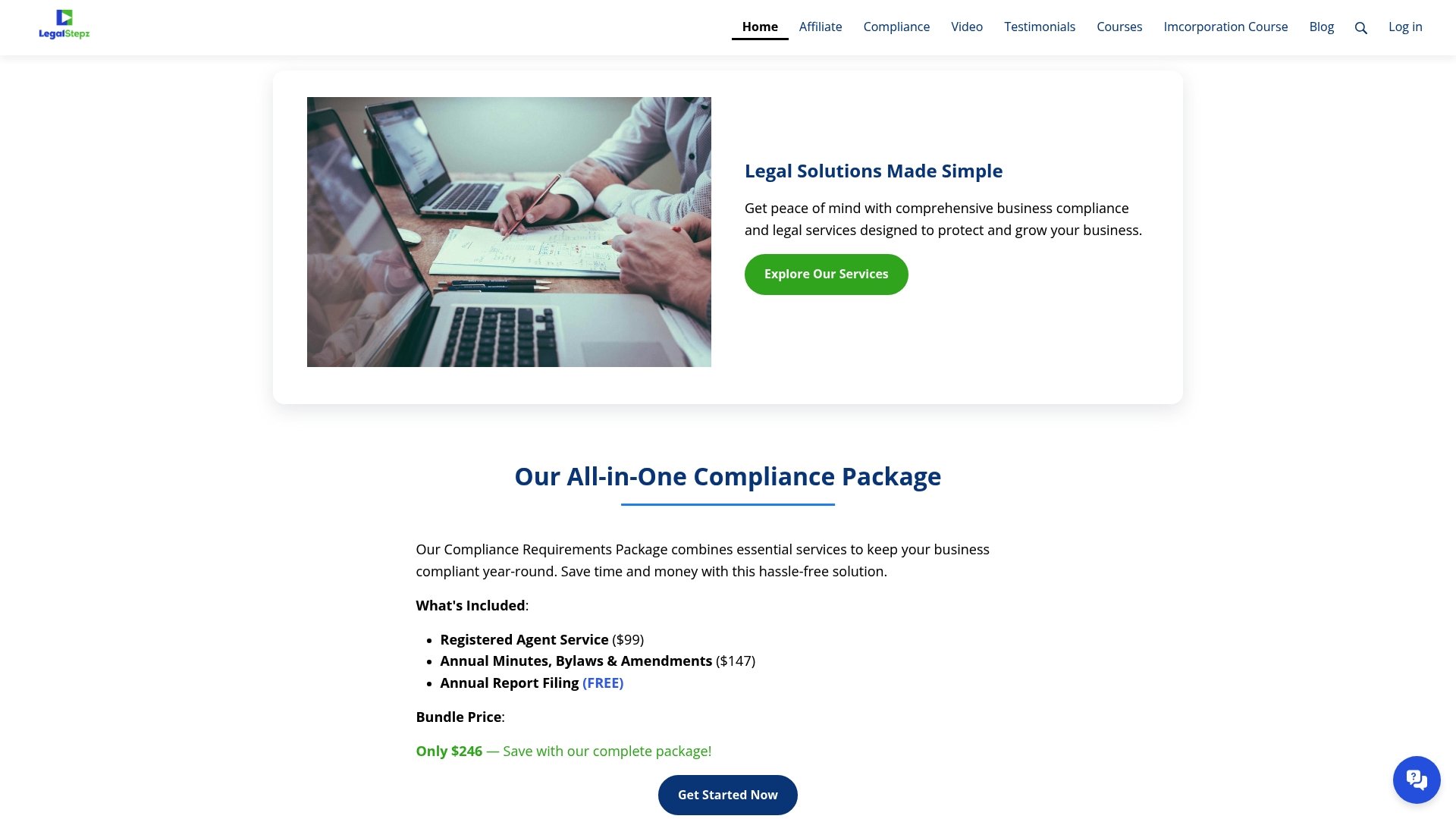
Likelihood of confusion is the most common reason the USPTO refuses trademark applications, which makes pre-filing preparation worth the time before you submit. Start with our Trademark Course or browse our full product catalog to see which training or compliance package fits your filing stage.
This article is general information, not a substitute for advice from a qualified lawyer. Consult a qualified legal professional about your own circumstances before acting on anything here.

FAQ
What is likelihood of confusion in trademark law?
Likelihood of confusion is the legal standard asking whether consumers would mistake the source, sponsorship, or approval of goods or services because two marks are too similar. The USPTO and courts apply a multi-factor test, with mark similarity and relatedness of goods carrying the most weight.
How does the USPTO decide if two trademarks are confusingly similar?
An examining attorney compares the marks for similarity in sound, appearance, and meaning, then checks whether the goods or services are related enough that consumers would assume a common source. This is governed by Section 2(d) of the Lanham Act, which is the most frequent basis for refusal.
Can identical trademarks coexist if they cover different goods?
Yes, identical or very similar marks can coexist when the goods or services are unrelated enough that consumers would not assume a shared source. The USPTO's own examples include cases like identical marks used for unrelated product categories.
What should I do if I receive a Section 2(d) refusal?
You can amend your identification of goods or services, argue the marks are not actually similar, submit supporting evidence, or pursue a consent or coexistence agreement with the cited registrant. If the refusal stands, you can appeal to the Trademark Trial and Appeal Board, though that process can take many months.
Does a trademark clearance search guarantee my application will be approved?
No, a clearance search narrows risk but cannot replace the USPTO's own independent search, which happens after you file. A thorough search covering federal, state, and common law uses still improves your odds significantly before you commit to an application.
Sources
- Possible Grounds for Refusal of a Mark | USPTO
- JACK DANIEL’S PROPERTIES, INC. v. VIP PRODUCTS LLC | Supreme Court
- Representative TTAB opinion (excerpt) — VITAWAYS/VITAWHEY