

You can reserve a business name with the California Secretary of State for a limited period using BizFile Online, and for an LLC or limited partnership the statutory fee is $10. That reservation is advisory only: the state makes its final call on availability when you actually file your formation paperwork, not before.
TL;DR:
- Reserving a name in California costs $10 and lasts for 60 days, but final availability is only determined when filing the formation documents.
- Conduct thorough searches across California Business Registry, USPTO trademark database, and domain/social media handles before reserving to prevent conflicts or rejections.
- Names must be distinguishable and not misleading, with specific designator and restricted word rules depending on the entity type, and often require prior approval from relevant regulators.
- Reserve only if you plan to file within the 60-day window, as holding a reservation without action wastes the fee and extends your timeline without guarantee.
- LegalStepz offers formation support, helping coordinate reservation, filing, and ongoing compliance to prevent timing mistakes and ensure proper registration.
Table of Contents
- Step-by-step: prepare names, search, submit, and calendar your deadline
- California naming rules: distinguishability, designators, and restricted words
- How to search names effectively (SOS, USPTO, domain, and DBA checks)
- Fees, timeline, renewal limits, and special handling options
- Where to file the reservation and how to use the forms
- What a name reservation does not cover
- Quick checklist and common pitfalls to avoid
- How LegalStepz helps founders get this right
- When to reserve and when to just file
- Let LegalStepz handle the filing details
- Sources
- FAQ
Step-by-step: prepare names, search, submit, and calendar your deadline
Reserving a name feels like paperwork, but the order you do things in matters more than the form itself. Skip a step and you can burn your 60 days on a name that gets bounced at formation anyway.
- Draft three to five candidate names before you search anything, and decide your entity type now, since your designator (LLC, Inc., LP) has to match what you plan to file.
- Run the California Business Search on each candidate, filtering by entity type, and pay attention to the distinctive words in your name rather than generic ones like "group" or "solutions."
- Search the USPTO trademark database at Uspto for each surviving candidate, since a name can be open in California and still collide with a federally registered mark.
- Check domain availability and social handles for your top pick, because losing the matching .com or handle after you've committed to a name is a common and avoidable headache.
- Submit your reservation through BizFile Online for the fastest turnaround, by mailing the Name Reservation Request Form, or by dropping it off in person if you need special handling.
- Pay the fee: $10 for an LLC or limited partnership reservation under Government Code section 12190, plus a $10 special handling fee if you drop off in person.
- Calendar the deadline the day you file. Sixty days passes faster than founders expect once incorporation logistics, banking, and licensing enter the picture.
The biggest mistake in this sequence is running the search once, feeling satisfied, and then sitting on the reservation for weeks while other business decisions stack up. The California Secretary of State treats the reservation as a hold on your intended name, not a guarantee, and the clock doesn't pause for indecision.
If you're also mapping out the broader formation process, a step-by-step LLC formation guide walks through what happens after the name is locked in, including articles of organization and your initial Statement of Information.
California naming rules: distinguishability, designators, and restricted words
A name reservation only holds value if the name would actually be approved at filing, so it pays to understand the rules before you search rather than after you're rejected.
California requires that a business name be "distinguishable in the records" of the Secretary of State and not "likely to mislead the public," standards laid out in the state's business entity name regulations. In practice, distinguishable means your name can't be identical or confusingly close to an existing entity name on file, even with small changes in punctuation, spacing, or a generic word swap. Misleading means the name can't imply a business purpose, government affiliation, or licensed profession you don't actually have.
- LLCs must include "LLC," "L.L.C.," or the full phrase "Limited Liability Company" in the name.
- Corporations typically need a designator such as "Inc.," "Corp.," "Corporation," or "Incorporated."
- Words implying banking, trust, or insurance services usually require prior approval from the relevant state regulator before the Secretary of State will accept the filing.
- Words suggesting a government agency, like "Federal" or "United States," are restricted or barred outright.
- Professional designations, such as implying you're a licensed attorney or physician when you're not, can trigger a rejection regardless of how the name searches.
These rules differ by entity type. An LLC and a corporation can sometimes hold names that look similar but aren't identical because the designator itself creates distinguishability. At formation, the Secretary of State may ask for consent letters or regulatory approval documentation if your name brushes up against a restricted term, so it's worth resolving that before you spend your 60-day window.
Pro Tip: If your name idea includes a restricted word like "trust" or "bank," contact the relevant regulator before reserving, since approval can take longer than the reservation period itself.
How to search names effectively (SOS, USPTO, domain, and DBA checks)
A search is only useful if you understand what the tool is actually telling you. The California Business Search ignores punctuation, capitalization, and common entity words, so two names that look different to you may register as identical to the system.
According to the Secretary of State's own search tips guidance, searches aren't case sensitive and generic words or entity identifiers get filtered out automatically. That means searching "Golden State Bakery LLC" and "Golden State Bakery Inc." can return the same underlying conflict, because the system reads past the designator.
- Search the distinctive part of your name alone, then again with your industry word attached, since narrow and broad searches surface different conflicts.
- Filter by entity type when you can, so you're comparing against LLCs or corporations specifically rather than every entity on file.
- Order a status report from the Secretary of State if you want a more exhaustive check than the free online search provides.
- Run the same distinctive keyword through USPTO's TESS database, since a name can clear California and still infringe a federal mark.
- Check the matching domain and major social handles, and separately confirm whether you'll need a county fictitious business name filing if you plan to operate under a different name than your legal entity name.
The California Business Search is a preliminary screening tool, not a legal clearance opinion, and the Secretary of State's own regulations confirm that final availability is decided when your formation document is actually reviewed. A clean search result lowers your risk. It doesn't eliminate it.
For a deeper walkthrough of availability logic specific to 2026 filings, see this breakdown of California entity name availability.
Fees, timeline, renewal limits, and special handling options
The cost of reserving a name is small, but the rules around timing and renewal trip up more founders than the fee does.
The statutory reservation fee for an LLC or limited partnership name is $10, specified directly in Government Code section 12190. Corporation fees should be confirmed against the current Secretary of State fee schedule at the time you file, since fee schedules are updated periodically. The reservation itself lasts 60 days from the date it's granted.
| Detail | Rule |
|---|---|
| Reservation length | Up to 60 days |
| LLC or LP reservation fee | $10 |
| Special handling fee (drop-off) | $10 for name reservations |
| Consecutive reservations | Not allowed for the same applicant and name without a gap |
- You cannot renew the same reservation back to back for the same name and applicant. At least one day must pass between reservation periods.
- Reservations can be transferred to a different applicant if you're handing the entity off to a partner or co-founder before formation.
- Drop-off, or special handling, service is available at Sacramento and Los Angeles offices for founders who need faster turnaround than mail or standard processing allows, according to the Secretary of State's special handling guidance.
Reserve only when you expect to file your formation documents within that 60-day window. If your launch timeline is uncertain, it's often smarter to hold off on the reservation and file directly once you're ready, since a lapsed reservation gains you nothing but a spent fee and a forced waiting period before you can reserve the same name again.
Where to file the reservation and how to use the forms
You have three practical paths to reserve a name, and each fits a different situation depending on how quickly you need confirmation.
- BizFile Online is the fastest option for most founders, since it's the Secretary of State's own portal and avoids mailing delays entirely.
- Mail filing means completing the Name Reservation Request Form PDF, available through the Secretary of State's name reservations page, and sending it with a check or money order for the fee to the Sacramento office.
- In-person drop-off works at the Sacramento and Los Angeles offices and qualifies for special handling, which adds a $10 fee on top of the reservation cost but can shorten processing time significantly when you're on a tight timeline.
Mail filing is the slowest of the three, so it makes sense mainly when you're not in a hurry and want to avoid the trip to a physical office. Drop-off is the opposite case: you pay extra specifically to skip the wait.
If you need to change your reserved name before you actually file your formation documents, you generally have to let the existing reservation run out or coordinate a transfer, since the state doesn't offer a simple "edit" function on an active reservation. Founders who reserve a name, then discover a trademark conflict during their USPTO check, often find themselves back at step one with a new candidate and a fresh $10 fee rather than a quick fix.

What a name reservation does not cover
A reservation confirms one narrow thing: the state's own database doesn't currently show a conflicting entity name, and no other applicant has reserved it. It does not do several things founders assume it does.
- It is not a trademark. Federal trademark rights come from USPTO registration or, in limited circumstances, from actual use in commerce, and a state name reservation carries no weight in a trademark dispute.
- It does not reserve your domain name or social media handles, which are separate systems entirely and can be claimed by anyone, anytime, regardless of your state filing.
- It is not a county fictitious business name (DBA) filing. If you plan to operate under a name different from your legal entity name, you'll need a separate DBA filing at the county level, with its own timeline and publication requirements described in the Business and Professions Code.
If brand protection matters to your business beyond simply forming the entity, the reservation is a first step, not a finish line. A comparison of trademark registration and DBA filing lays out when each protection actually applies.
Quick checklist and common pitfalls to avoid
Most reservation problems come down to skipping a check or misjudging the timeline, not a complicated legal issue.
- Pick three to five candidate names before you search, so a rejection doesn't send you back to a blank page under time pressure.
- Run all four checks: California Business Search, USPTO trademark search, domain availability, and social handle availability.
- Reserve only if you'll file within 60 days, and calendar that deadline the same day you submit.
- Confirm any restricted words (bank, trust, insurance, federal) with the relevant regulator before you rely on the name.
- Know your DBA needs separately if you're operating under a name different from your legal entity name.
Common mistakes worth naming directly: treating the free online search as a legal clearance, using a restricted word without securing the needed approval first, forgetting the special handling fee when dropping off in person, and confusing a DBA filing with an entity name reservation, which are entirely different processes with different offices and different rules.
Pro Tip: If your reservation gets rejected at formation despite a clean preliminary search, don't assume the search was wrong. The state's final review at filing time catches conflicts the online tool doesn't always surface.
If your name gets rejected, your options are picking an alternate from your backup list, seeking written consent from the conflicting entity if one exists, or running a full trademark clearance search with legal help before committing again.
How LegalStepz helps founders get this right
A service provider works with entrepreneurs on the compliance side of business formation: filing statements of information, drafting annual corporate minutes and bylaws, providing registered agent services, and offering step-by-step courses for LLC and corporation formation and trademark registration.
Founders most often run into trouble not with the search itself but with timing: reserving a name too early, missing the 60-day window because formation logistics stalled, or discovering a restricted word issue after the reservation was already filed. Certain formation courses walk through the sequence in order, so the name reservation lines up with the rest of the filing rather than becoming its own separate scramble.
When to reserve and when to just file
A reservation earns its $10 fee when you have a real reason to wait: you're coordinating a public launch, syncing with a fundraising round, or you need the name locked while other paperwork, like a registered agent agreement, gets finalized.
Most founders don't need it. If you're ready to file your formation documents today, filing directly skips the extra step and the extra deadline to track. A reservation is a tool for founders who aren't ready to file yet but need the name held. It's not a required part of forming a California entity, and treating it as a checkbox on your to-do list adds a fee and a countdown clock you didn't need.
— Peter
Let LegalStepz handle the filing details
Reserving a name and then getting the formation paperwork filed correctly are two different jobs, and Formation filing support can help so you're not tracking deadlines, designators, and fee schedules on your own.
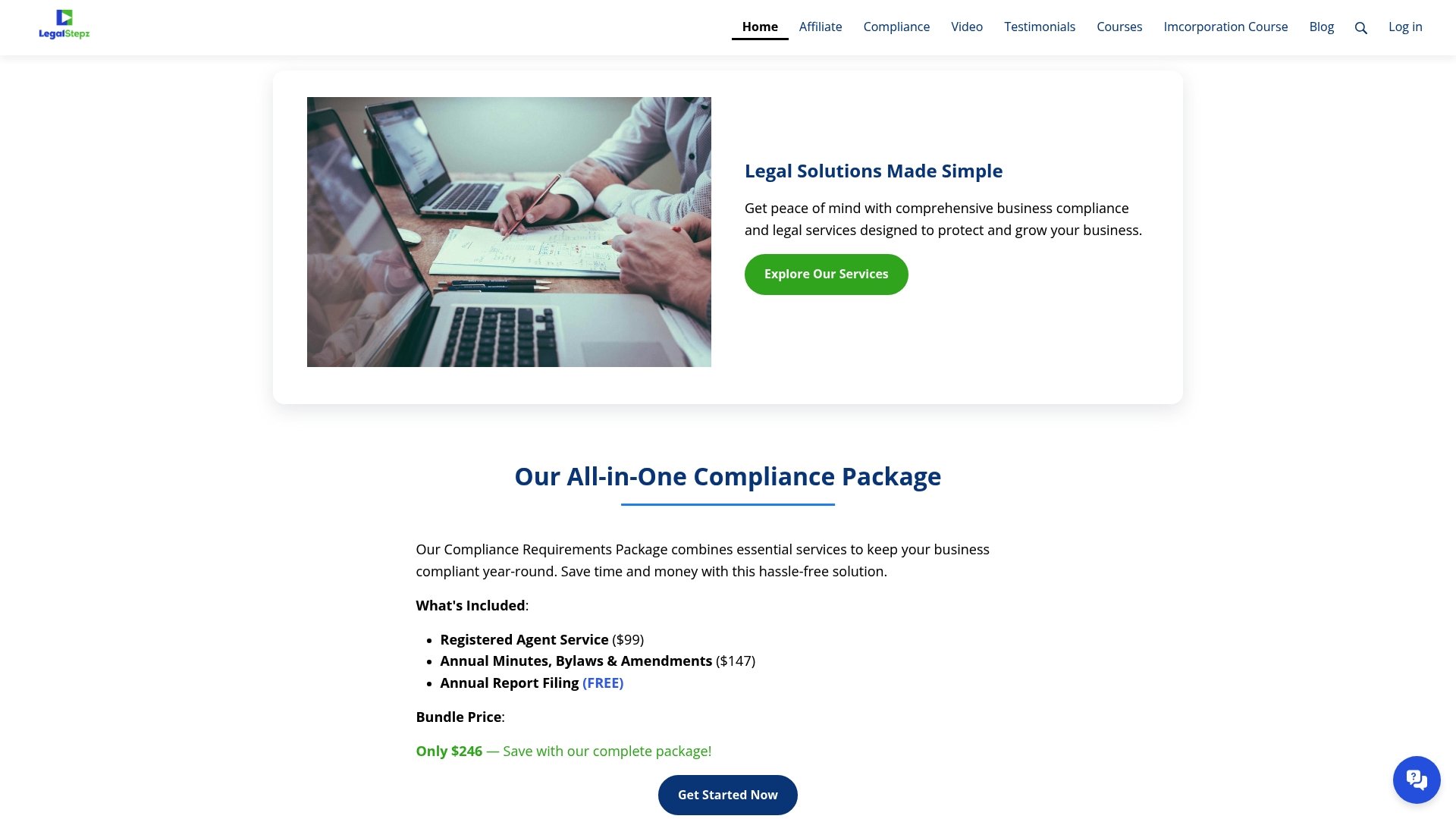
- Services may include formation filing support for LLCs and corporations, registered agent service for a consistent point of contact for state correspondence, compliance bundles covering annual minutes and bylaws drafting, and step-by-step formation courses for those who prefer to handle filing with structured guidance.
Reserving your own name through BizFile Online is entirely doable without help, and plenty of founders do it themselves. Where LegalStepz tends to save the most time is coordinating the timing between your reservation, your formation filing, and your ongoing compliance obligations so nothing lapses. Visit LegalStepz to see current formation packages and get started.
Sources
For the official rules, forms, and search tools referenced throughout this guide:
FAQ
Is California a Native American name?
The name "California" is generally traced to a fictional island in an early Spanish novel rather than to a Native American language. It was applied by Spanish explorers to the region well before statehood.
What was California called originally?
Spanish explorers named the region "California" starting centuries ago, and the name stuck through Mexican and then American territorial control. There wasn't a widely used alternate name for the broader region before that Spanish naming.
How can I check if my LLC name is available in California?
Use the California Secretary of State's Business Search to run a preliminary check against existing entity names on file. Keep in mind the state treats this as a screening tool, not a final determination, since the actual availability decision happens when you file your formation documents.
What not to put in your LLC name?
Avoid words implying banking, trust, or insurance services unless you've secured the required regulatory approval, and avoid anything suggesting a government affiliation, like "Federal" or "State Department." Your LLC name also needs the required designator, such as "LLC" or "Limited Liability Company," to be accepted by the Secretary of State.