

If you formed or registered a business in California, you generally must file your initial Statement of Information within 90 days at bizfileOnline, the Secretary of State's official filing portal. Missing that window can trigger penalties. If you would rather hand the task off, there are filing services available that can handle the paperwork for you.
TL;DR:
- The initial Statement of Information must be filed within 90 days after forming in California, or penalties may apply, especially if late.
- Corporation filings occur annually within a five-month window, while LLCs and nonprofits file every two years, starting from their registration month.
- Gather all necessary details, including registered agent address and officer names, before filing online to avoid delays or errors.
- Filing can be done quickly via the SOS portal, but addresses must be physical street addresses, not P.O. boxes, to prevent validation errors.
- Keeping a compliance schedule or using a filing service helps prevent missed deadlines that could affect your entity's legal standing.
Table of Contents
- What the Statement of Information is and who must file
- When the initial filing is due and how the six month window works
- What information to gather before you start the form
- Step by step: filing online at bizfileOnline
- Fees, penalties, and how to fix a late or missing filing
- How to find your filed Statement of Information and verify status
- Publisher perspective: practical compliance habits worth building
- How Legal Stepz can help with filing and ongoing compliance
- FAQ
What the Statement of Information is and who must file
A Statement of Information is an update you send the California Secretary of State so the state's records reflect your current officers, registered agent, business address, and general activity. It is not a tax form and it does not report income. It simply confirms who runs the company and where official notices should go.
Not every entity follows the same schedule. According to official SOS guidance, the filing obligation depends on entity type:
- Domestic and foreign corporations file a Statement of Information every year.
- LLCs and most nonprofits file an initial Statement of Information, then follow up every two years.
- Even a business with no revenue or activity typically still has to file, since the requirement tracks registration status, not operations.
Skipping the filing because the business is quiet is a common mistake. The state does not exempt dormant entities from keeping their records current.
When the initial filing is due and how the six month window works

The clock starts the day your entity forms or registers in California, and practical filing guides consistently point to a 90 day window for that first submission. Missing that first deadline is where most new business owners get tripped up, since it arrives before many have even opened a bank account.
After the initial filing, the schedule shifts to a recurring window tied to your formation month:
- Corporations file every year, during a six month window that runs from the first day of the anniversary month through the last day of the month before it, five months later.
- LLCs and nonprofits follow the same six month window logic but only every two years, on the anniversary of their original registration.
- A corporation formed in March, for example, files each year sometime in the window covering March through August.
- An LLC registered in March files initially within 90 days, then again every other March through August after that.
Marking the window on a calendar the day you register saves you from calculating it manually months later.
What information to gather before you start the form
Before opening the form, gather everything in one sitting so you are not stopping mid-filing to track down an address or a legal name.
- Your registered agent's name and California street address (a P.O. box will not work here).
- Officer and director names with business addresses for a corporation, or manager and member details for an LLC.
- Your principal business address and, if different, a separate mailing address.
- A short description of what the business actually does. If you are unsure how specific to be, a plain phrase like "retail sale of handmade goods" or "software consulting services" is generally sufficient.
- The name and title of whoever will sign the form, since an officer, manager, or authorized employee typically needs to sign.
Pro Tip: Keep a single reference document with your registered agent, officer, and address details so every future filing is a copy-paste job instead of a research project.
Step by step: filing online at bizfileOnline
Filing directly through the state's portal is the fastest route, and SOS's own bizfileOnline system is built specifically for this kind of submission.
- Go to bizfileOnline.sos.ca.gov and sign in, or create a free account if this is your first filing.
- Search for your entity by name or entity number to pull up your record, then select "File Statement of Information" from the available actions.
- Work through each section: enter your registered agent's name and address, list officers or managers with their addresses, confirm your principal and mailing addresses, and add a brief business activity description.
- Review every field for typos, especially addresses, then pay the filing fee and submit. Print or save the confirmation page since it is your proof of timely filing.
If you prefer paper, you can mail a completed form to the Secretary of State's Sacramento office or drop it off in person at the Sacramento location, though processing by mail runs slower than the online portal. Video walkthroughs of the online process exist and can help first time filers see exactly what each screen looks like before they start.
One of the most common snags is a validation error on the registered agent address field, usually because a P.O. box was entered instead of a physical street address. If your filing seems stuck, check that every address field uses a real street address and that no required field was left blank before resubmitting.
Fees, penalties, and how to fix a late or missing filing
Filing fees vary by entity type, so confirm the current fee for your specific structure on the Secretary of State's fee schedule before submitting.
- Missing your deadline can result in a state penalty, and collection of that penalty is often handled through California's Franchise Tax Board rather than the Secretary of State directly.
- A late filing does not usually mean you have to start over. You submit the same Statement of Information form, just after the deadline has passed.
- Once submitted, confirm the filing was accepted through your bizfileOnline account and keep a copy of the confirmation for your records.
- If penalties have already been assessed, related tax and fee guidance from a CPA familiar with California entities can help you understand what you owe and how to resolve it alongside your filing.
Catching up late is almost always better than not filing at all, since continued noncompliance can eventually affect your entity's standing.
How to find your filed Statement of Information and verify status
Once a Statement of Information is filed, it becomes a public record, and anyone, including you, can look it up.
- Use the California SOS business search to find your entity by name or entity number and view its filing history.
- A filed Statement of Information will show your registered agent, officers or managers, and addresses exactly as submitted, so check those fields against your own records to confirm accuracy.
- If you need an official copy, you can order certified copies directly through bizfileOnline or by contacting the Secretary of State's office for assistance.
Checking your own filing periodically is a simple way to catch an outdated address or a former officer still listed on record.
Publisher perspective: practical compliance habits worth building

Most missed filings are not caused by confusion about the rules. They are caused by no system for tracking the date. A calendar reminder tied to your formation month, paired with a broader annual compliance checklist, solves this for less effort than most owners assume.
Self-filing works fine for a single entity with a simple structure. Once you are juggling multiple entities, frequent address changes, or you simply do not want to track state deadlines, a registered agent and filing service becomes worth the cost relative to the time and risk of a missed deadline.
— Peter
How Legal Stepz can help with filing and ongoing compliance
Filing one form is manageable. Staying on top of it every year, alongside registered agent duties, annual minutes, and bylaws updates, is where most owners lose the thread. Some compliance packages are built for ongoing needs rather than a single form.
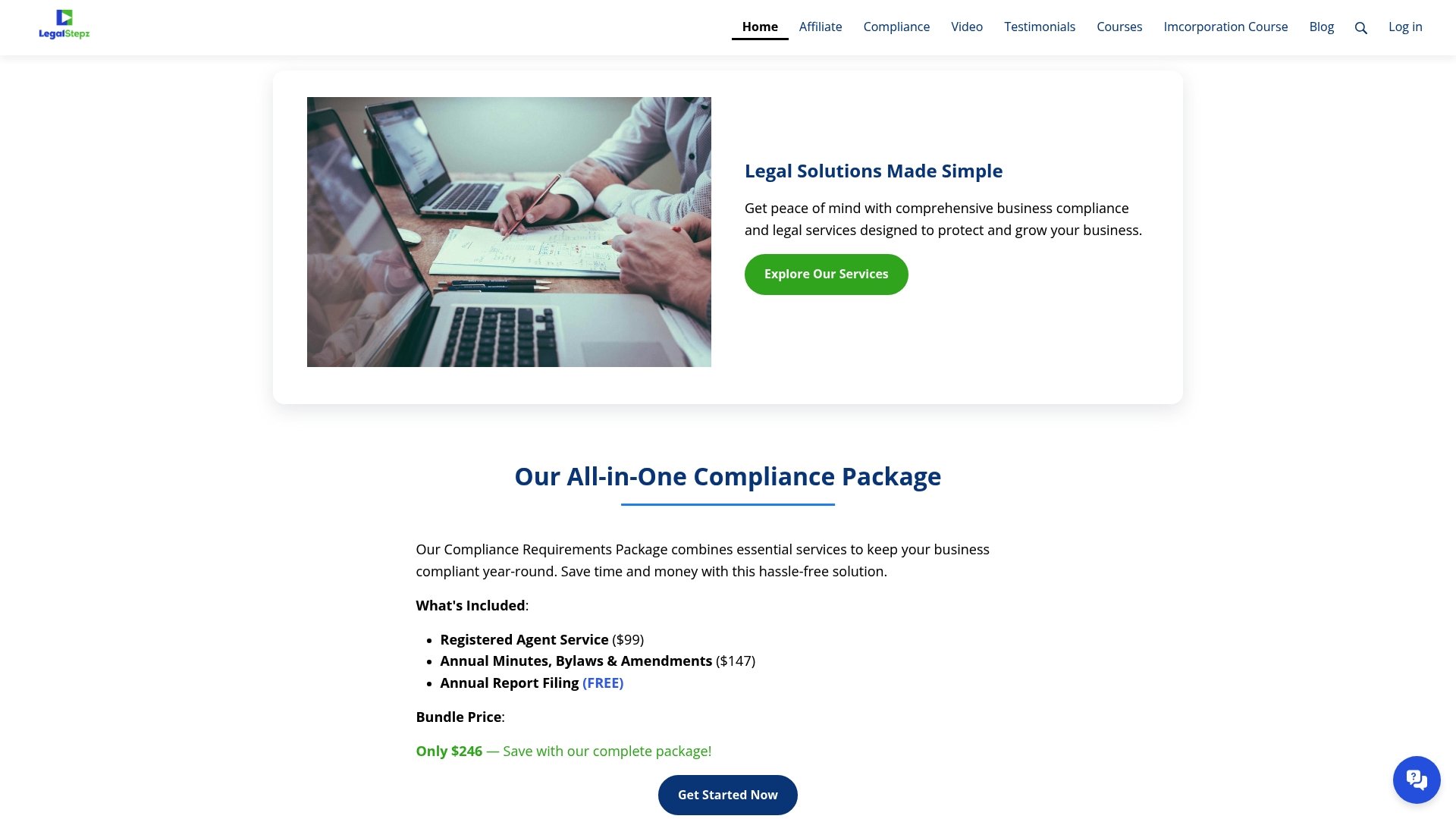
- A registered agent service keeps a physical address on file so you are not using your home or office address on public record.
- Annual minutes, bylaws and changes services keep your corporate records current between filings.
- Annual report filing support may be available as part of some compliance packages.
This setup fits new business owners who want the deadline handled without tracking it themselves, and it fits busier owners managing more than one entity. Visit the Legal Stepz compliance page to see the full package and get started.
This article is general information, not a substitute for advice from a qualified lawyer. Consult a qualified legal professional about your own circumstances before acting on anything here.
FAQ
Do I have to file a Statement of Information every year?
It depends on your entity type. Corporations file every year, while LLCs and most nonprofits file an initial Statement of Information and then every two years after that.
What is the California initial Statement of Information for an LLC?
It is the first filing an LLC submits to the Secretary of State after registering, generally due within 90 days of formation. It reports the LLC's managers or members, registered agent, and business addresses, and after that initial filing, the LLC moves to a biennial schedule.
What happens if I don't file my Statement of Information?
Missing the deadline typically triggers a state penalty, and collection of that penalty is often handled by the Franchise Tax Board. You can still file late using the same form, and doing so promptly limits further complications with your entity's standing.
How do I find my Statement of Information?
You can look up a filed Statement of Information through the California SOS business search using your entity's name or entity number. The record is public, so anyone can view the officers, registered agent, and addresses on file.