

Yes, most California LLCs must file Form LLC-12, the Statement of Information, and you can do it online at Sos or by mailing the completed form with a $20 fee. Before you fill anything out, check your entity's filing window on the Secretary of State's Business Search tool, then start the online filing while your status is in front of you.
TL;DR:
- California LLCs must file Form LLC-12 within 90 days of registration and biennially thereafter during their specific six-month window, which is based on their original filing date.
- Address errors, incomplete management listings, or using P.O. boxes for addresses are the most common reasons for rejected filings, and new filings should replace previous ones.
- Filing online via bizfileOnline is faster and more efficient, with an immediate confirmation receipt, compared to mailing the form with a $20 fee.
- Missing the biennial deadline results in a $250 penalty, and continued non-compliance can lead to suspension or forfeiture, complicating future filings.
- The $20 filing fee applies to each submission, while separate fees apply for copies and certifications, and the LLC must also fulfill the $800 annual tax with the Franchise Tax Board.
Table of Contents
- Which LLCs have to file Form LLC-12?
- When is the LLC-12 due?
- Filling out Items 1 through 8: a field-by-field walkthrough
- How to file online or by mail
- What it costs and what happens if you miss the deadline
- Common mistakes and how to fix them fast
- Where Legal Stepz fits into your filing routine
- A practical take on staying compliant
- Simpler compliance without the guesswork of tracking dates yourself
- Sources
- FAQ
Which LLCs have to file Form LLC-12?
Every domestic LLC formed in California and every foreign LLC registered to do business here must file a Statement of Information, according to the Secretary of State's filing guidance. This applies whether your LLC has one member or fifty, and whether it is actively trading or sitting dormant.
A few points trip people up regularly:
- An inactive LLC still owes the filing until you formally dissolve it with a Certificate of Cancellation, not just by stopping operations.
- A single-member LLC that the IRS treats as a disregarded entity for federal tax purposes still has its own separate filing obligation in California.
- Foreign LLCs registered to transact business in California follow the same biennial schedule as domestic entities, with no exemption for being based elsewhere.
If your LLC was suspended or forfeited for a tax issue, the filing obligation does not go away. You will need to resolve the underlying problem with the Franchise Tax Board before the Secretary of State will process new filings for that entity.
When is the LLC-12 due?
Your first Statement of Information is due within 90 days of the date your LLC was formed or registered in California. After that, the filing becomes biennial: you file once every two years during a 6-month window tied to the month your LLC originally filed, according to the Secretary of State's filing window guidance.
To find your personal window, look up your entity on the Secretary of State's Business Search and note the "Date Filed." That month determines your filing period going forward, every other year.
Your biennial filing window generally opens about five months before your LLC's anniversary month and closes at the end of that month. To find your specific window, check your anniversary month on the Secretary of State's Business Search and count back five months for the start of your six-month filing period. Filing outside this window could cause rejection or penalty. Filing even one day early or late outside that window can trigger a rejection or, eventually, a penalty, so it pays to mark the window on your calendar the moment you confirm it. If your anniversary month does not appear above, count back five months from that month to find your own six-month window.

Filling out Items 1 through 8: a field-by-field walkthrough
The LLC-12 form is short, but each numbered item has its own formatting rules. Here is what the official SOS instructions require, item by item.
- Item 1, LLC name. Enter your name exactly as it appears in Secretary of State records, punctuation and all. If what you type does not match, pull up your entity on Business Search and copy the name verbatim rather than retyping from memory.
- Item 2, SOS entity number. This is the 12-digit number assigned at formation. Newer entities sometimes carry a "B" prefix instead of a leading zero; copy the number exactly as shown on your file-stamped documents or Business Search record.
- Item 3, jurisdiction. Leave this blank if your LLC was formed in California. Foreign LLCs enter the state or country of formation exactly as recorded with the Secretary of State.
- Item 4, addresses. List your principal office address, a mailing address if different, and your California office address if you have one. Street addresses cannot be P.O. boxes, and city names must be spelled out in full rather than abbreviated.
- Item 5, managers or members. List at least one manager or member with a complete name and address. If you have more names than the form allows, attach Form LLC-12A rather than cramming extra entries into the margins.
- Item 6, agent for service of process. Name either an individual with a California street address or a registered corporate agent, never both on the same form. A P.O. box is not acceptable for an individual agent's address.
- Item 7, type of business. Write a brief, plain description of what the LLC actually does, such as "residential property management" or "graphic design services." Vague entries like "general business" are technically accepted but offer no useful detail if anyone needs to verify your activity later.
- Item 8, chief executive officer. Fill this in only if your LLC has designated a CEO. Most member-managed and manager-managed LLCs leave this blank, since the title does not apply to their structure.
Pro Tip: Keep a copy of your most recently filed LLC-12 on hand before you start a new one. Comparing old and new entries side by side catches mismatched addresses and name discrepancies before they become rejections.
The most frequent reasons filings bounce back are address formatting errors and leaving Item 5 blank. The official instructions are explicit that at least one manager or member must be listed, and that P.O. boxes are not valid street addresses. When you have more managers, members, or agents than the main form accommodates, Form LLC-12A exists specifically for that overflow, and it attaches directly to your LLC-12 rather than replacing it.
How to file online or by mail
Filing online through bizfileOnline is the faster route for almost everyone, according to the Secretary of State's bizfile portal.
- Create or log into your bizfileOnline account, then request "User Access" for your specific entity so the Statement of Information filing option appears for it.
- Search for your LLC by name or entity number, select "File Statement of Information," complete Items 1 through 8, review for accuracy, pay the $20 fee, and submit.
- Save or download your confirmation receipt immediately. This is your proof of compliance if any question comes up later.
- To file by mail instead, print and sign the completed form, attach a check payable to the Secretary of State for $20, and mail it to the Business Entities filing address listed on the form.
Online filings typically process faster than mailed submissions, according to the Secretary of State's processing-dates page, which publishes current turnaround estimates for both methods. If you are ordering certified copies along with your mailed filing, include the applicable copy fees with your payment so the whole package does not get held up for a missing amount.
What it costs and what happens if you miss the deadline
The filing fee for Form LLC-12 is a flat $20, whether you file online or by mail, according to the official SOS instructions. Copies and certifications carry separate charges.
- Copy fees run $1.00 for the first page and $0.50 for each additional attachment page.
- A certified copy adds $5.00 per document on top of the copy fee.
- Missing the filing deadline triggers a $250 penalty imposed by the Secretary of State, as described in FTB's billing information guidance.
- Beyond the SOS penalty, the Franchise Tax Board can impose its own penalties and interest for late tax filings, and a long enough lapse can lead to suspension or forfeiture of your LLC's status.
Suspension or forfeiture is the outcome worth avoiding most. Once that happens, some filing options disappear until you resolve the underlying tax issue with the FTB. The practical fix is to check both your SOS Business Search listing and any FTB notices, settle what the FTB demands, and then submit any outstanding Statements of Information once your status is active again.
Common mistakes and how to fix them fast
Most rejected LLC-12 filings trace back to a handful of repeat offenders, all addressed directly in the official form instructions.
- Using a P.O. box or an abbreviated city name where the form requires a full street address.
- Entering an SOS entity number that does not match Business Search records, often from a dropped digit or an old number.
- Leaving the manager or member section blank, or incorrectly listing the LLC itself as its own manager.
- Submitting a jurisdiction entry for a domestic LLC when that field should be left blank entirely.
Pro Tip: If you already filed and spotted an error afterward, the fix is simple: file a new Statement of Information with corrected information rather than trying to amend the old one. The new filing supersedes the previous record.
If you need proof of what is currently on file, order a certified copy through bizfileOnline or by mail, which confirms exactly what the Secretary of State has on record for your entity.
Where Legal Stepz fits into your filing routine
Some California LLC owners prefer handling the LLC-12 themselves once they understand the fields. Others want someone else tracking the window and submitting the paperwork.
- Legal Stepz offers registered agent service for LLCs that need a reliable California address for service of process.
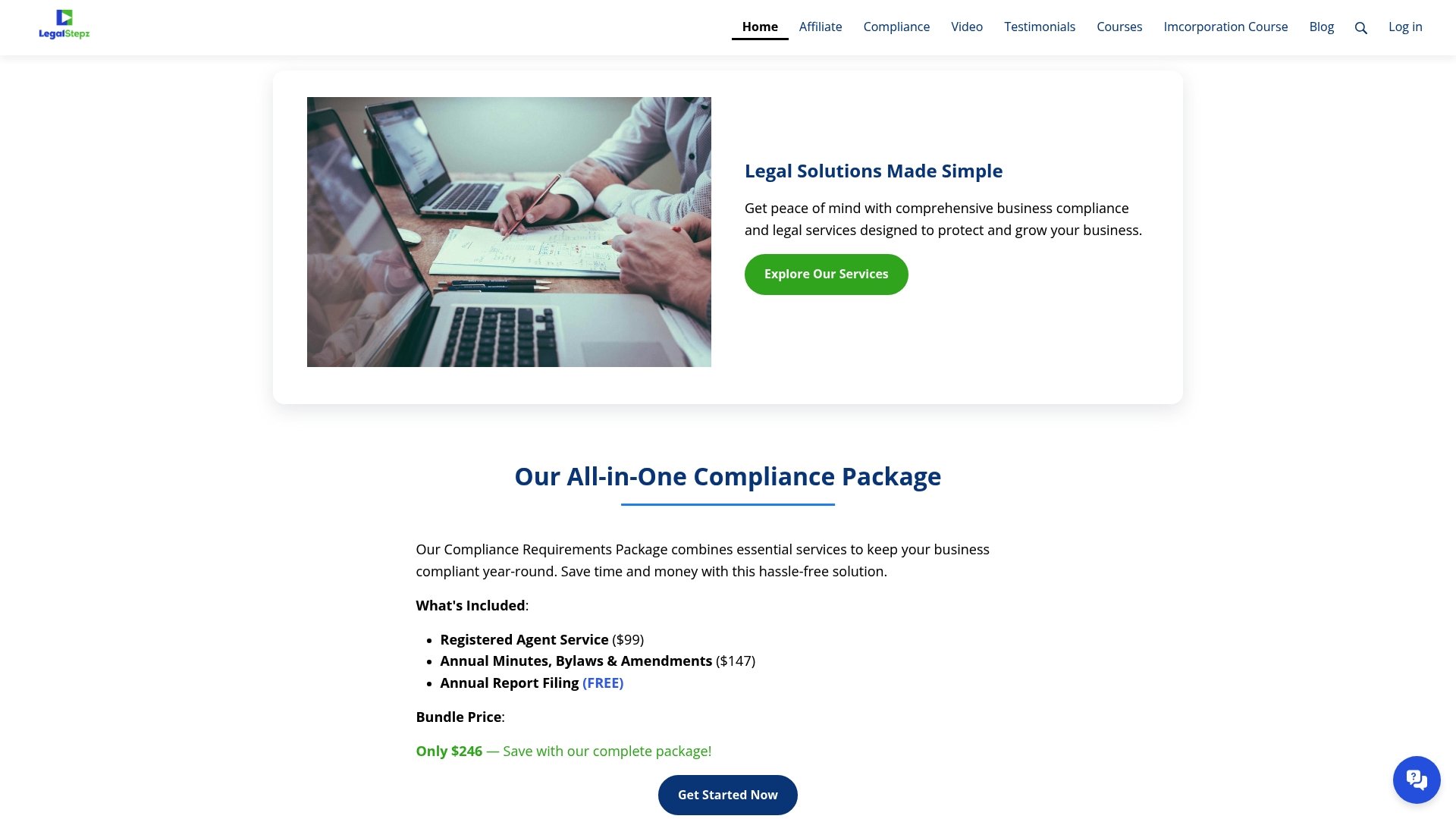
- The compliance package covers Statement of Information filing assistance alongside annual minutes and bylaws upkeep.
- For owners who want to learn the whole formation and compliance process themselves, the Limited Liability Company Course walks through entity setup and ongoing filings step by step.
If you would rather read more on the form itself first, Legal Stepz's overview of California Statement of Information filing and its broader filing resource hub cover the distinctions between this filing and other compliance tasks, including agent for service of process rules covered in this agent explainer.
A practical take on staying compliant

The LLC-12 itself is not complicated. What trips people up is treating it as a one-time task instead of a recurring one tied to a specific window that resets every two years.
My short list of priorities: confirm your entity's status on Business Search before you do anything else, file inside your actual window rather than guessing at a date, and keep your confirmation receipt somewhere you can find it in two years when the next window opens. Pair that habit with your tax side too. California LLCs generally owe the $800 annual tax and a Form 568 filing separately from the Statement of Information, and letting one slide tends to create problems for the other.
— Peter
Simpler compliance without the guesswork of tracking dates yourself
Filing the LLC-12 yourself costs $20 and an hour of attention to the fields above. If you would rather hand off the tracking and filing entirely, Legal Stepz's compliance package bundles Statement of Information filing help with registered agent service and annual minutes and bylaws upkeep, so the paperwork does not depend on you remembering a six-month window two years from now.
If you are still building out your LLC's foundation or want to understand the filing process in more depth before deciding, the Limited Liability Company Course walks through formation and ongoing compliance at your own pace. Either way, check your filing window today and get your Statement of Information submitted before it closes. Readers managing LLC-owned property may also find financing guidance for LLC-owned rental property useful as a related resource.
Sources
The rules above come directly from the Secretary of State and Franchise Tax Board. Before you file, it is worth checking these directly for your own entity.
- Instructions for Completing the Statement of Information (Form LLC-12) — California SOS (PDF)
- FTB 1138 - Business Entity Refund/Billing Information
- bizfile :: California Secretary of State
FAQ
What are the instructions for completing California LLC-12?
You fill in your LLC's name, SOS entity number, jurisdiction if foreign, addresses, at least one manager or member, your agent for service of process, business type, and CEO if applicable, following the official field instructions. Street addresses cannot be P.O. boxes, and the filing fee is $20.
What is LLC-1 and LLC-12?
Form LLC-1 is the Articles of Organization you file once to create your LLC in California. Form LLC-12 is the Statement of Information, a separate recurring filing due within 90 days of formation and then every two years during your six-month window.
How do I file LLC-12 online?
Log into bizfileOnline, request User Access for your entity, locate your LLC, select the Statement of Information filing, complete the required fields, and pay the $20 fee before submitting. Save your confirmation receipt as proof of filing.
Do you have to pay the $800 California LLC fee every year?
Yes, California LLCs generally owe the $800 annual tax to the Franchise Tax Board separately from the $20 Statement of Information filing fee paid to the Secretary of State. These are two different obligations to two different agencies, and missing either one can create compliance problems.