

If your LLC is registered or qualified to do business in California, you must file a Statement of Information, initial within 90 days of registration, then biennially during a six-month window tied to your registration month. The filing goes through Sos, and missing it can trigger Franchise Tax Board penalties or suspension of your right to do business in the state. Both the California Secretary of State and the Corporations Code back this requirement.
TL;DR:
- A foreign LLC must file after formally qualifying to do business in California; sales to residents or occasional calls alone do not trigger the rule.
- Confirm the original registration date in Business Search and set a calendar reminder, because Secretary of State notices can be missed or filtered.
- If none of the reported details has changed, an LLC may qualify to file a Statement of No Change instead of completing every field again.
- The agent for service of process must have a physical California street address; a P.O. box will cause the filing to be returned.
- A late filing carries a $250 penalty; separately, many registered LLCs owe an $800 annual minimum tax, even without in state activity.
Table of Contents
- Who has to file and what law requires it
- What to prepare before you file
- How to file your Statement of Information step by step
- Fees, penalties, and what the Franchise Tax Board expects
- Filing tips that prevent rejections and delays
- Why the filing habit matters more than the form
- How Legal Stepz keeps your filings on track
- FAQ
- Sources
- Official forms, statutes, and primary sources
Who has to file and what law requires it
California Corporations Code §17702.09 requires every LLC, and every foreign LLC registered to transact intrastate business in California, to deliver a Statement of Information within 90 days of registration and then biennially. The key word is "registered." If your out of state LLC has formally qualified with the California Secretary of State, the rule applies to you, even if you have no office or employees in the state. Simply shipping products to California customers or taking occasional calls from them does not trigger this duty on its own; filing paperwork to transact business does.
The statute spells out exactly what belongs on the form:
- Your LLC's exact name and California file number
- Your agent for service of process and their address
- Your principal office address and a list of managers or members
- A brief description of your business activity
Your filing window is a six month period based on your original registration month, and the Secretary of State typically sends a reminder notice a few months before that window closes.
What to prepare before you file
Gather these items before you start the Form LLC-12 so the filing goes through on the first try.
- Your exact LLC name as registered, along with your California entity (file) number or any alternate name on record.
- A current certificate of good standing from your home jurisdiction, which the Secretary of State requires when you first register a foreign LLC in California.
- Your agent for service of process, whether an individual California resident or a registered corporate agent, since a P.O. box is not accepted as the agent's address.
- Your principal office address, mailing address, a list of managers or members, and a plain description of your business activity.
- A working email address for Secretary of State notices, so you do not miss the reminder before your filing window closes.
If nothing has changed since your last filing, you may be eligible to submit a Statement of No Change instead of re-entering every field. Our checklist for foreign entity registration walks through the same documents in more detail if you are registering for the first time.
How to file your Statement of Information step by step
Start by confirming your original registration date through the Secretary of State's Business Search tool, since that date determines your six month filing window. Everything else follows from there.
- Set up or confirm your bizfileOnline user access for your entity before you try to file; without it, some online filing options stay hidden, and anyone without proper access cannot submit on the entity's behalf.
- Log in to bizfileOnline, locate your LLC, and open the Statement of Information form.
- Fill in the required fields: agent for service of process, principal and mailing addresses, managers or members, and business activity. Attach your certificate of good standing if the Secretary of State has not already confirmed your foreign qualification on file.
- Pay the filing fee and submit. Save or print your filed copy, and order a certified copy if you need one for a lender, landlord, or partner.
If you would rather file by mail or in person, you can print the completed LLC-12 form and send it to the Secretary of State's Sacramento office, though processing takes longer than online submission. A filing returned for a missing signature or incorrect agent address simply needs the correction and a resubmission, online or by mail.
Pro Tip: Translate and notarize your foreign certificate of good standing before you file if your home jurisdiction does not issue documents in English; certified legal translation services can prepare these in advance so a missing attachment never holds up your registration.
Fees, penalties, and what the Franchise Tax Board expects
Filing the Statement of Information carries a modest fee, and certified copies cost extra if you need one for a bank or business partner. The real financial exposure comes from what happens if you skip the filing or ignore your tax obligations.
| Item | Cost or consequence |
|---|---|
| Statement of Information filing fee | Published in the LLC-12 form instructions |
| Certified copy fee | Published in the same fee schedule |
| Late filing penalty | $250 penalty assessed and collected by the Franchise Tax Board |
| Annual minimum tax | $800, per the Franchise Tax Board's LLC guidance |
The $800 annual minimum tax applies to many LLCs registered in California, and failing to pay it can lead to suspension or forfeiture, according to the Franchise Tax Board. A suspended LLC loses the ability to defend or bring a lawsuit in California courts, and contracts signed while suspended can become voidable. Many owners assume no activity in the state means no tax due, but registration itself is usually what starts the clock. Our post on avoiding the $800 tax trap covers timing strategies in more depth.
Filing tips that prevent rejections and delays
Most rejected filings come down to a handful of avoidable mistakes. Using a P.O. box as your agent's address is one of the most common, since the Secretary of State requires a physical California street address for service of process. A mismatched jurisdiction name, where your home state's certificate does not exactly match your California registration, is another frequent snag, along with simply forgetting to attach the certificate of good standing at all.
- Double check that your agent for service of process has a physical California address, not a mailbox.
- Confirm your home jurisdiction's name on the certificate of good standing matches your California filing exactly.
- Designate one person inside your company to monitor Secretary of State notices and bizfileOnline access.
Pro Tip: Keep a standing calendar reminder tied to your six month filing window rather than relying only on the Secretary of State's notice, since mail and email reminders can be missed or filtered out.
Why the filing habit matters more than the form

Owners tend to treat the Statement of Information as paperwork, but a late or missed filing quietly erodes your legal standing in California. A $250 penalty is annoying; losing the right to enforce a contract in state court is a different problem entirely.
The habit that works is simple: set a reminder for your six month window, confirm your bizfileOnline access once a year, and keep your certificate of good standing current if you operate under a foreign jurisdiction. None of it takes long, and all of it keeps you out of avoidable trouble.
— Peter
How Legal Stepz keeps your filings on track
Staying ahead of a six month filing window alongside running an out of state business is easy to deprioritize until a notice arrives. We handle the paperwork so you do not have to track deadlines across multiple states.
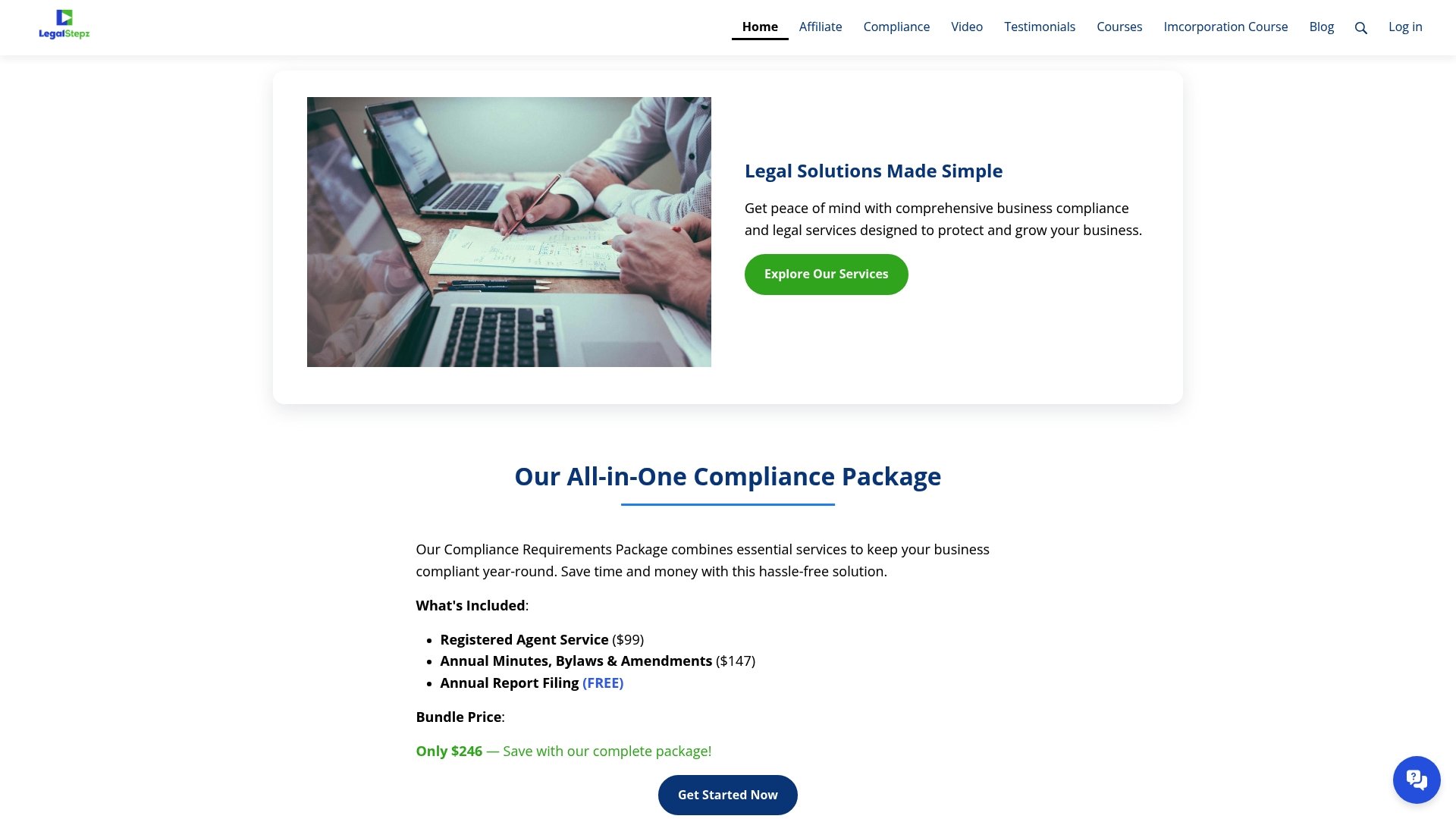
- We file your Statement of Information and keep your Registered Agent Service active so service of process never lands at the wrong address.
- We prepare Annual Minutes, Bylaws, and Changes Throughout the Year so your governance records stay current alongside your state filings.
- We also offer a self paced Limited Liability Company Course for owners who want to learn the formation and compliance process themselves.
Pro Tip: If you manage registrations in more than one state, a dedicated registered agent service makes it far easier to keep every notice in one place instead of chasing mail across jurisdictions.
Busy owners and multi state businesses get the most out of handing this off. Visit our compliance services page to see current filing options and get started.
This article is general information, not a substitute for advice from a qualified lawyer. Consult a qualified legal professional about your own circumstances before acting on anything here.
FAQ
What does a foreign LLC mean?
A foreign LLC is simply an LLC formed in one state that has registered to transact business in another, in this case California. The term describes where the LLC was originally formed, not international ownership.
Which is best, LLC or LTD?
"LTD" is not a business structure used in the United States; it is a designation common in the United Kingdom and other countries. American business owners choosing between entity types typically compare an LLC to a corporation based on taxation, liability protection, and management structure rather than comparing it to an LTD.
What are common LLC mistakes to avoid?
The most frequent mistakes include listing a P.O. box as your agent for service of process, letting your certificate of good standing lapse, and missing your Statement of Information filing window. Each of these can lead to a returned filing or, in the case of a missed Statement of Information, a $250 penalty from the Franchise Tax Board.
How much does it cost to register a foreign LLC in California?
Registration fees and the Statement of Information filing fee are published in the official LLC-12 form instructions. Beyond the filing fee, registered LLCs are generally subject to California's $800 annual minimum tax once qualified to do business in the state.
Sources
- Statements of Information Filing Tips :: California Secretary of State
- California Corporations Code §17702.09
Official forms, statutes, and primary sources
These are the primary sources behind the filing rules in this guide.
- The Secretary of State's Statements of Information filing tips cover the 90 day initial deadline, the biennial window, and bizfileOnline access.
- California Corporations Code §17702.09 sets out the statutory filing requirement and required form fields.