

To respond to a trademark office action, read every issue the examining attorney raised, answer each one completely through the USPTO's online response form, and file within three months of the issue date. You can buy one three-month extension for a fee. If you miss the deadline, the application is abandoned and the filing fees are not refunded.
An office action feels like a rejection, but often it is a to-do list. This guide explains what the letter means, how to build a response that addresses every point, which deadlines apply and what happens after you file.
TL;DR
- An office action is the USPTO examining attorney's letter listing problems with your application. It contains requirements (fixes) and refusals (legal objections), and some need no written response at all.
- You generally have three months from the issue date to respond, plus one optional three-month extension.
- Your response must be complete: every requirement and refusal needs an answer, either by arguing with evidence or by accepting the suggested fix.
- A first office action is never final. You can only appeal to the Trademark Trial and Appeal Board after a final action.
- Missing the deadline means abandonment, so put the date on your calendar the day the letter arrives.
Table of Contents
- What a trademark office action actually is
- The most common issues and what they mean
- Deadlines: three months, one extension, no grace
- How to build a complete response
- Responding to the two refusals founders see most
- What happens after you respond
- What a response costs
- Preventing the next office action
- Our perspective
- Learn the trademark process step by step
- FAQ
- Sources
What a trademark office action actually is
According to the USPTO, an office action is an official letter from an examining attorney that lists legal problems with your chosen mark or with the application itself. The letter arrives by email at the address on your application, so check that inbox (and spam folder) after filing.
The USPTO separates two kinds of issues:
- Requirements are problems with the paperwork that you can fix with simple revisions, such as clarifying the goods or services you listed.
- Refusals are legal reasons the examining attorney will not register the mark as filed, such as a likelihood of confusion with an already registered mark.
Some office actions require a written response, others suggest a phone call or email to the examining attorney, and some require no response at all. Read the opening and closing paragraphs first, because they say which path applies.
The most common issues and what they mean
The USPTO's own examination process training lists the issues that come up most often. Here is each one in plain language.
| Issue | What it means | Typical direction of the response |
|---|---|---|
| Indefinite identification of goods or services | Your description is too vague for the USPTO to classify or search | Reword using the examiner's suggestions or more precise language |
| Disclaimer requirement | A word in your mark is generic or descriptive and cannot be claimed on its own | Accept the disclaimer or argue the word is not descriptive |
| Section 2(d) likelihood of confusion | Your mark looks, sounds or means something similar to a registered mark for related goods | Argue the marks or goods differ, or narrow the goods |
| Section 2(e)(1) merely descriptive | The mark directly describes a feature or quality of your goods or services | Argue it is suggestive, amend the goods, or accept an alternative if offered |
| Specimen refusal | The proof of use you submitted does not show the mark used as a trademark | Submit a substitute specimen that was in use before the filing deadline |
Many of these are avoidable before you file. Choosing the right class and wording up front prevents the indefinite identification problem, and our guide to picking trademark classes that pass USPTO review covers that step. If your issue is a specimen, see what trademark specimen examples actually look like.
Deadlines: three months, one extension, no grace
The standard response period
The USPTO says you must respond to a nonfinal office action within three months of the date it issued. That period applies to office actions issued on or after December 3, 2022, when the USPTO shortened the previous six-month window. Applications filed through the Madrid Protocol under Section 66(a) are different: they get six months and no extension.
How the clock works on the last day
The USPTO's response forms page states that your response must be received before 11:59 p.m. Eastern time on the last day of the response period. Transmission problems do not excuse a late filing. If the last day falls on a weekend or a federal holiday, you can file by 11:59 p.m. Eastern on the next regular business day.
In practice, do not wait for the last evening. Aim to file at least two or three days early so a technical glitch or a forgotten attachment does not cost you the application.
The extension
Under 37 C.F.R. § 2.62(a)(2), you may request one three-month extension, for a maximum response period of six months from the issue date. Only one extension request can be filed per office action. The USPTO fee schedule lists the electronic fee for a pre-registration office action extension at $125.
Filing the extension request must happen before the original three months run out. Once you file it, the new deadline is six months from the original issue date, not six months from the day you filed.

What happens if you miss it
If you do not respond in time, the application is abandoned. Your application fees are not refunded and the mark will not register. Starting over means a new application and new fees, and anyone who filed after you may now hold priority.
How to build a complete response
The USPTO requires that a response be complete, meaning it addresses every legal problem raised in the office action. Leaving one refusal unanswered can result in a final action even if you handled everything else well.
Step 1: Sort the letter into a checklist
Copy each requirement and refusal into a list. Number them. Beside each one, write whether you will accept it, argue it, or fix it with an amendment. This checklist becomes the outline of your response.
Step 2: Note the examiner's evidence
Examining attorneys attach evidence: registrations for a likelihood-of-confusion refusal, dictionary or website excerpts for a descriptiveness refusal. Open every attachment. Your argument has to engage with what is actually in the file, not with what you assume is in it.
Step 3: Decide whether to argue or agree
For each issue you have two options, according to the USPTO. You can argue against the examining attorney's evidence or analysis, or provide your own evidence for your interpretation. Or, if you agree, you can adopt the language or resolution the examiner suggested.
Fixing a simple requirement by agreeing is usually fastest. Save arguments for issues where you have real facts on your side.
Step 4: Make specific, evidence-backed arguments
The USPTO advises that when you argue, you should make specific, fact-based points and include supporting evidence, and avoid conclusory or broad arguments. A sentence like "consumers will not be confused" proves nothing. A comparison of how the marks look, sound and mean, supported by evidence of how the goods are sold, does real work.
Step 5: Watch the scope of your amendments
The USPTO's Trademark Basics Boot Camp on responding to an office action notes that for an indefinite identification requirement you should consider the examiner's suggestions and propose acceptable wording. It also reminds applicants that you cannot broaden the scope of the identification, and you cannot undo amendments once made. Narrow carefully, and only as far as you can live with commercially.
Step 6: File with the right form
The Response to Examining Attorney Office Action form is for responding to a nonfinal action. If the examiner suggested a call or email to resolve something, the Boot Camp guidance is to do that. Otherwise, respond completely through the online form.
Responding to the two refusals founders see most
Likelihood of confusion (Section 2(d))
This is the refusal that worries people most, because it involves someone else's registration. Your response typically compares the marks and the goods or services. Differences in meaning, commercial impression or the actual products can matter. Sometimes a small change to the mark or a narrower identification of goods resolves it. Our walkthrough on how to change one word to cut likelihood of confusion shows how founders think through that decision.
Merely descriptive (Section 2(e)(1))
According to the Boot Camp training, you can respond by arguing that the mark does not describe your goods or services, by amending the goods or services, or by accepting an alternative if the examiner proposes one. Marks that hint at a benefit without stating it outright tend to stand on firmer ground than marks that name what the product is or does.
What happens after you respond
The examining attorney reviews your response. There are three broad outcomes:
- Approval. Every issue is resolved and the mark moves toward publication for opposition.
- Another nonfinal action. If your response raised a new issue or only partly resolved the old ones, you may get another letter and another response period.
- A final action. Any refusals or requirements that remain are made final.
Final actions and appeals
Per the USPTO, a final action issues only after you have had a chance to respond to all issues. A first office action is never final, and you can appeal an examiner's requirement or refusal only after a final action.
After a final action you have two main routes. You can file a Request for Reconsideration, or you can appeal to the Trademark Trial and Appeal Board. The USPTO notes that filing a request for reconsideration does not extend the time to appeal or make another proper response. For a final action issued on or after December 3, 2022, the notice of appeal deadline is three months from the issue date.
If the notice of appeal and fee are not filed on time, the application is deemed abandoned and the Board cannot hear the appeal unless the Director grants a petition to revive, according to Chapter 1200 of the USPTO's appeal guidance. Treat a final action as a hard stop: decide quickly which route you are taking.

What a response costs
The USPTO does not charge a separate fee just to submit a response. Your real costs are your own time and, if you hire help, professional fees. The one USPTO fee you may face is the extension, listed at $125 for an electronically filed request on a pre-registration office action. Fees change, so confirm the current amount on the USPTO fee schedule before you file.
If an appeal is on the table, a separate appeal fee applies. Check the same fee schedule for the current figure.
Preventing the next office action
Most founders can lower the odds of a second letter by tightening the application before filing:
- Search before you file. A clearance search helps you spot conflicting marks that trigger Section 2(d) refusals. See our notes on trademark searches.
- Describe goods and services precisely. Vague wording draws indefiniteness requirements.
- Pick the right classes. Mismatched classes create avoidable fixes.
- Prepare your specimen early. If you file based on actual use, the proof must show the mark in use as a brand. If you file on intent to use, review our intent to use trademark steps, evidence and fees.
- Understand the whole process. Our trademark process section walks through each stage, and the Trademark Center walkthrough covers common application errors.
Our perspective
We built Legalstepz around one idea: California founders can handle far more of their own legal filings than they think, as long as someone shows them the steps in order.
An office action is a good example. It looks intimidating because it arrives as a formal letter with statute numbers in it. Once you sort it into requirements and refusals and treat each as a separate small task, it becomes manageable.
The founders who struggle most are the ones who open the letter, panic and wait. The deadline keeps running. Our advice is always the same: read it the day it arrives, make the checklist, and file early.
The cheapest office action is the one you prevent, which is why we teach the application stage in detail: searches, classes, identifications and specimens. We built our trademark course so founders understand how the USPTO thinks before they file, and can recognize what the examining attorney is asking when a letter does arrive.
Peter
Learn the trademark process step by step
If you are preparing a new application, or want to understand what the examining attorney looks for, our Trademark Course is a one-time $37 purchase. It is a step-by-step video course on registering a trademark yourself, written for California entrepreneurs.
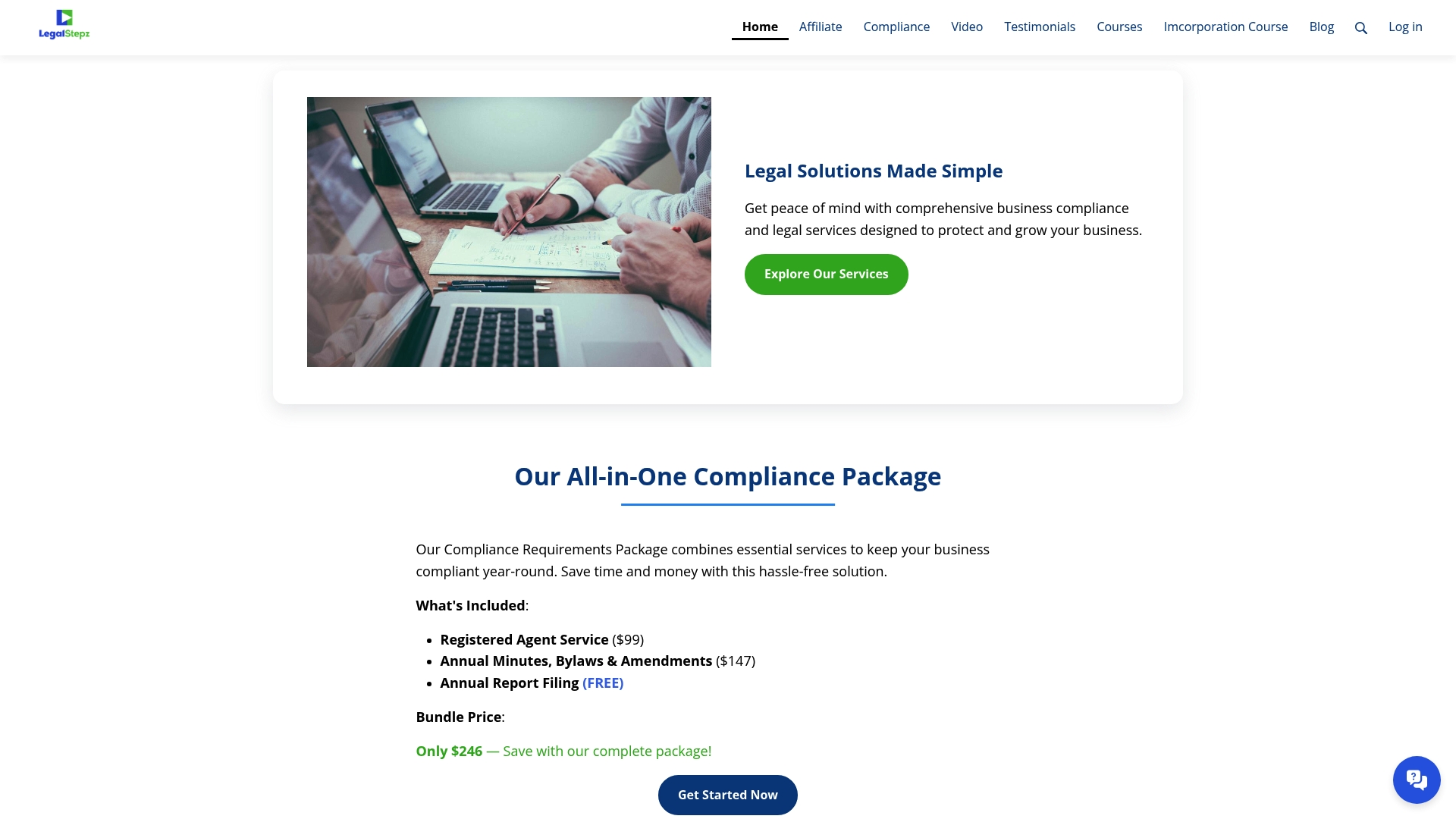
If you are also forming or maintaining a California entity, see our courses for LLC and corporation formation, and our compliance packages for registered agent service at $99 and annual minutes and bylaws at $147.
FAQ
Does every office action require a response?
No. According to the USPTO, some office actions require a written response, some suggest contacting the examining attorney by phone or email, and some require no response at all. Read the letter closely to see which applies, and note the deadline either way.
Can I get more than one extension?
No. You can request one three-month extension per office action, which gives a maximum of six months from the issue date. Madrid Protocol applications under Section 66(a) get a six-month period with no extension option.
Can I appeal after my first office action?
No. A first office action is never final, and you can appeal only after a final action. After a final action you can file a Request for Reconsideration or a notice of appeal to the Trademark Trial and Appeal Board, and the appeal deadline keeps running while reconsideration is pending.
What if I respond after the deadline?
The application is abandoned, the filing fees are not refunded and the mark will not register. You would need to file a new application. Where the deadline was missed in circumstances the USPTO recognizes, a petition to revive may be possible, so check the USPTO's current rules.
How much does it cost to respond?
The USPTO charges no separate fee to submit a response. The extension request is the main USPTO fee, listed at $125 when filed electronically. Fees can change, so check the USPTO fee schedule before filing.
Sources
- Responding to office actions, USPTO
- Response forms, USPTO
- USPTO fee schedule
- Trademark Basics Boot Camp: Responding to an office action, USPTO
- The Trademark Examination Process, USPTO
- Definitions for Responding to a USPTO Office Action, USPTO
- Trademark examination guide 2-22, USPTO
- Chapter 1200 Ex Parte Appeals, USPTO