

California businesses can use five kinds of address: a home address, a leased commercial space, a coworking desk, a virtual office or commercial mail-receiving address, and a PO box. Only some of them work for every purpose. A PO box can receive mail but cannot serve as your registered agent address. A home address is legal but exposes your privacy and may hit zoning limits. A street address with suite number, such as a coworking or virtual office, often covers the state filing and keeps your home out of public records.
The right choice depends on which job the address has to do. This guide separates those jobs, compares the options, and shows how to change an address once it is on file.
TL;DR
- California filings use up to three address roles: principal office, mailing address, and the agent for service of process. One address can fill all three, or you can split them.
- A registered agent needs a California street address. A standard PO box does not qualify, and the IRS bars a PO box on the physical-address line of Form SS-4.
- Home addresses are allowed, but check local zoning first and remember that Statement of Information filings are public.
- A virtual office or mail-receiving street address can work for state filings, but advertising rules may require you to disclose your actual street address.
- To change an address, file a complete Statement of Information. Outside your filing period it carries no fee.
Table of Contents
- The three jobs an address does
- California business address options compared
- Using your home address
- Commercial office or retail space
- Coworking spaces
- Virtual offices and commercial mail-receiving addresses
- PO boxes
- Which address fits which business
- How to update your California address
- Keep an address you can rely on
- FAQ
- Sources
The three jobs an address does
Before you compare options, know what you are choosing for. A California business address is not one thing.
Principal office. Form LLC-12, the LLC Statement of Information, requires a street address for the principal office. Corporations file a similar form. Our guide to the principal office address in California explains what counts.
Mailing address. The same form lets you list a different mailing address. This is where the state and the IRS send letters. It is the place to put a mailbox if you do not want mail going to your home.
Agent for service of process. An individual agent needs a California street address. This is where lawsuits and official notices are delivered, so it must be staffed and reliable.

A filed LLC-12 on the Secretary of State's site shows how simple this can be: one LLC used the same suite-numbered street address for its principal office, mailing address, California office and individual agent. Many small companies do exactly that. Others split the roles to protect privacy and keep records organized, an approach Nav describes.
California business address options compared
| Option | Real street address? | Works as registered agent address? | Main advantage | Main watch-out |
|---|---|---|---|---|
| Home address | Yes | Yes, if you are the agent and are available | No added cost | Public record, zoning, privacy |
| Commercial lease | Yes | Yes | Full presence, room to operate | Long commitment, highest cost |
| Coworking space | Usually | Sometimes | Flexible, professional | Some filings may be rejected |
| Virtual office or mail-receiving address | Street address with suite | Depends on who is staffing it | Privacy, low cost | Advertising disclosure, no real operations |
| PO box | No | No | Cheap mail receipt | Cannot be a physical or agent address |
The sections below explain each row.
Using your home address
The simplest option is the one you already have. A home address can work as your principal office, and if you live in California you can be your own agent, provided you are reliably reachable at that address during business hours.
Two cautions matter before you do it.
Zoning. The California Office of the Small Business Advocate says that choosing an address is a strategic decision affecting local taxes, zoning and compliance. It advises asking your local planning department about zoning permits for home-based operations. City rules differ, so call before you file.
Privacy. Anything you list on a Statement of Information goes into a public database. If you do not want your home address searchable next to your business name, use a separate street address for the filing and a mailbox for correspondence. Many owners discover this only after a stream of solicitations arrives.
Home is a good fit for a solo consultant or an online seller who sees no customers and is comfortable with the exposure. It is a weaker fit if clients or process servers arriving at your door would be a problem.
Commercial office or retail space
A leased office, studio or storefront gives you a true operating address. You need one if customers visit, if you hold inventory, or if your license requires an inspected premises. It also gives you an easy answer to the question of which address to use: all three roles, in one place.
The cost is commitment. Commercial leases tend to run for years and come with deposits, so they make little sense for a business that works from laptops. The California Office of the Small Business Advocate lists the factors that should drive location: target market and customers, costs, transportation, permits, taxes, zoning, suppliers, workforce and personal preferences. If several of those point to a specific city, lease there. If none do, you are paying for presence you do not use.
Coworking spaces
Coworking spaces rent shared or private office space. Many offer a business address, and some include mail handling and conference rooms. They fill the gap between a home and a lease, with monthly terms.
The catch is acceptance. Nolo notes that coworking spaces may offer a valid business address, but some states may reject them on formation filings. Before you sign, confirm three things with the operator:
- Someone is present on the premises during normal business hours to accept legal documents, if you plan to use it for your agent address.
- The operator will notify you promptly when anything arrives.
- Your agreement allows you to use the address as your principal office, not just your mail.
If you need a real desk several days a week, coworking is a strong choice. If you only want the address, a virtual office is usually cheaper.
Virtual offices and commercial mail-receiving addresses
This is the option most readers searching this topic are weighing. A virtual office gives you a street address, usually with a suite or mailbox number, plus mail receipt, scanning or forwarding. The business itself runs from home or remotely.
Can you use one for California filings? Often yes. One summary of the rules says a commercial mail-receiving agency (CMRA) street address may be used for a California LLC's designated office, while an individual agent still needs a California street address. A CMRA is a business that receives mail on behalf of others, and under USPS rules it must keep Form 1583 on file for each customer and present its delivery address as a private mailbox.

That last point is why you should read your agreement closely. A CMRA mailbox is still a mailbox, and it may not be a place where someone will accept a process server's papers. If you want a virtual address as your principal office, pair it with a registered agent who is staffed and available at a California street address.
What virtual addresses mean for advertising
California has a rule that surprises owners. If you advertise consumer goods or services and use a PO box, private mailbox or mail-receipt street address, you must disclose your legal name and your actual business street address, with exceptions for retail, licensed services and qualifying residences. The statute is Business and Professions Code Section 17538.5. Violations are punishable as misdemeanors, with up to six months in county jail or fines up to $2,500.
In practice: if you sell to consumers and advertise under a virtual address, talk to a California attorney about whether an exception applies to you. If your customers are other businesses, the rule matters less, but read the statute's scope before assuming that.
PO boxes
A PO box is fine for receiving mail and nothing else. Nolo says a standard USPS PO box is solely a mailing address and is generally prohibited from serving as the required physical or registered agent address on state registration documents. Registered agents must have a valid, legal street address.
The IRS draws the same line. The Form SS-4 instructions ask for a physical address on line 5a only if it differs from the mailing address, and they prohibit a PO box there. The form also asks for a mailing address for correspondence, and you report later changes with Form 8822-B.
So a PO box can serve as the mailing address on your Statement of Information. It cannot be your principal office or agent address.
What we tell California owners about addresses
Most address problems we see are not about picking the wrong type. They come from picking one address and letting it quietly do all three jobs without anyone watching it. The registered agent address is the one that matters most, because lawsuits and state notices arrive there, and a missed notice can turn into a default or a suspension.
Our approach is to separate the roles. Use whatever principal office fits your operations, use a mailbox you actually check for correspondence, and keep a dependable agent at a California street address. That is why we offer our Registered Agent Service as a standalone product at $99 one-off, and why we pair it with compliance support: the address is only useful if the filings that carry it are accurate and current.
Our tip for new owners: before you pick an address, write down who needs to reach you, how fast, and what is public. The answers usually choose the address for you.
Peter
Which address fits which business
Use the question "who needs to find you?" to decide.
- Solo online business, no visitors. Home as principal office is easiest. If privacy matters, use a virtual or mailbox address and a professional agent.
- Consulting or professional practice with a few clients. A coworking membership or virtual office with occasional meeting-room rental gives you an address that looks professional without a lease.
- Retail, food, or product business. Lease a commercial space, since zoning, permits and inspections tie to the premises.
- Business with a remote team in several states. Choose a principal office where decisions are made, and a staffed California agent. If your company is incorporated elsewhere, see our note on foreign corporation Statement of Information due dates.
- Business that wants zero public exposure of home. Separate roles: street address for the filing, mailbox for mail, agent for service.
Whatever you choose, do not use an address you cannot receive mail at reliably. The state's notices are the ones you least want to miss.
How to update your California address
Changing addresses is a filing, not a phone call. An LLC updates its address by filing a complete Statement of Information on Form LLC-12. The form is due biennially, with a $20 fee during the applicable filing period, while a change filed outside that period has no fee.
The key points:
- File the full form. You cannot send a partial update. Re-enter everything that has not changed.
- Update the IRS too. The Secretary of State does not notify the IRS. Use Form 8822-B for the mailing address. Our guide, File Form LLC-12 first, covers the order.
- Do not miss the cycle. Failing to file a required Statement of Information by its due date brings a $250 penalty under Revenue and Taxation Code Section 19141 and the Corporations Code. Read about penalties and late fees and the deadlines that lead to suspension.
- Sign correctly. See who signs the LLC-12.
If your registered agent changes along with your address, make the update at the same time so the filing, the agent and your records agree. For fee details, see our page on Statement of Information fees and the biennial filing window.
Keep an address you can rely on
If you want the agent role handled without tying it to your home or your lease, our Registered Agent Service costs $99 one-off. We also prepare annual minutes, bylaws and changes throughout the year for $147 one-off, which keeps your corporate records in line when an address or officer changes.
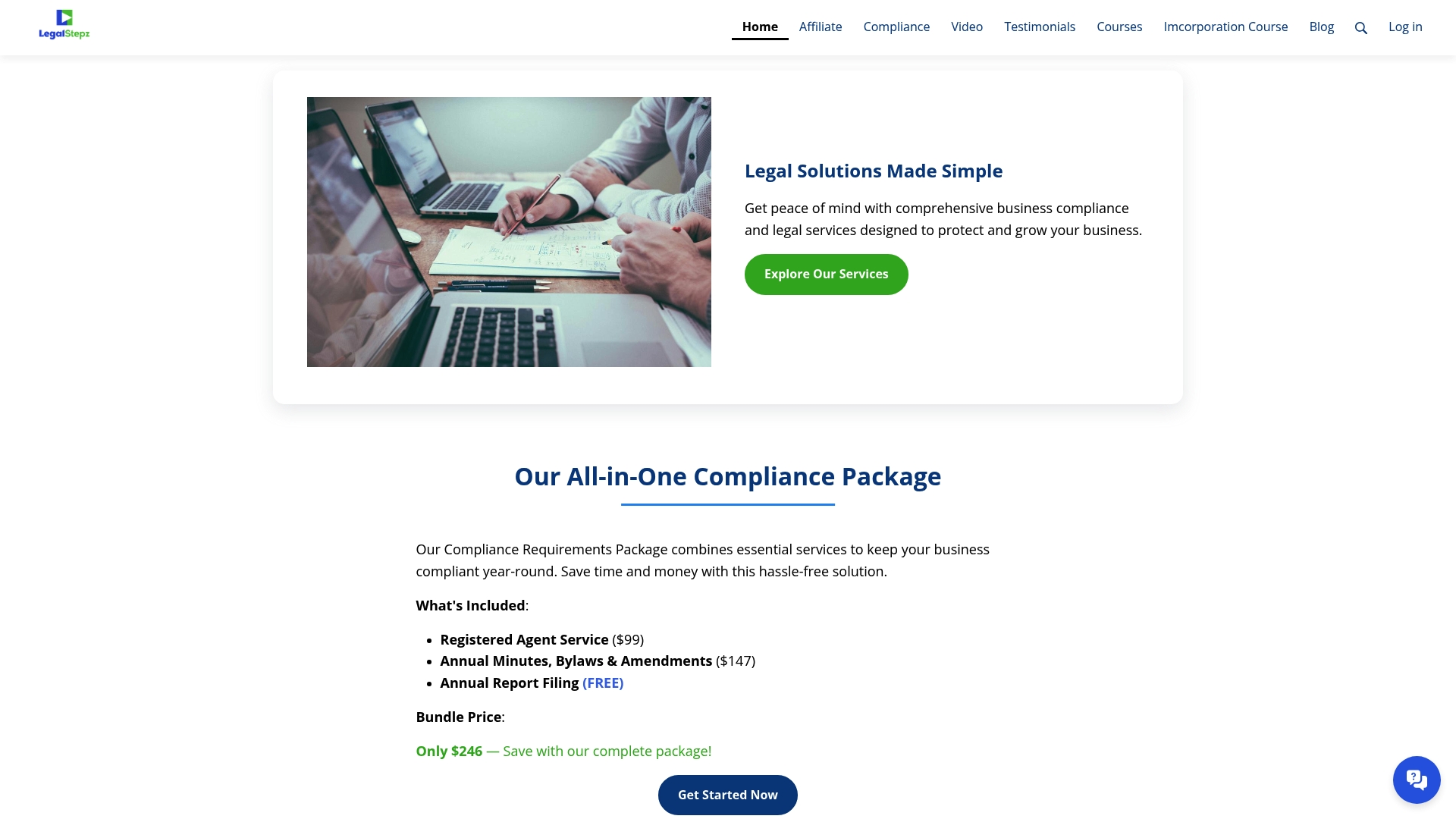
Still forming the company? Our Incorporation Course and Limited Liability Company Course are each $37 one-off. They walk you through each step, including choosing the address that goes on your first filing. You can also read how to form a California LLC.
FAQ
Can I use a virtual address for my California LLC or corporation?
Often yes for the principal office or mailing address, since a CMRA street address may be used for an LLC's designated office. Your agent still needs a California street address with someone available to accept papers. If you advertise to consumers, check the address-disclosure rule in Business and Professions Code Section 17538.5.
Does the IRS accept a virtual address?
The IRS asks for a mailing address on Form SS-4 and a physical address only if different. It prohibits a PO box on the physical-address line. A street address with a suite number is not a PO box, but confirm with your tax professional how it applies to your situation.
How do I update my LLC address in California?
File a complete Statement of Information (Form LLC-12) with the Secretary of State. A change outside your filing period has no fee, while the regular biennial filing costs $20. Then report the new mailing address to the IRS on Form 8822-B.
What should I put as my business address?
Put a street address you can control for the principal office, a mailbox you check for the mailing address, and a staffed California street address for the agent. They can all be the same address if it meets every requirement. Match your choice to your zoning, privacy and customer needs.
Sources
- Do You Need a Physical Address for Your LLC? (Nolo)
- Statement of Information, Form LLC-12 (California Secretary of State, via DIR)
- Filed California LLC-12 example (Secretary of State)
- What Address Should I Use For My Business? (Nav)
- Set Up Your Business in California (California Office of the Small Business Advocate)
- Can I Use a PO Box for My LLC in California? (LegalClarity)
- Instructions for Form SS-4 (IRS)
- California Business and Professions Code Section 17538.5
- Application to Act as a Commercial Mail Receiving Agency, USPS Form 1583-A