

Most states tie your statement of information deadline to either the anniversary of your formation date or a fixed annual date, and new entities typically file an initial report within 30 to 90 days of registration. The two fastest checks you can run right now are: pull up your state secretary of state's filing schedule for your exact entity type, and confirm your federal tax deadlines, since Form 1120-S timing can shift related corporate filing windows.
TL;DR:
- Most states base statement of information deadlines on either the anniversary of formation or a fixed date; missing these can lead to penalties or suspension.
- California requires annual filings for corporations and biennial for LLCs, with specific windows tied to their registration or formation date.
- Federal deadlines for Form 1120-S are generally due on March 15, shifting to March 16 in 2026 due to the weekend, and late filings can trigger penalties and suspension.
- Setting reminders at least two weeks before deadlines and using professional services can prevent missed filings and ensure ongoing compliance.
- If a filing is missed, immediate action should include filing delinquent reports, understanding reinstatement steps, and consulting professionals for complex cases.
Table of Contents
- How state statement of information deadlines generally work
- California Statement of Information: exact timing, 2026 e-file notes, and a filing checklist
- Initial reports and state-by-state differences after formation
- Federal deadlines that interact with your filing calendar
- If you miss a filing: penalties, reinstatement, and triage steps
- How Legal Stepz helps with statements of information and ongoing compliance
- Author perspective: three moves for a busy owner this week
- Keep deadlines off your desk with Legal Stepz
- FAQ
- Sources
- Authoritative links: federal, state, and Legal Stepz resources
How state statement of information deadlines generally work
States use one of two models. Some assign a due date based on your formation anniversary, so a corporation formed in June files every June. Others set a single fixed date for every entity in the state, regardless of when you registered. This difference matters for calendaring: anniversary-based states need a reminder tied to your specific formation date, while fixed-date states let you set one recurring entry for every entity you manage.
Most statements of information ask for the same core data regardless of state: current officers or managers, your agent for service of process, your principal office address, and sometimes a brief statement of business purpose.
To find your exact rule, take these steps:
- Search your entity's name on your state secretary of state's business search tool.
- Open the filing instructions page for your entity type (LLC, corporation, nonprofit).
- Note the filing fee, whether e-file is available, and the exact due date language used.
- Gather your officer and agent information now, before the window opens.
Pro Tip: Set a recurring calendar reminder 30 days before your filing window opens, not on the due date itself, so you have time to fix errors.
California Statement of Information: exact timing, 2026 e-file notes, and a filing checklist
California splits its timing by entity type. Corporations file every year, within a specific filing period tied to the anniversary month of incorporation. LLCs file every two years, also based on their original registration date. For a calendar-year corporation incorporated in April, the filing window typically opens several weeks before the anniversary month and closes at the end of that month.

For 2026, California has updated how filers access the bizfile system, which affects how and when you can submit your Statement of Information. Reviewing the 2026 e-file access changes before your window opens avoids last-minute login or privacy-setting delays.
The initial-report window after forming a new entity in most states runs within a few months, a range confirmed across state filing guidance and widely cited by commercial filing services. Missing that first window can trigger penalties before your business has even completed its first year.
Before you e-file, confirm you have:
- Your entity's exact legal name as registered with the state.
- Current officer, director, or manager names and addresses.
- Your registered agent's name and California address.
- Your principal executive office address.
- A brief description of your business activity, if required for your entity type.
Confirm your entity type on the California Secretary of State's site and open the e-file page now, before the window narrows.
Initial reports and state-by-state differences after formation
An initial report exists so the state has current officer and agent information on file immediately after formation, rather than waiting a full year for the first annual filing. Windows vary widely. Some states require an initial report within 30 days of formation, while others, including California for LLCs, build in up to 90 days.
Foreign qualification adds a second layer: when you register to do business in a new state, that state treats you as newly formed for reporting purposes, often triggering its own initial-report clock regardless of your home state's schedule.
After any formation or qualification event:
- Calendar the initial-report deadline immediately, not after your first invoice or client meeting.
- Set a reminder at least two weeks before the window closes.
- Consider a registered agent service so filing notices reach you reliably, even if your address changes.
Federal deadlines that interact with your filing calendar
Federal tax deadlines don't file your statement of information for you, but they shift the broader compliance calendar many owners track alongside it. Form 1120-S is generally due by the 15th day of the third month after your tax year ends. For a calendar-year S corporation, the due date in 2026 is March 16, moving one day because March 15 falls on a Sunday.
When a federal deadline falls on a Saturday, Sunday, or legal holiday, the return is due the next business day, a rule that also affects extension deadlines.
Other federal triggers can force rapid updates to your corporate records, including SEC filings for public companies and FinCEN beneficial ownership information reports after ownership changes.
- Mark your tax year end and count forward three months to find your 1120-S deadline.
- Check whether that date falls on a weekend before assuming the standard date applies.
- Talk to a tax professional before year end if you're considering a short tax year or an extension.
If you miss a filing: penalties, reinstatement, and triage steps
Missing a statement of information deadline typically triggers a late fee first, followed by administrative suspension or dissolution if the filing stays outstanding. Suspension means you lose good standing, which can block contracts, loans, and even lawsuits filed in your business's name. Reinstatement after suspension usually costs more than the original filing fee would have.
If you've missed a deadline:
- File the delinquent statement immediately, even before resolving any penalty.
- Check your state's specific reinstatement steps, since the process varies by jurisdiction.
- Notify your registered agent so future notices don't get missed again.
- Ask whether expedited reinstatement is available if you need good standing restored quickly for a pending deal.
Federal relief exists for certain late elections too. The IRS has granted extensions for late elections under specific procedural rules, but that relief requires documented reasonable cause and often benefits from professional help.
Pro Tip: If you've missed more than one filing cycle, get a professional involved before self-correcting. Reinstatement rules stack, and a wrong move can extend the timeline.
How Legal Stepz helps with statements of information and ongoing compliance
We offer filing of California Statements of Information, drafting of annual minutes and bylaws, and registered agent services for businesses that want to manage filing deadlines with assistance rather than manual tracking. Our blog covers the 2026 California annual report requirements and the compliance checklist many owners used to prepare before their filing window opens. A delegated filing service reduces missed-deadline risk by replacing memory with a procedural checklist: someone confirms your window, gathers your fields, and files on your behalf.
Author perspective: three moves for a busy owner this week
Set one compliance calendar and share it with your team. Confirm whether your state uses an anniversary or fixed date, and if you're newly formed, note your initial-report window separately. If you're in California, verify 2026 bizfile access and prepare your required fields before you sit down to file.
— Peter
Keep deadlines off your desk with Legal Stepz
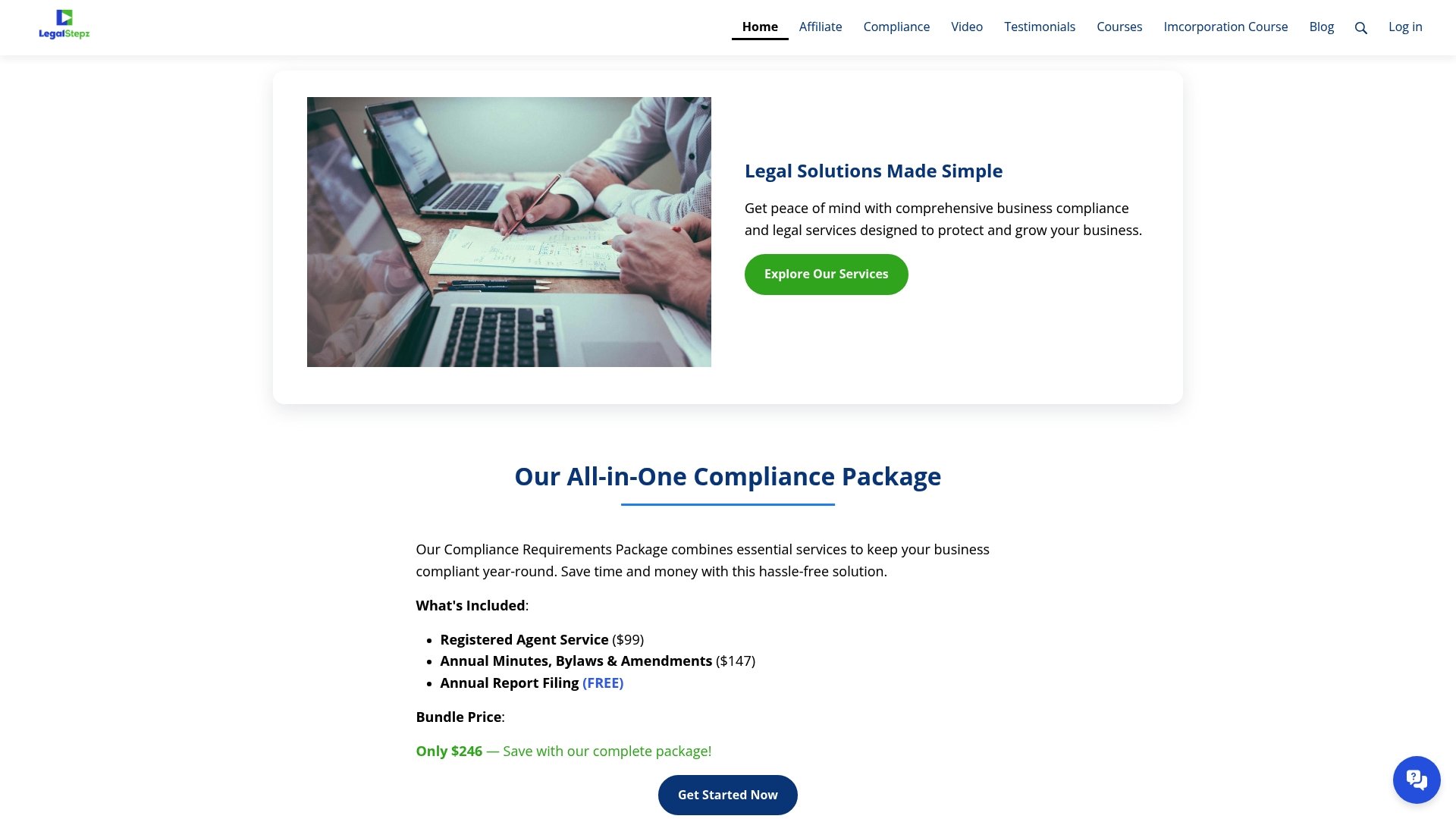
We built our compliance services around the exact problem this article describes: a missed statement of information turning into a suspended entity. Our Registered Agent Service runs $99 one time, and our Annual Minutes, Bylaws and Changes Throughout the Year service runs $147 one time, both designed to keep your filings current without you tracking a second calendar.
- We confirm your filing window and required fields before your deadline arrives.
- We handle the filing directly, so you're not logging into a state portal under time pressure.
- We keep your registered agent address current, which is often where missed notices start.
If you'd rather handle formation yourself first, our Incorporation Course walks through entity setup and the early compliance obligations that follow. For readers weighing a future sale of a California manufacturing business, exit planning resources are worth a look well before compliance becomes a deal issue. Start with our compliance page and tell us your entity type and formation date. We'll confirm your exact deadline and handle the filing from there.
FAQ
What is the deadline for filing a Statement of Information in California?
California corporations file every year within a window tied to their incorporation anniversary month, while LLCs file every two years based on their original registration date. Check your exact window on the California Secretary of State filing page or through our California filing guidance.
Is there an extension for S Corp filing in 2026?
The standard Form 1120-S due date for calendar-year S corporations shifts to March 16, 2026, since March 15 falls on a Sunday. Extensions beyond the due date require timely filing with the IRS under applicable procedures.
What happens if a Statement of Information is late?
A late statement of information typically triggers a penalty fee first, followed by administrative suspension or dissolution if it remains unfiled. Suspension removes your good standing, which can block contracts and legal actions until you file and pay any reinstatement costs.
Is there a deadline to file for S Corp status?
S Corp election timing is separate from your statement of information deadline and generally must be filed within two months and 15 days of the start of the tax year you want the election to apply to. Missing that window sometimes qualifies for late-election relief through the IRS procedures if you can show reasonable cause.