

California does not have a single "annual report" for LLCs. Instead, your LLC has three separate obligations: a Statement of Information filed with the Secretary of State every two years, an $800 annual tax paid to the Franchise Tax Board (FTB), and a yearly tax return, usually Form 568. People lump these together as the annual report, which is why missed deadlines are so common. This guide separates them, gives the dates and amounts, and shows what happens if one slips.
TL;DR
- Every California LLC files a Statement of Information every two years, in its registration month. The first is due within 90 days of formation.
- The Statement of Information costs $20. A late one carries a $250 penalty and can lead to suspension.
- The $800 annual tax is a separate payment to the FTB, due April 15 for calendar-year LLCs, whether or not you did business.
- Form 568 is due March 15 for multi-member LLCs and April 15 for most single-member LLCs. The $800 is not paid with it.
- LLCs with $250,000 or more of California income owe an additional fee on top of the $800.
Table of Contents
- The three filings people call the annual report
- The Statement of Information: every two years, not every year
- The $800 annual LLC tax
- Form 568 and the additional LLC fee
- What happens if you miss a deadline
- A yearly compliance calendar
- Perspective: why the two-year filing catches people
- Staying compliant with Legalstepz
- FAQ
- Sources
The three filings people call the annual report
It helps to treat these as three different jobs with three different agencies.
| Filing | Agency | Frequency | Cost |
|---|---|---|---|
| Statement of Information (Form LLC-12) | Secretary of State | Every two years | $20 |
| Annual LLC tax (Form FTB 3522 voucher) | Franchise Tax Board | Every year | $800 |
| LLC return (Form 568) | Franchise Tax Board | Every year | Based on income, plus any additional LLC fee |
The Statement of Information is the closest thing to an annual report, and it is not a tax filing. The $20 fee is separate from the franchise tax obligations, which the FTB administers. Filing one does not satisfy the other.
The Statement of Information: every two years, not every year
All LLCs, including qualified out-of-state LLCs registered in California, file a Statement of Information every two years in the month of registration. Whether you file in even or odd years depends on the year you registered.
When it is due
Your first statement is due within 90 days after the Secretary of State files your Articles of Organization (or your Application for Registration, if you are a foreign LLC). After that, the filing period is the calendar month of your original filing plus the five months before it. That gives you a six-month window, and you can file any time in it.
The Secretary of State's schedule shows how the window works: for an LLC formed in January, the period runs from August 1 through January 31 of the following year, and it shifts by one month for each later formation month. An LLC formed in April would file between November and April.

The state sends a reminder about three months before the due date. Do not rely on it. Reminders go to the address on file, and many owners have moved or changed email since formation. Put the window in your calendar the day you form the LLC.
What the form asks for
The Form LLC-12 instructions list what you need:
- The LLC's name and Secretary of State file number
- The state of organization
- Principal office street address and mailing address
- A California office address, if you have one
- The chief executive officer's name and address, if any
- Names and addresses of managers, or members if the LLC is member-managed
- The agent for service of process
- The general type of business
- The name and title of the person completing the form
The form also asks whether any manager or member has an unappealed final wage-and-hour judgment, and it has an optional email field for state notices, according to a summary of the form's requirements.
Get the agent for service of process right. That is the person or company who receives lawsuits and official mail for the LLC, and it must be a California address where someone is reliably present during business hours.
No changes since last time
If nothing has changed since your last complete statement, you may be able to file the short no-change version, Form LLC-12NC. If anything changed, even one address, file a full statement. The state's instructions note that changes are made by filing a new form completed in its entirety. You do not have to wait for your two-year window to update your information.
One point surprises dormant LLCs: you must file even if the LLC is not actively doing business when the statement comes due.
For a deeper walk-through, see our guides on the California LLC biennial filing and Statement of Information deadlines, and the current bizfile Access requirements.
The $800 annual LLC tax
This is the number that drives most searches. The FTB states that every LLC doing business in California, or organized here, owes an $800 annual tax. It is due even if the LLC earns nothing, and it keeps accruing every year until you file a certificate of cancellation.
Due date
The tax is due by the 15th day of the 4th month after the beginning of the taxable year, which is April 15 for calendar-year LLCs.
First-year tax
A new LLC's first annual tax is due on the 15th day of the 4th month after it files with the Secretary of State. The FTB's example: an LLC registered on June 18, 2020 owed its first tax on September 15, 2020. There was a temporary first-year waiver, but it covered only taxable years beginning on or after January 1, 2021 and before January 1, 2024. Plan to pay the $800 in your first year.
How to pay
Payment is made with the Form FTB 3522 LLC Tax Voucher by mail, or electronically through Web Pay for Businesses, e-file with tax software, or by credit card. If you pay through Web Pay or by card, do not also send the voucher.
Do not include the $800 with Form 568. The California Department of Tax and Fee Administration says the annual tax should not be paid with Form 568.
Stopping the tax
The only way to stop owing it is to formally close the LLC. We cover the steps in stopping the $800 franchise tax and dissolving an LLC through bizfile. Simply ceasing operations does not end the obligation.
Form 568 and the additional LLC fee
The third piece is your annual return. LLCs taxed as partnerships file Form 568 by the 15th day of the 3rd month after year end, which is March 15 for calendar-year filers. Single-member LLCs not owned by a pass-through entity have until the 15th day of the 4th month, April 15. Confirm the current year's dates in the FTB's booklet for your tax year, since the instructions are updated annually.
The March and April dates are why people mix up the deadlines. A multi-member LLC may file its return in March, then still owe the $800 in April.
The extra fee for higher income
If your LLC's total income from California sources reaches $250,000, you owe a graduated fee in addition to the $800, according to the FTB:
| California total income | Additional fee |
|---|---|
| $250,000 to $499,999 | $900 |
| $500,000 to $999,999 | $2,500 |
| $1,000,000 to $4,999,999 | $6,000 |
| $5,000,000 or more | $11,790 |
The same schedule appears in the FTB's June 2025 Tax News. The fee is based on income from all sources derived from or attributable to California, not profit. An LLC with high revenue and thin margins still owes it.
The FTB applies a 10 percent penalty when your estimated fee payment falls short of the fee owed. No penalty applies if the estimated payment equals or exceeds the prior year's total fee. If your revenue is growing, it pays to estimate this early. Founders who want help forecasting these costs against cash flow can look at founder financial planning support before the bill arrives.
What happens if you miss a deadline
The consequences differ by filing.
Missed Statement of Information. The state sends a notice of delinquency and gives an additional 60 days to file. If you still do not file, a $250 penalty applies, and the Secretary of State may suspend or forfeit the LLC. The FTB collects that penalty, per its suspension page.
Suspension. A suspended LLC loses its rights, powers and privileges to do business in California. That includes selling or transferring real property, bringing or defending a lawsuit, and keeping the right to use the business name. Contracts signed while suspended can cause real trouble later, so deal with a suspension notice immediately and speak with a California attorney or tax professional about your specific situation.
Late tax. Unpaid tax draws penalties and interest. One 2026 guide describes the late payment penalty as 5 percent of the unpaid tax plus 0.5 percent for each additional month, capped at 25 percent. Check the FTB's notice for your exact amount.
Our article on missing the biennial window covers how to get back into good standing.

A yearly compliance calendar
A simple routine prevents nearly every problem:
- At formation: note your registration month and calculate your six-month Statement of Information window, starting with the first statement due within 90 days.
- January: gather income figures and decide who prepares Form 568.
- March 15: Form 568 for LLCs taxed as partnerships.
- April 15: the $800 annual tax for calendar-year LLCs, plus the single-member LLC return.
- Every second year, in your window: the Statement of Information, even if nothing changed.
- Any time your agent, address or managers change: file an updated statement.
An LLC formed in, say, September would file its Statement of Information in the window ending that September and again two years later, while paying the $800 every April in between.
Perspective: why the two-year filing catches people
We see the same pattern with California LLC owners. They remember the $800 because the FTB is persistent, but the Statement of Information is a quiet filing that comes around once every two years, and it is the one that gets an LLC suspended.
Our advice is to treat the registered agent address and the Statement of Information as one system. If the state's mail goes to an address nobody checks, the reminder and the delinquency notice both go unread. A dependable registered agent and a calendar entry for your window remove most of the risk.
We built our services around this. We file the Statement of Information, keep records current, and offer registered agent service so that official mail reaches a real person. For founders who want to understand the process themselves, our LLC course walks through formation and upkeep step by step.
Peter
Staying compliant with Legalstepz
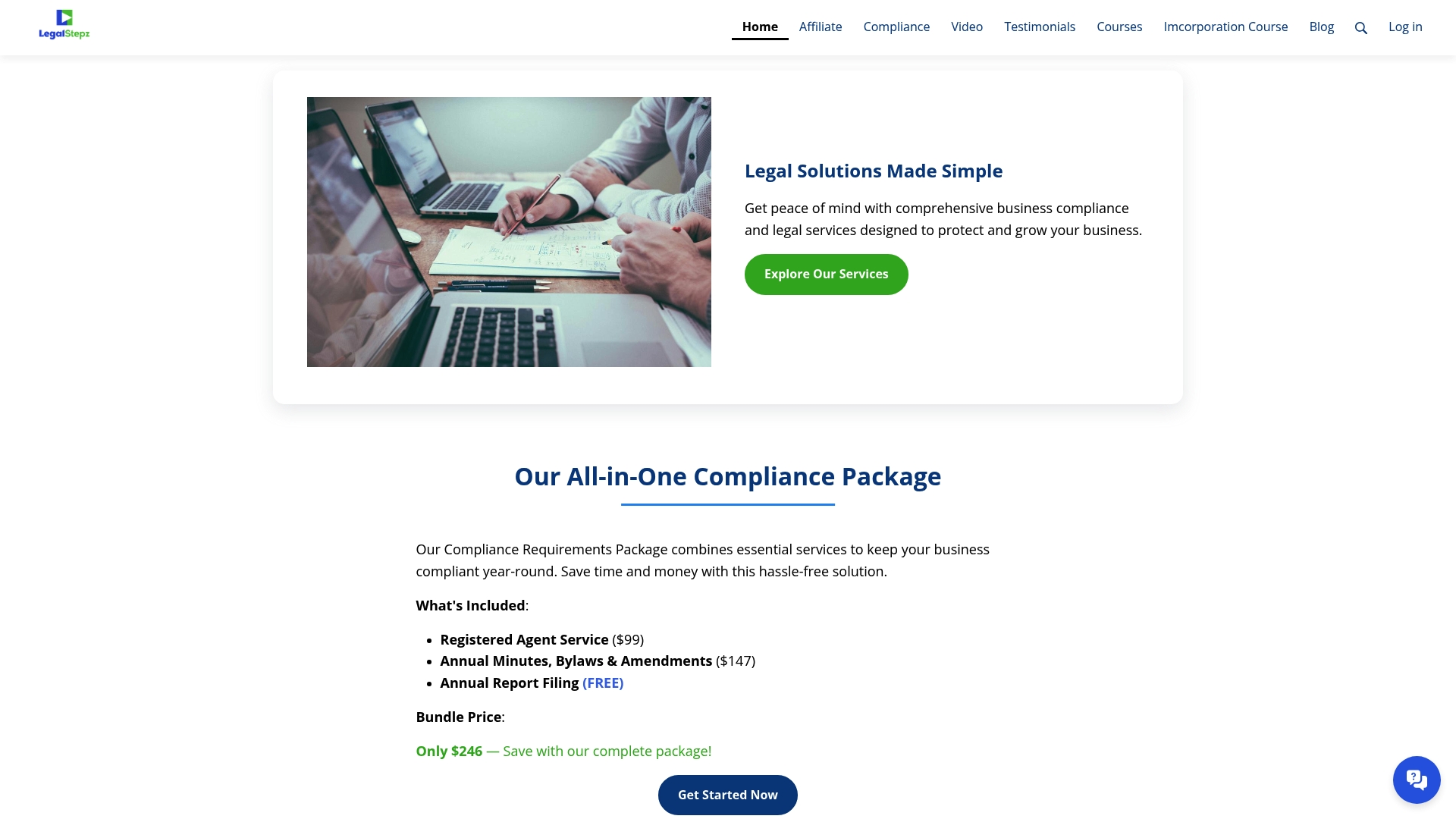
If you would rather not track windows and notices yourself, our compliance page covers it. Our Registered Agent Service is $99, and we also file the Statement of Information as part of our Annual Report service. For corporations, Annual Minutes, Bylaws and Changes Throughout the Year is $147.
If you are forming or running your own entity, the Limited Liability Company Course is $37 and teaches the formation and ongoing steps in video lessons. Our Incorporation Course is also $37 if you are considering a corporation. Start at legalstepz.com to see what fits.
FAQ
Do I have to file an annual report for my LLC in California?
Yes, but it is not a yearly report. California LLCs file a Statement of Information every two years in the month of registration, and they pay the $800 tax and file a return each year. Failure to file the Statement of Information can lead to suspension or forfeiture.
What is the annual LLC tax in California?
It is $800 per year, paid to the FTB, and it applies even if the LLC had no income. It is due April 15 for calendar-year LLCs and continues until the LLC is canceled. LLCs with higher California income also owe the additional fee shown above.
How much does the Statement of Information cost?
The fee for the initial or biennial LLC Statement of Information is $20. Filing late adds a $250 penalty. Our guide to Statement of Information fees explains how to avoid a rejected filing.
Can I pay the $800 with my Form 568?
No. The annual tax is paid separately with the FTB 3522 voucher or online, and the state tax agency says not to pay it with Form 568. The return and the tax have different due dates for many LLCs.
Sources
- California Secretary of State: Frequently Asked Questions
- California Secretary of State: Statements of Information Filing Tips
- Form LLC-12 instructions (California DIR)
- FTB: Limited liability company
- FTB: Limited liability company (first-year tax)
- FTB: 2026 Instructions for Form FTB 3522
- FTB: 2025 Limited Liability Company Tax Booklet
- FTB: 2017 Limited Liability Company Tax Booklet 568
- FTB Tax News, June 2025
- FTB: My business is suspended
- CDTFA: Limited Liability Companies
- Ezel: California LLC Statement of Information Requirements
- Tax Expert Today: California Late Payment Penalty