

You can register a trademark in California with the Secretary of State by filing Form TM-100 with a drawing of your mark and three identical specimens, for a fee of $70 per class. The filing can be done online through bizfile California. That registration covers California only. If you sell or plan to sell across state lines, a federal registration with the USPTO is the broader protection. This guide shows you which one fits, how to file the state application, and where a business name ends and a trademark begins.
TL;DR
- A California state trademark protects your mark inside California. Federal USPTO registration protects it nationwide.
- To file with the state you must already be using the mark in California commerce. You submit Form TM-100, a drawing, and three identical specimens.
- The form lists a fee of $70 per classification code. Confirm the current amount with the Secretary of State before you pay.
- Your LLC or corporation name is not a trademark. A business name identifies the company, and a trademark identifies the source of goods or services.
- Search first, file second. Registration does not guarantee exclusive ownership.
Table of Contents
- State or federal: which registration do you need?
- Business name vs trademark: the difference that trips up most owners
- Search before you file
- How to register a trademark with the California Secretary of State
- How long does it take?
- After registration: renewal and what the registration does not do
- Common mistakes to avoid
- Get the foundation in place
- FAQ
- Sources
State or federal: which registration do you need?
The first decision is geographic. The California Secretary of State defines a trademark as any word, name, symbol, or device used to identify and distinguish your goods from those made or sold by others. A service mark does the same for services. The Secretary of State's FAQ uses those definitions for state filings.
A state registration protects the mark only within California. The USPTO explains that federal registration gives national protection. It also gives a legal presumption of nationwide ownership, the option to record the mark with U.S. Customs and Border Protection, and the right to sue over the mark in federal court.
Here is a practical way to sort yourself:
| Your situation | Usually points to |
|---|---|
| One storefront or a local service, no plans beyond California | State registration may be enough |
| Online sales shipped to other states | Federal registration |
| Plans to raise money, license the brand, or sell the business | Federal registration |
| You want the mark recorded with Customs to block imports of knockoffs | Federal registration |
| You want a quick, low-cost record while you build | State, with federal to follow |
The two are not mutually exclusive. Some owners register with the state first for a fast public record, then file federally when sales expand. If you want a deeper side-by-side, our article on state trademark vs federal registration walks through the trade-offs for U.S. entrepreneurs.
There is also a deterrence angle. The California Department of General Services notes in an intellectual property newsletter that federal registration discourages infringement because registered marks turn up easily in USPTO searches. The same publication observes that state agencies often register their marks to prevent public confusion about who provides important services. The logic carries over to a small business: a registered mark is easy for others to find before they copy it.
Business name vs trademark: the difference that trips up most owners
Many California founders assume that forming an LLC or corporation, or filing a fictitious business name, protects the brand. It does not work that way.
According to the USPTO's trademark and trade name flyer, a business name identifies the business itself, while a trademark identifies the source of goods or services. The two can sometimes be the same words, but they do different jobs.
What an LLC or corporation name does
When you form an entity, the state checks that your name is distinguishable from other entities on its records. That is an availability check for the registry. It is not a search of every brand used in commerce, and it does not give you the right to stop someone else from using a similar name for similar goods. The same flyer notes that an LLC designation can appear in a trade name, which is the name of a business. That is a different thing from a mark that tells customers who made a product.
If you want to see how the state's name check works, read our explainer on California entity name availability. For the mistakes we see most often when owners pick a name, see common business name mistakes.
Where a DBA fits
A DBA, or fictitious business name, lets you operate under a name other than your legal one. It is a naming and notice filing, not ownership of a brand. We compare the two in when a $70 California trademark is enough and when a DBA isn't.
A quick test
Ask yourself three questions:
- Would a customer see this name on a product, package, website, or ad and understand it as the brand of what they are buying? If yes, it works as a trademark.
- Is it the name on your tax return, contracts, and bank account? That is your business name.
- Do you need to stop a competitor from using a confusingly similar brand? Then you need a trademark, not just an entity.
Sometimes the answers overlap, and your company name is also your brand. That is common, and it is the reason to register the mark rather than assume the entity filing covers it.
Choosing the entity itself matters too, because it affects taxes and how you hold the brand. If you are still weighing structures before settling on a name, this S-corp vs LLC comparison covers the tax side of that decision.
Search before you file
A search is the cheapest protection you will buy. Registration with the state is not a clearance of your mark. The Secretary of State's own instructions state that California registration does not guarantee exclusive ownership, and they advise applicants to consult private legal counsel on trademark issues. A search is how you find out whether someone else already has rights that could beat yours.
A workable search covers four places:
- California state records. The Secretary of State offers an online trademark search tool through bizfile that lets anyone look through active California registrations.
- Federal records. Search the USPTO database for registered and pending marks, including near matches in sound and meaning, not just identical spelling.
- Entity and DBA names. A company can have unregistered rights in a name it has used for years.
- The open market. Search engines, app stores, social handles, domain names, and marketplaces. Unregistered use, often called common law use, can still create a conflict.
The last two are the ones people skip. Our eight-step California trademark search process is built around catching common law use. More search guidance sits in our trademark searches archive.
Write down what you find, including the owner, the goods or services, and how similar the mark looks and sounds to yours. If a close match covers related goods, talk to a trademark attorney before you spend money on filing.
How to register a trademark with the California Secretary of State
The state's instructions for Form TM-100 set out the requirements. Here is the sequence.

Step 1: Confirm you are using the mark in California
The state requires that you are using the mark in commerce within California. A name you only plan to use someday does not qualify for this route. Federal filing, by contrast, can be based on intended use, which is a reason some founders go federal early.
Step 2: Identify your goods or services and your class
The fee is charged per classification code. If your brand covers clothing and also consulting, those are separate classes and the fee applies to each. Decide exactly what you sell under the mark before you file, and describe it plainly.
Step 3: Prepare a drawing of the mark
The application needs a drawing. For a word mark, this is the name in clear lettering. For a logo, it is the design as it appears in use. Keep it consistent with how the mark actually appears on your product or advertising.
Step 4: Gather three identical specimens
A specimen is real-world proof of the mark in use, such as a label, tag, packaging, or advertising for a service. The instructions call for three identical specimens. Make sure the mark on each specimen matches the drawing.
Step 5: Complete Form TM-100 and pay the fee
Fill out the Trademark / Service Mark application. The instructions list a fee of $70.00 per classification code. That figure comes from the 2019 form instructions, so check the Secretary of State's current page before sending payment.
Step 6: Submit online, by mail, or in person
The Secretary of State's trademark page says applications can be submitted through the bizfile California portal, by mail, or in person at the Sacramento office. Online filing is usually the simplest because you can keep a record of what you submitted.
If you want a walkthrough of how the fees compare across the state and federal systems, see our guide to California trademark costs. For more on the filing paperwork, browse the trademark application archive.
How long does it take?
There is no single number you can rely on. The Secretary of State says that processing times vary by request type, submission method, and the date your request is received. They run longer when many requests arrive around fiscal and calendar year-end. Check that page for the current dates before you plan a launch around your registration.
Federal timing is a different process and generally takes longer than a state filing, since it involves examination of the application. If you are weighing both, our article on the California trademark timeline lays out what to expect at each stage.
A sensible plan: file as soon as your search is clean and your mark is in use, and do not wait on the registration certificate to keep building the brand.
After registration: renewal and what the registration does not do
A state registration is active for five years from the filing date. According to the Secretary of State's FAQ, you can renew it for additional five-year periods as long as the mark stays in continual use. Put the renewal window on your calendar the day you receive the certificate. If you stop using the mark, you should not expect to hold the registration.
Some habits keep the mark strong:
- Use the mark consistently, in the same form as your drawing.
- Keep dated examples of use: labels, ads, invoices, screenshots.
- Watch for look-alike names in your category and respond early.
- Use the ™ symbol for an unregistered mark. Do not use the federal ® symbol unless you hold a federal registration.
And remember the limits. Because a California registration covers only California, an out-of-state business could still use a similar name in other states. If your sales or ads reach beyond California, that gap is the signal to look at federal registration.
Common mistakes to avoid
Treating the entity filing as brand protection. Forming a corporation or LLC gets your name on a registry. It does not stop others from using a confusing brand.
Skipping the common law search. A clean state database does not mean the name is free. Someone may have used it for years without registering.
Filing under the wrong class. Describe the goods or services you actually sell. A mismatch weakens what the registration does for you.
Choosing a name that only describes the product. Marks that merely describe what you sell are hard to protect. Distinctive names are easier to own and defend.

Letting the registration lapse. Renewal is every five years, and use must be continual.
Using a name in your logo that differs from the application. The drawing and the specimens should match.
Our perspective
We see the same pattern with California owners every year. They form the company, pick a clean name, and assume the brand is covered. It is not. The entity gets you a place on the state's records, and the trademark is what protects the name customers recognize.
That is why we treat the name, the entity, and the mark as one system. A founder who searches properly, forms the right entity, keeps the corporate records in order, and registers the mark has a brand that can be defended and sold later. Skipping any link shows up as a problem at the worst moment: a financing round, a sale, or a dispute.
The good news is that most of this is doable by a motivated owner with clear instructions. A step-by-step course and a well-run compliance routine cost far less than a rebrand. We built our offerings so California entrepreneurs can do the foundation work correctly the first time and bring in an attorney only where the stakes call for it.
Peter
Get the foundation in place
A registered mark works best when the company behind it is in good standing. We help California entrepreneurs with both sides. Our Trademark Course is a $37 one-time purchase that walks you through the trademark process, and our Incorporation Course and Limited Liability Company Course are $37 each if you are still forming the entity. For ongoing compliance, our Registered Agent Service is $99 one-off, and Annual Minutes, Bylaws and Changes Throughout the Year is $147 one-off.
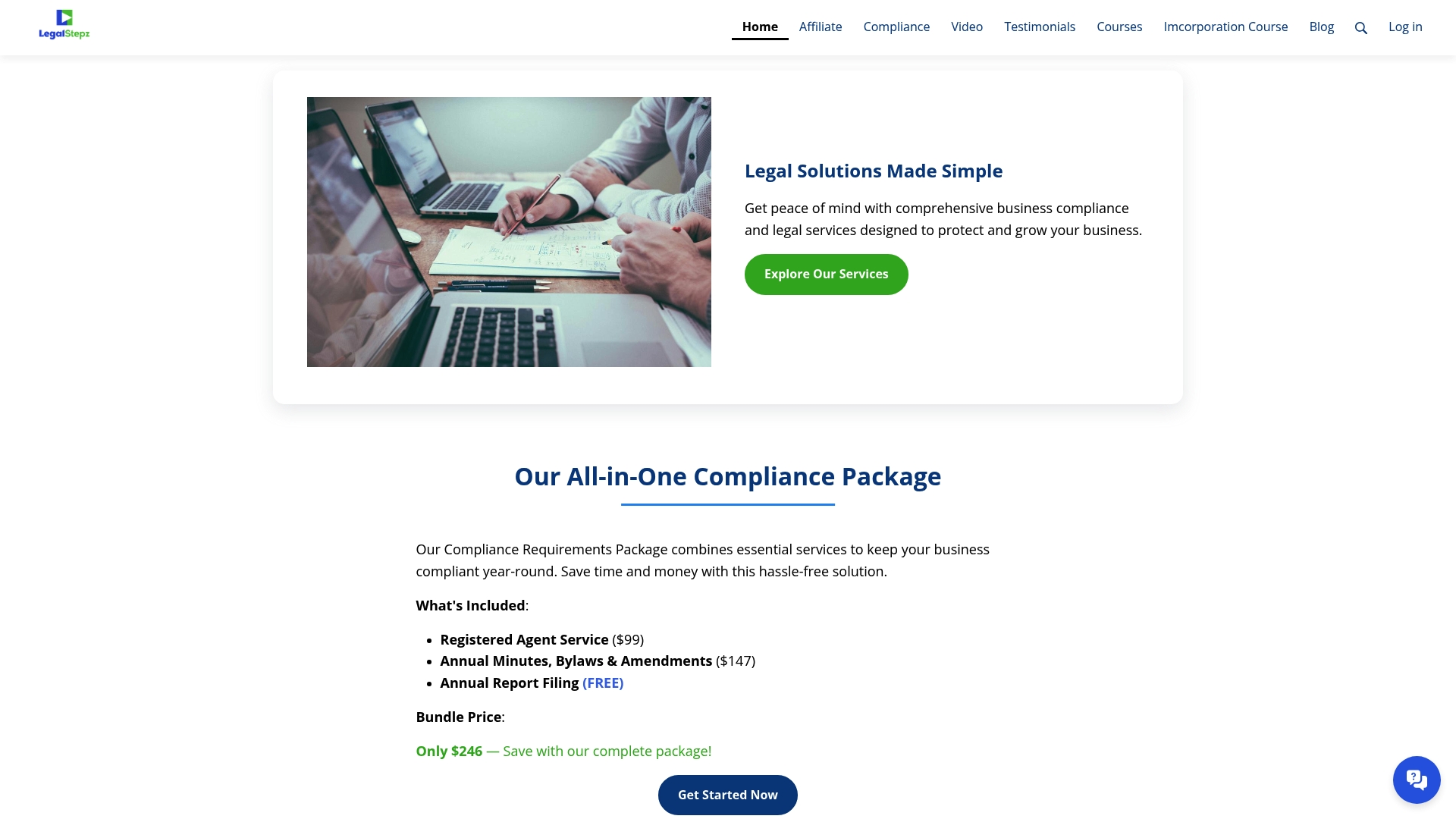
If you want a single place to start, see the products page for the courses or the compliance page for the services.
FAQ
Is a California trademark enough, or do I need a federal one?
A California registration protects your mark only within the state. Federal registration through the USPTO provides national protection and a presumption of nationwide ownership. If you sell online to other states or plan to expand, federal registration is the stronger choice.
What is the difference between a business name and a trademark?
A business name identifies the company, and a trademark identifies the source of goods or services. They can be the same words, but forming an LLC or corporation does not make the name a trademark. You need a separate registration to protect the brand.
Does registering my LLC name protect my brand?
No. An entity filing records your company name with the state, and it can include an LLC designation in a trade name. It does not give you trademark rights against others using a similar brand. Search and register the mark itself.
How much does it cost to register a trademark in California?
The Form TM-100 instructions list $70.00 per classification code. That figure is from the 2019 instructions, so confirm the current fee with the Secretary of State. Federal fees are set separately by the USPTO.
How long does a California trademark last?
A state registration is active for five years from the filing date. You can renew it for additional five-year periods as long as the mark remains in continual use.
Sources
- Why register your trademark? | USPTO
- Frequently Asked Questions | California Secretary of State
- Instructions for Completing the Trademark / Service Mark Application (TM-100)
- Trademarks and Service Marks | California Secretary of State
- Current Processing Dates | California Secretary of State
- How trademarks and trade names differ | USPTO
- Intellectual Property Newsletter, December 2018 | California Department of General Services