
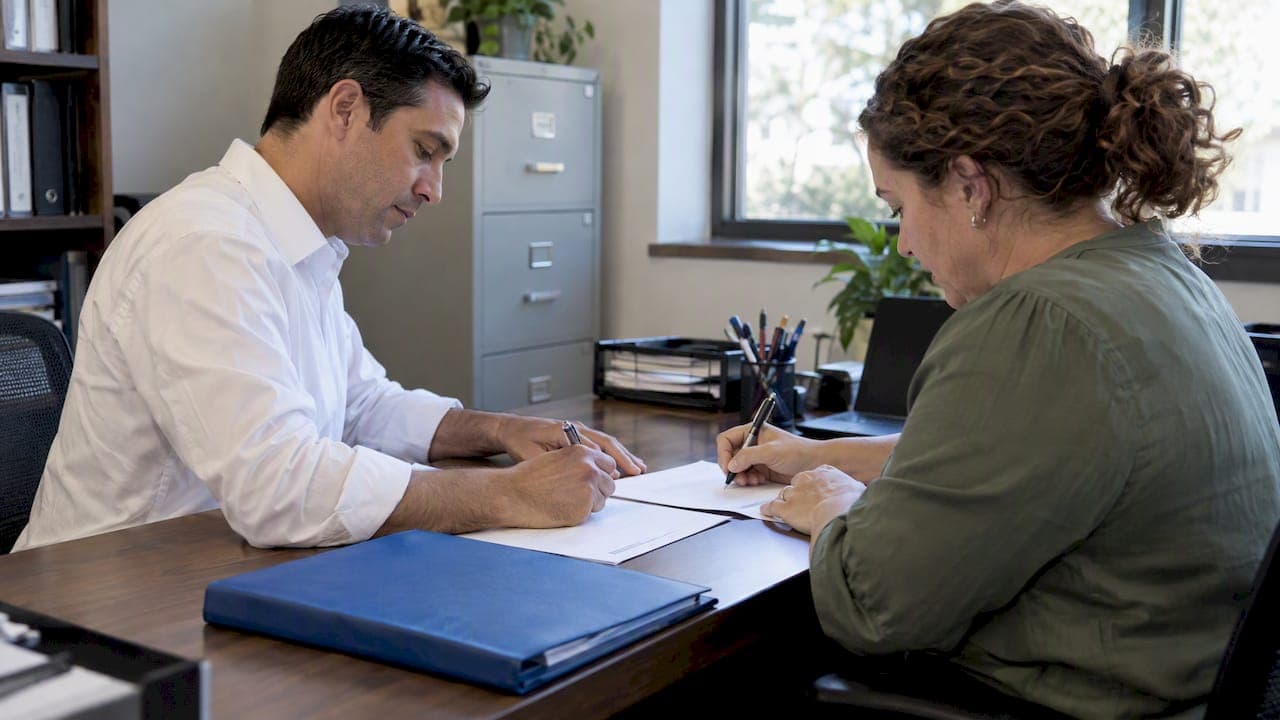
Yes. California corporations must keep annual meeting minutes under Corporations Code §8320, and these minutes stay in your internal files rather than going to the Secretary of State. If you have not held this year's meeting yet, the move right now is to schedule it, draft minutes, get them signed, and file them with your corporate records, or gather unanimous written consent if a meeting is not practical.
TL;DR:
- California corporations must keep shareholder, board, and committee minutes under Section 8320; these records stay internal and are not filed with the Secretary of State.
- Hold a meeting in each year directors are elected, following your bylaws for the date, notice period, and quorum; the Statement of Information is separate.
- Record attendance, quorum, motions, seconds, vote counts, resolutions, and attachments; have the chair sign promptly, typically with the secretary countersigning, ideally within a week.
- When meetings are impractical, unanimous written consent substitutes if all required directors or shareholders sign and date the exact resolution, then file it with corporate records.
- Shareholders may inspect corporate minutes at the principal office or registered agent’s office, so retain signed copies where they can be produced on reasonable request.
Table of Contents
- What California Law Requires: Records, Minutes, and Inspection Rights
- When to Hold Your Annual Meeting and How It Fits Your Filing Calendar
- How to Prepare, Approve, and Sign Defensible Minutes
- Using Written Consents Instead of a Formal Meeting
- Where to Keep Minutes and How Long to Retain Them
- Common Mistakes That Undermine Your Minutes
- A Practical Checklist for Compliant Minutes
- Why Consistent Minutes Matter More Than Owners Expect
- Get Your Annual Minutes Drafted and Filed Without the Guesswork
- FAQ
- Sources
What California Law Requires: Records, Minutes, and Inspection Rights
California corporate law sets a clear baseline for recordkeeping. Under Corporations Code §8320, every corporation must keep adequate books and records of account, plus minutes of the proceedings of its shareholders, board of directors, and any committees of the board. This is not optional paperwork. It is the legal backbone that proves your corporation acted properly when it elected directors, approved a contract, or authorized a major transaction.
Alongside this, Corporations Code §1601 gives shareholders a statutory right to inspect those books, records, and minutes. This inspection happens at the corporation's principal office or at the office of its registered agent, so wherever you keep your records, they need to be accessible on reasonable request.
A common point of confusion is where these documents actually live. Your bylaws and minutes are internal governance tools, not filings:
- Minutes record what happened at a meeting or through written consent.
- Bylaws set the rules for how your corporation operates.
- Neither document gets submitted to the California Secretary of State, which maintains only formation and status filings, not internal governance records.
For a closer look at how these two documents differ in practice, our bylaws versus minutes breakdown walks through what officers are responsible for keeping current.
When to Hold Your Annual Meeting and How It Fits Your Filing Calendar
California corporations must hold a meeting in each year that directors are elected, and your bylaws typically spell out the exact date, notice period, and quorum rules for that meeting. Missing this window does not dissolve your corporation, but it weakens your governance record and can create problems if a dispute or audit ever puts your decisions under scrutiny.
It helps to separate your meeting and minutes obligation from your Statement of Information filing cadence. The Statement of Information goes to the Secretary of State on its own schedule and keeps your entity's public record current; your annual meeting and minutes are a separate, internal requirement. Our guide on annual report requirements explains how the two obligations run side by side without overlapping.
A simple sequence keeps both on track:
- Set the meeting date according to your bylaws and confirm quorum.
- Send notice to directors or shareholders within the required window.
- Hold the meeting and draft minutes capturing what was decided.
- Sign the minutes and file copies with your corporate records and tax files.
Our post on the annual meeting requirement covers notice timing in more detail if your bylaws are silent or outdated.
How to Prepare, Approve, and Sign Defensible Minutes
Minutes that hold up under scrutiny share the same structural elements regardless of how small the meeting was. Each set should include:
- The meeting type (annual, special, or committee), date, time, and location.
- A list of who attended and confirmation that quorum was met.
- Each motion made, who moved it, who seconded it, and the vote count or note of unanimous consent.
- The resolutions adopted and a reference to any attachments or materials reviewed.
Vague language is the most common weakness we see. "The board discussed finances" tells you nothing a year later. "The board approved a $15,000 equipment lease with XYZ Leasing, moved by Director A, seconded by Director B, passed unanimously" gives you something defensible if anyone ever questions the decision.
Once drafted, minutes need a signature from the meeting chair, typically countersigned by the corporate secretary, dated the day of signing rather than left blank. Signed originals belong with your permanent corporate records, not in a loose folder on someone's desktop. Our signing instructions and drafting guide walk through both the templates and the sign-off sequence step by step.
Pro Tip: Sign minutes within a week of the meeting, while details are fresh and before anyone forgets who seconded what.
Using Written Consents Instead of a Formal Meeting
Not every corporation can gather directors or shareholders in one room, and California law accounts for that. Under Corporations Code §307, a unanimous written consent signed by all directors or shareholders carries the same legal weight as a unanimous vote taken at a meeting. Small corporations use this often when everyone already agrees and a scheduled meeting feels unnecessary.
A valid written consent should include:
- The exact resolution text, written as precisely as you would phrase a motion at a meeting.
- A signature line and date for every director or shareholder whose consent is required.
- A statement that the consent is unanimous and intended to substitute for a meeting.
The usual pitfalls are missing signatures, resolution language vague enough to mean different things to different readers, and consents that never get filed with the rest of the corporate minutes book. Our post on written consent mechanics covers the formatting details that keep a consent enforceable.
Where to Keep Minutes and How Long to Retain Them
Shareholder inspection rights under Corporations Code §1601 mean your minutes need to be reasonably accessible, not buried in storage or scattered across old email threads. A shareholder requesting records is entitled to see them at your principal office or your registered agent's address within a reasonable timeframe.

Retention matters just as much as location. The Franchise Tax Board's Form 100 guidance outlines how corporate records, including minutes, support the tax filings corporations submit each year, and those same minutes often become the first thing an auditor asks for if your corporation's activity is ever questioned.
Practical storage options include:
- Your principal office, if it is secure and reasonably staffed.
- Your registered agent's address, which many small corporations use for consistency.
- An encrypted electronic system that can produce a legible paper copy on request, alongside the signed original.
Common Mistakes That Undermine Your Minutes
The Secretary of State's Business Entities FAQ warns about private companies that mail solicitations resembling official state forms, offering to prepare your "annual minutes" or file your Statement of Information for a fee. These are not government mailings, and relying on them instead of your own records creates confusion rather than compliance.
Beyond scams, the recurring errors we see are:
- Minutes that document a discussion but never record who moved, seconded, or how the vote came out.
- Minutes left unsigned for months, with no clear date of approval.
- Resolutions summarized loosely enough that nobody can reconstruct what was actually authorized.
Each of these is fixable. Approve a correction entry at your next meeting that formally adopts the prior minutes as corrected, attach the corrected language, and have it signed like any other resolution.
A Practical Checklist for Compliant Minutes
A working checklist keeps the process consistent year after year, whether you are running the meeting yourself or delegating it to a corporate secretary.
- Confirm your meeting date and notice period against your bylaws.
- Distribute an agenda ahead of time so attendees know what will be decided.
- Record attendance and confirm quorum at the start of the meeting.
- Capture each motion, second, and vote count as it happens, not from memory afterward.
- Draft the resolution language clearly: "Resolved, that the corporation approves [specific action]."
- Have the chair and secretary sign and date the minutes promptly.
- File signed copies with your corporate records book and tax files.
- Store a backup copy in a secure digital system.
Our corporate minutes template walks through the mandatory fields line by line, so you are not starting from a blank page each year.
Why Consistent Minutes Matter More Than Owners Expect
I have seen small corporations treat minutes as an afterthought until a dispute, loan application, or tax audit suddenly demanded proof of a board decision made years earlier. A clean minutes book turns that scramble into a five-minute lookup. If you are not sure your records would hold up, it is worth asking a registered agent or corporate services provider to review them before you need them. Our practical breakdown covers more of what we have observed on this front.
— Peter
Get Your Annual Minutes Drafted and Filed Without the Guesswork
We offer services to help draft annual minutes, prepare bylaws, file your Statement of Information, and provide registered agent services to assist with your governance paperwork. Our compliance services bundle annual minutes and bylaw updates for $147 one-off and registered agent service for $99 one-off, with annual report filing available on request.
If a major corporate action like a layoff is part of what your minutes need to reflect, our employment-law partners at Serendib Law Firm cover WARN Act notice obligations worth understanding before the board votes. When you are ready to get your minutes in order, start on our compliance page and request a draft this week.
This article is general information, not a substitute for advice from a qualified lawyer. Consult a qualified legal professional about your own circumstances before acting on anything here.
FAQ
Do California corporations have to file annual minutes with the state?
No. Annual meeting minutes are internal corporate records, not filings. The Secretary of State's Business Entities FAQ confirms that minutes and bylaws stay with the corporation rather than going to the state.
Can a California corporation skip its annual meeting if everyone agrees?
Yes, under certain conditions. Corporations Code §307 allows a unanimous written consent signed by all directors or shareholders to replace a meeting, carrying the same legal effect as a unanimous vote.
Who has the right to inspect corporate minutes in California?
Shareholders have a statutory right to inspect minutes, books, and records under Corporations Code §1601, accessible at the corporation's principal office or registered agent's address.
What happens if a corporation never kept annual minutes?
The corporation is out of compliance with Corporations Code §8320, which weakens its governance record and can complicate disputes, loans, or tax audits. Missing years can be addressed by drafting catch-up minutes now and documenting the correction at the next meeting.
Can Legalstepz help draft and sign annual minutes?
Yes. Our annual minutes and bylaws service is $147 one-off through our compliance page, covering drafting, signing instructions, and recordkeeping support.