

To register a trademark in California, you file an application with the California Secretary of State, either online through bizfile California, by mail, or in person in Sacramento. You pay $70 per classification code and show that you are actually using the mark in California. The registration protects you in California only, so the first decision is whether a state filing is enough for your business or whether you need a federal one. This guide walks through both, with the forms, fees and renewal rules.
TL;DR
- A California state trademark is filed with the Secretary of State. The fee is $70 per classification code, and you must already be using the mark.
- It gives you rights in California only. Rights across the United States require a federal registration with the USPTO.
- Search before you file, in California records and in the federal database, because registration is never guaranteed.
- A state registration lasts five years and renews for $30 if the mark is still in continual use.
- If you sell outside California or plan to, compare the federal route before you spend on a state filing.
Table of Contents
- State trademark or federal trademark: what each one covers
- Search before you file
- What you need to register in California
- How to file, step by step
- Costs, duration and renewal at a glance
- Our perspective
- When federal registration is the better move
- Learn the process yourself with our course
- Mistakes that cost California applicants time and money
- FAQ
- Sources
State trademark or federal trademark: what each one covers
A California registration creates rights in California only. A federal registration with the U.S. Patent and Trademark Office (USPTO) creates rights throughout the United States and its territories. It also gives you a legal presumption that you own the mark and have the right to use it, lets you use the Ⓡ symbol, and lets you record the mark with U.S. Customs and Border Protection to help stop infringing imports.
That difference decides most cases. Think about where your customers are:
- Local or California-only business. A restaurant, salon, contractor or neighborhood retailer that sells only in California can get real value from a state registration at a low filing fee.
- Online seller or software company. If customers in other states buy from you, a California registration leaves those states uncovered.
- Brand you intend to grow. If you expect to expand, start by looking at the federal application, and treat state registration as optional.
Our article on state trademark vs federal goes deeper on this choice. If you are also weighing a fictitious business name, see when a $70 California trademark is enough and when a DBA isn't.
One point is easy to miss. A trademark is different from your business entity name. Forming an LLC or corporation with the Secretary of State does not give you trademark rights in the name. For the entity side, read California entity name availability explained for 2026 and how to register a business name in California.
Search before you file
Search first, because a filing fee is not refunded when a conflict sinks your application. You need to check three places.
- California records. The Secretary of State offers a free California Trademark Search tool online, with free PDF copies of imaged trademark documents.
- The federal database. The USPTO encourages applicants to run a clearance search of live federal marks before filing. The USPTO also searches for conflicting marks during examination, so a conflict you skipped will surface later.
- Real-world use. Businesses that use a name without registering it can still have rights. Look at business directories, domain names, social handles and a plain web search for similar names in your industry.
The third check is the one most people skip. We built a 8-step California trademark search process that catches common law use, and you can browse more in our trademark search articles.
While you search, look for marks that are similar in sound, spelling or meaning, not only identical. Check related goods and services too. A mark for "Bay Brew" coffee and one for "Bay Brew" craft beer can still confuse the same customers.
Keep in mind that registration is not guaranteed. An application has to meet all legal requirements to be accepted, so a mark that is purely descriptive of what you sell, or too close to someone else's, can be refused.
What you need to register in California
The Secretary of State's instructions for Form TM-100 list what goes into an application. Gather these before you start:
- A completed application (Form TM-100). It identifies the owner, the mark, the goods or services and the date you first used the mark.
- A clear drawing of the mark. This is the version of the mark you are registering, whether plain words or a logo.
- Three identical specimens. These show the mark in actual use in commerce in California, such as labels, tags, packaging, signage or advertising.
- A certified English translation if any part of the mark is not in English.
- Disclosure of any prior USPTO refusal. If the mark was previously refused federal registration, the application must say so and give the reasons.
You also sign a declaration, under penalty of perjury, that your application is accurate. Treat it seriously. Describe your goods and services precisely, and enter dates of first use only if you can back them up with invoices, photos or records.
Pick the right classification

Trademarks are grouped into classes of goods and services, and the California fee is charged per classification code. If your brand covers both clothing and a retail store, you may need two classes, which doubles the fee. File in the classes that match what you really sell today, not every product you might launch someday, because the state expects the mark to be in use.
How to file, step by step
- Confirm the mark is in use in California. State registration is based on actual use, so you need real specimens before you apply.
- Run your searches. Complete the three checks above and note any marks that could be confused with yours.
- Choose your class or classes. Match each class to the goods or services you currently offer under the mark.
- Prepare the drawing and specimens. Make the drawing clean and the three specimens identical.
- Complete Form TM-100. Fill in the owner name exactly as it appears in your business records, since the owner has to be the true owner of the mark.
- File and pay. The Secretary of State accepts applications online through bizfile California, by mail, or in person at the Sacramento office. The fee is $70 per classification code.
- Respond to the examiner if asked. If the Trademarks and Service Marks unit raises an issue, answer it promptly and accurately.
- Calendar your renewal. Put the renewal window on your calendar the day you get the registration.
For timing, see our breakdown of how long the California trademark timeline takes. Our trademark application articles also cover common filing questions.
Costs, duration and renewal at a glance
| Item | California (state) | Federal (USPTO) |
|---|---|---|
| Where rights apply | California only | Entire United States and its territories |
| Filing fee | $70 per classification code | $350 per class base fee, with additional fees possible depending on completeness and complexity |
| Term | Five years from the filing date | Maintained through periodic filings |
| Renewal | $30, within six months before expiration, while the mark stays in continual use | $325 per class for Section 9 renewal and $325 per class for Section 8 declaration |
| Use of Ⓡ symbol | Not part of the federal benefits | Allowed after federal registration |
Federal fees can change, so check the USPTO page before you file. Our guide to California trademark costs, including how to avoid the $200 USPTO surcharge, shows how to keep a federal application from picking up extra fees.
Renewing a California registration
A California registration is active for five years from the date filed with the Secretary of State. You can renew it for another five years within the six months before it expires, as long as the mark is in continual use. If you stop using the mark, you have nothing to renew. Set two reminders: one at the start of the window and one a month later.
Our perspective
We see the same pattern with California founders again and again. They spend weeks on the logo and the name, then treat the trademark as an afterthought, or hand it to the most expensive option they can find.
Our view is that a founder who understands the process makes better decisions at every step. You can learn to search properly, pick the right classes, gather the specimens and decide between state and federal filing yourself. That is exactly why we built our Trademark Course, so that you can do the work with a clear walkthrough.
The state filing is the most approachable entry point for a California-only business. It costs $70 per classification code and it forces good habits: documenting first use, keeping specimens and tracking renewal dates. Those same habits make a later federal filing smoother.
Registration is only one piece of staying protected. A trademark belongs to the entity that owns the brand, so your corporation or LLC records, annual minutes and registered agent should be in order too. We built our compliance services for exactly that side of the business.
Peter
When federal registration is the better move
Go federal when your brand is bigger than one state. Sell to customers in other states, ship across state lines, run a national online store, or plan to raise money or license the brand, and California-only rights will fall short. To get rights throughout the United States and its territories, register with the USPTO. If you only expand into one or two other states, you can also register in those states.

The USPTO is also not an enforcement agency. Owning a federal registration gives you a stronger legal position, but you are responsible for pursuing anyone who infringes. That is true of a state registration as well, so keep records of your use and watch for copycats.
A practical rule: if you would be upset to find someone in Texas or New York using your name next year, file federally. If your customers truly are local and you want a low-cost record on the books, the state filing makes sense. Our walkthrough of the USPTO Trademark Center and common application errors helps if you go that route.
Learn the process yourself with our course
If you want a guided path through trademark registration without paying for a full legal engagement, our Trademark Course is a one-time purchase at $37. It is an instructional video course made for California entrepreneurs who want to understand each filing step and handle it themselves. You can see it on our products page.
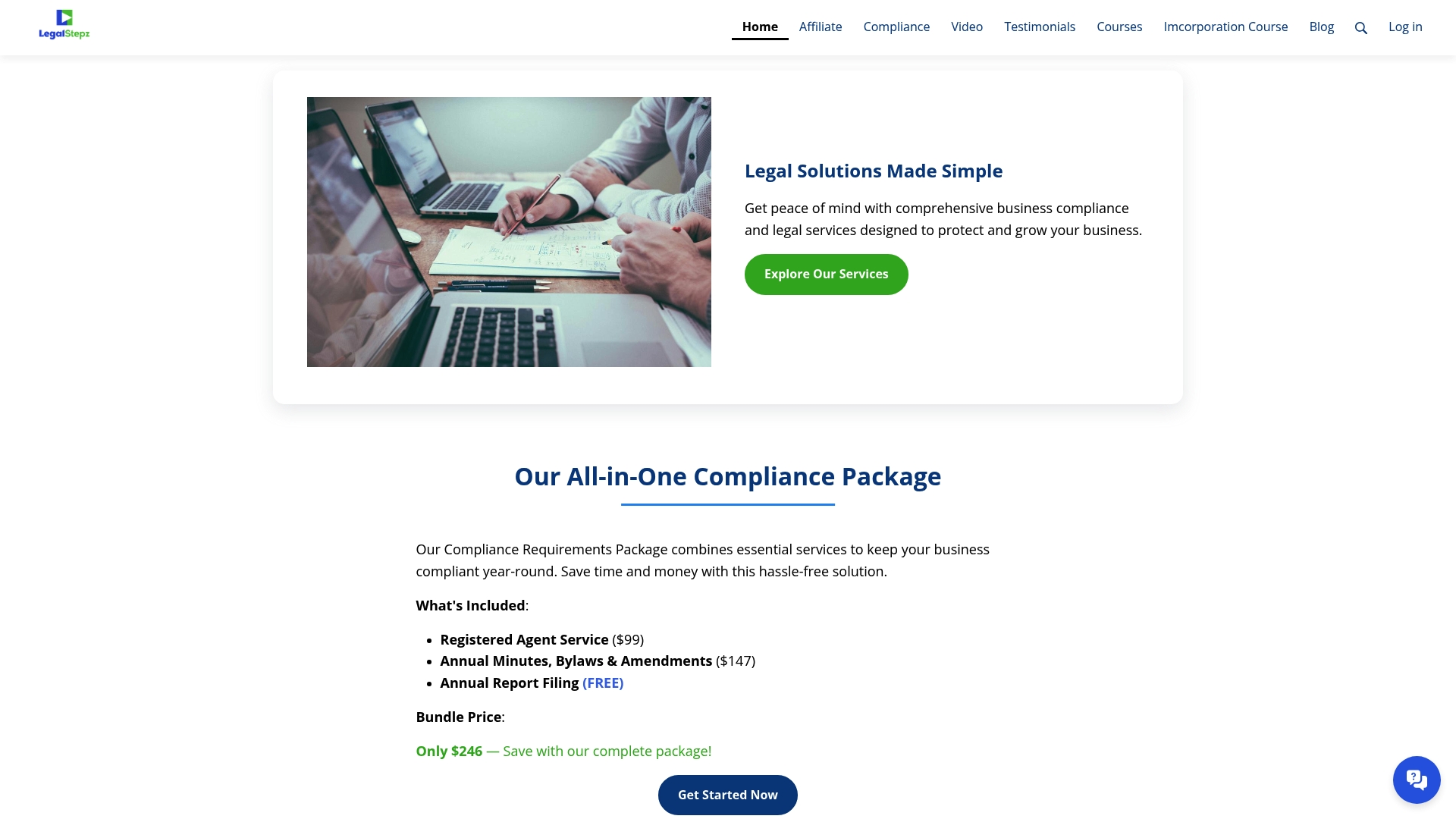
If you are also forming a company, we offer an Incorporation Course and a Limited Liability Company Course at $37 each. Once your entity exists, our compliance packages include a Registered Agent Service at $99 and Annual Minutes, Bylaws and Changes Throughout the Year at $147, so the entity that owns your trademark stays in good standing.
Mistakes that cost California applicants time and money
- Filing before you are using the mark. The state application asks for proof of use in California, so a brand that exists only on a mockup is not ready.
- Skipping the federal search. A clean California search says nothing about a federal mark that could block you later.
- Mismatched specimens. You need three identical specimens that show the mark as it appears in your drawing.
- Wrong owner. If your business is a corporation or LLC, decide whether the entity or you personally owns the mark, and be consistent in every document.
- Over-broad descriptions. Claiming goods or services you do not offer invites trouble, and you sign under penalty of perjury.
- Missing the renewal window. The renewal window is the six months before expiration. Miss it and you may have to start over.
- Assuming a DBA or entity name is a trademark. Those filings do not give you the rights that a trademark registration does.
FAQ
How much does it cost to register a trademark in California?
The California Secretary of State charges $70 per classification code. If your mark covers goods in two classes, you pay for two. Renewal after five years is $30.
Does a California trademark protect me in other states?
No. State registration creates rights in California only. If you expand across state lines, you can register in another state or apply for a federal trademark with the USPTO.
Can I file a California trademark application online?
Yes. The Secretary of State accepts applications through the bizfile California portal, and also by mail or in person at the Sacramento office. Have your drawing and specimens ready as files before you begin.
How long does a California trademark last?
It is active for five years from the date filed. You can renew for another five years within six months of expiration, provided the mark is in continual use.
Do I need a lawyer to register a trademark in California?
The Secretary of State's application is designed so owners can complete it themselves with the form instructions. If your situation is complicated, such as a refused federal application, a conflict with an existing mark or a dispute, a licensed attorney can advise you on that specific matter.
Sources
- Trademarks and Service Marks, California Secretary of State
- Frequently Asked Questions, California Secretary of State
- Forms and Fees, California Secretary of State
- Instructions for Completing the Trademark / Service Mark Application (TM-100)
- Why register your trademark? USPTO
- Federal trademark searching, USPTO
- Possible Grounds for Refusal of a Mark, USPTO
- How much does it cost? USPTO
- USPTO fee schedule